
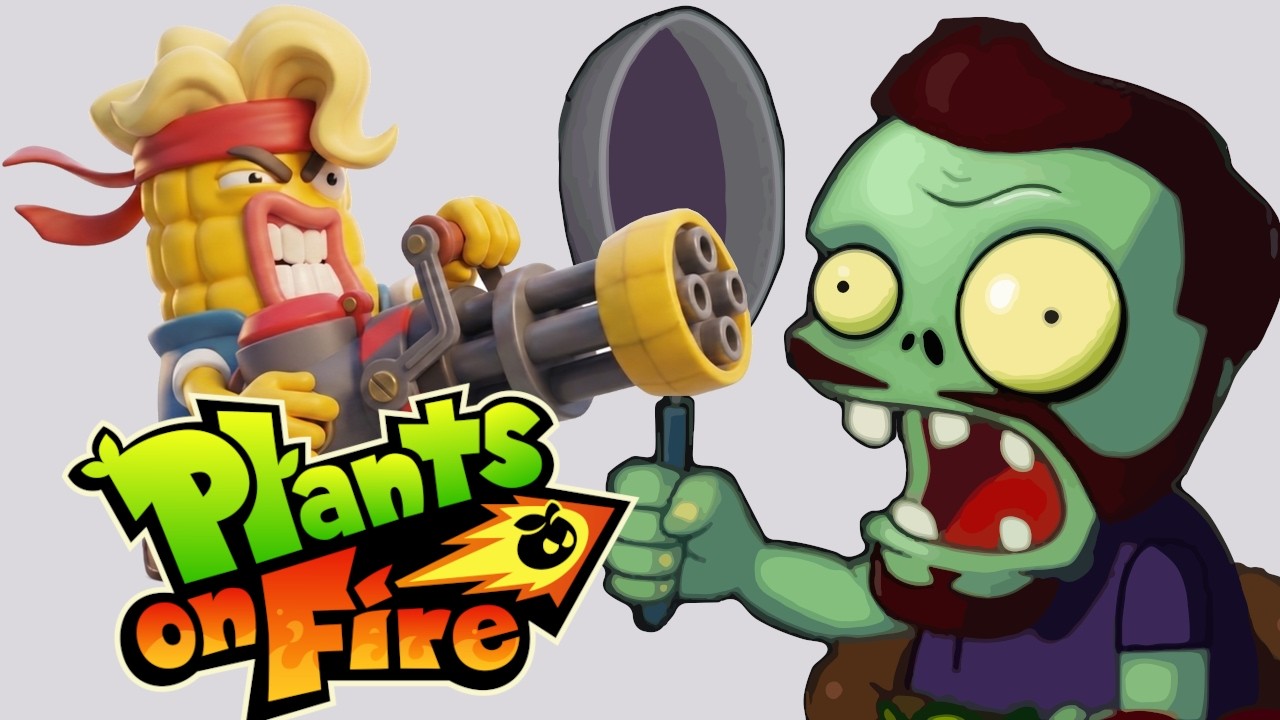
To succeed in Plants on Fire, you must shift your focus from simply placing units to actively managing the fusion economy on your board. Merging is not just an aesthetic upgrade; it is the primary engine for scaling your damage output and clearing higher-level waves. By mastering the timing of your merges and understanding how to maintain board space, you can prevent being overwhelmed by enemy surges while maximizing your total defensive efficiency during critical combat encounters.
The Strategic Value of Active Merging
Merging units in Plants on Fire is the most effective way to increase your defensive capabilities without relying solely on limited board slots. When you combine two identical units, you condense your power into a higher-tier entity that occupies less space while offering significantly improved stats. This creates the necessary "elbow room" on your grid, allowing you to deploy fresh, low-level units that contribute to your overall fire output and tactical flexibility.
If you ignore the merge mechanic, your board quickly becomes cluttered with weak, low-tier units that cannot handle the scaling health pools of late-wave enemies. By constantly looking for merge opportunities, you ensure that your defensive line remains compact and potent. This practice is essential for mid-game survival, where the density of your defense matters just as much as the individual units you choose to field. Remember, a single Tier 3 unit is almost always more valuable than four Tier 1 units due to the sheer concentration of damage-per-second (DPS) and the potential for special ability procs.
Prioritizing Board Space Management
Effective board management dictates that you should rarely fill every available tile with low-tier units, as this leaves you with no room to synthesize better defenses. You should always aim to keep at least two to three empty slots on your grid. This buffer is critical because it allows you to react to the enemy's movement by quickly deploying new units or merging existing ones without needing to sacrifice your current defensive structure.
When you reach a state of full board saturation, your ability to adapt to incoming threats drops to near zero. If a specific lane is being pushed, you won't have the space to drop a counter-unit or merge your current plants into a higher power level. Maintaining a "buffer zone" of open tiles is a hallmark of high-level play; it ensures that every action you take is a calculated move rather than a desperate attempt to fill empty grid space when you need to pivot your strategy.
Scaling Defensive Power Through Fusions
Higher-tier units resulting from successful merges provide exponential returns on your initial investment. While it might feel safer to have five individual level-one units on the board, two level-two units and one level-three unit will almost always outperform them in terms of raw damage throughput and utility. The game rewards players who consolidate their resources, as higher-tier units often possess unique abilities that can alter the flow of a wave.
Identifying Power-Multiplier Units
Not all plants scale equally. To maximize your efficiency, focus your merges on:
- Area-of-Effect (AoE) Units: When merged, these plants often gain larger splash radii, which are vital for clearing swarms.
- Debuffers: Higher tiers often increase the duration or potency of status effects, such as slowing enemies or increasing the damage they take from other sources.
- Attack Speed Specialists: Merging these units can push them over critical breakpoints, allowing them to clear waves before enemies reach your front line.
By focusing your merges on these "power-multiplier" units, you create a backbone for your defense that remains effective even when enemy difficulty spikes.
Recognizing When to Hold or Merge
The decision to merge should be dictated by the current state of the lane and the difficulty of the incoming wave. If your current defense is comfortably holding back the enemy, it is often better to hold onto your units and save up for a larger, more impactful merge later. However, if you are being pushed back or if the enemy density is increasing, you must merge immediately to boost your damage output and reclaim the lane.
Avoid the temptation to merge purely for the sake of clearing space when you are already in a winning position. Instead, look for opportunities to chain your merges together. By timing your merges during lulls in the enemy spawn rate, you ensure that you don't leave yourself vulnerable during a transition between wave intensities. This tactical patience is what separates players who can sustain a defensive line from those who crumble under the pressure of mid-round spikes.
Advanced Tactics: Managing Resource Economy
In Plants on Fire, your gold—or equivalent currency—is a limited resource. Every unit you deploy has a cost, and every merge is an investment. If you find yourself in a losing battle, check your economy. Are you spending all your currency on Tier 1 units that are immediately overwhelmed?
Try the "Slow-Burn Approach":
- Early Game: Deploy only enough units to hold the lane.
- Middle Game: Focus on merging existing units rather than buying new ones. This keeps your board space open and your total investment low.
- Late Game: Use your saved currency to "dump" new units onto the board and merge them rapidly into high-tier powerhouses to handle the boss-level health pools.
Avoiding Common Pitfalls
Many players fall into the trap of "Horizontal Expansion"—filling the board with as many Tier 1 units as possible. While this provides a temporary sense of security, it lacks the raw power needed for boss fights.
- The Over-Saturation Trap: Never fill the board completely unless you are in the final seconds of a boss encounter. Always keep those 2-3 empty slots as an emergency "merge buffer."
- Ignoring Synergy: Don't just merge units because you have two identical ones. Check their current positions. Would merging them remove a critical slowing effect from a key lane? If so, wait until you have a replacement unit ready to place in that spot.
By mastering these mechanics, you will find that Plants on Fire becomes much less about luck and much more about the calculated, strategic application of your defensive assets. Stay patient, keep your board clean, and always prioritize quality over quantity.

Free Plants on Fire Codes
Current active codes and how to redeem them.

Sarah Williams
Sarah specializes in RPG and collection games, explaining team building, character growth, and beginner-friendly ways to avoid expensive early mistakes.
COMMUNITY
Player Comments
108 players commented on this guide.
Can you add more details about strategy in a future update?
Nice guide. I am checking the other Plants on Fire articles next.
The explanation is clear, especially for beginners.
This guide answered the exact question I had.