
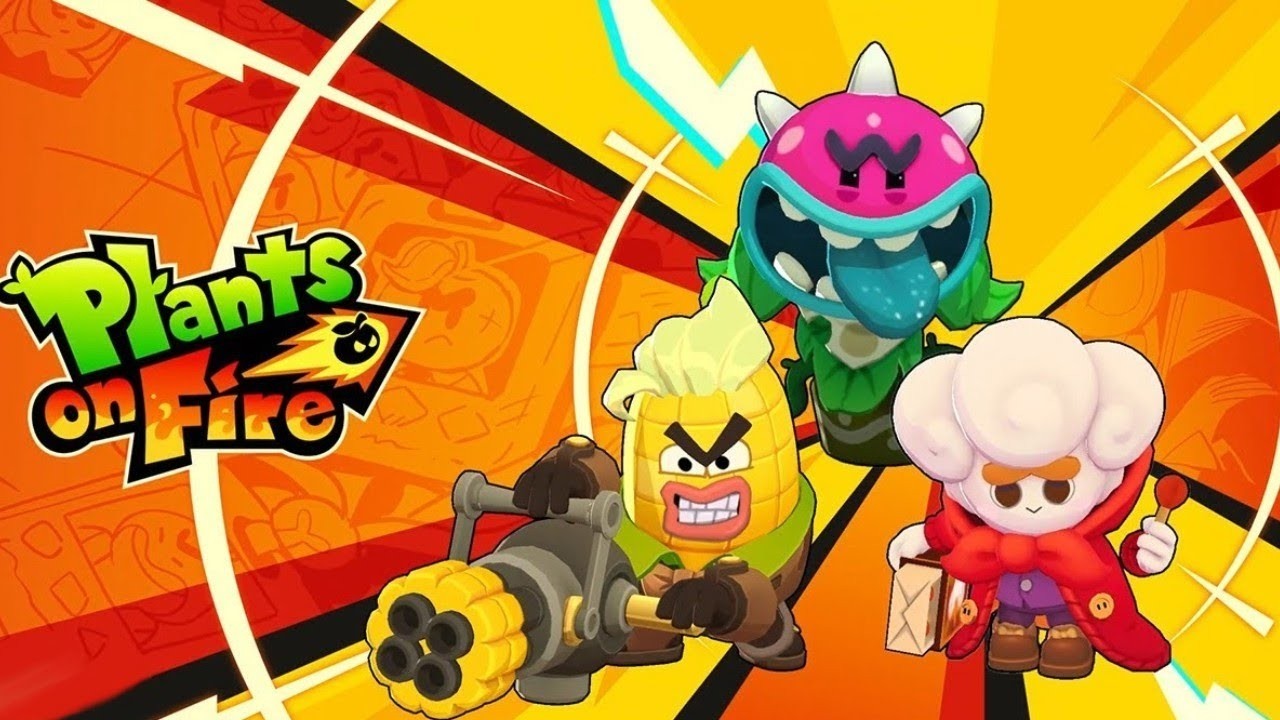
To dominate the leaderboards in Plants on Fire, you must master the delicate balance between aggressive board expansion and tactical grid management. Success in this game isn't just about having the highest-level units; it’s about how those units interact with the environment and the incoming wave patterns. By prioritizing front-line positioning, mastering the economy of merges, and adapting your board state to real-time threats, you can transform a losing run into a high-scoring victory.
The Foundation of Defensive Positioning
The most common mistake for beginners in Plants on Fire is treating the grid as a static display rather than a dynamic tactical space. Because enemy units move along fixed paths, your defensive output must be front-loaded.
- The Spawn-Point Anchor: Always prioritize placing your highest damage-per-second (DPS) units closest to the enemy spawn points. This maximizes "uptime," allowing your towers to engage targets the moment they enter the grid.
- Staggered Defense: Don't cluster all high-damage units in the back. Create a "stopper" layer at the front—using units with high health or slowing capabilities—to act as a damage sponge, while your glass-cannon units remain safe in the mid-grid, uninterrupted by direct enemy contact.
- Lane Symmetry: Monitor the spawn lanes. If the game sends waves from multiple directions, ensure your high-tier units are positioned to cover multiple paths. A high-level plant is useless if it is trapped on a lane where no enemies are currently spawning.
Strategic Merging: Scaling Power Without Losing Ground
Merging is the core engine of progression in Plants on Fire, but it is also a trap if done incorrectly. The urge to merge every time you see two identical plants can lead to a "board drought," where you have high-level units but not enough total firepower to cover the grid.
The Golden Rules of Merging:
- Avoid Over-Merging: If your board has plenty of open space, prioritize filling those slots before merging. More units on the board mean more individual sources of damage.
- The "Breathing Room" Principle: Only merge when you are running out of grid space or when you have sufficient currency to immediately repopulate the empty tiles created by the merge.
- Tier vs. Quantity: A board of four Tier-2 units often provides more consistent coverage than a single Tier-4 unit. Use merges to upgrade your plants only when you are confident that the combined output of your remaining units can handle the current wave intensity.
Managing Resource Cycles and Unit Economy
Currency management in Plants on Fire is about maintaining a "combat reserve." If you spend every coin the moment it appears, you leave yourself vulnerable to sudden difficulty spikes or "leaker" enemies that slip past your front line.
- The Two-Unit Buffer: Always keep enough currency in your bank to spawn at least two basic units. This acts as an "emergency brake." If an enemy breaks through your front line, you can instantly spawn units in the rear to stall them while your high-tier plants recover.
- Dynamic Rotation: Don't be afraid to sell or sacrifice low-tier, low-utility units if they are blocking a prime spot needed for a high-tier drop. In the late game, board space is your most valuable resource; an idle, weak plant is a wasted slot that could hold a game-changing asset.
Adapting to Wave Intensity and Enemy Density
As you progress through the stages, Plants on Fire introduces "Elite Waves" featuring high-health enemies or swarms that can overwhelm singular defenses.
- Shift to Concentrated Fire: When facing boss-type enemies, stop spreading your resources thin. Relocate your most powerful units to focus exclusively on the lane the boss is occupying.
- Rerolling the Board: If the game’s RNG (random number generator) provides units that don't synergize with your current setup, treat them as "merge fodder." Use them to clear space quickly, hoping for a better drop on the next cycle. This active pruning of your board state is what separates top-tier players from the rest.
- The Mid-Game Pivot: By wave 15–20, your board should be mostly Tier-3 or higher. If you are still relying on a swarm of Tier-1 units, you will eventually hit a "damage wall." Use the mid-game period to aggressively merge toward your primary carry units.
Advanced Tactics: Long-Term Survivability
Long-term success in Plants on Fire requires a shift from reactive play to proactive planning. The most successful defensive setups utilize a "checkboard" pattern, where high-impact units are surrounded by supportive units that provide buffs or debuffs.
Checklist for Stage Completion:
- Symmetry Check: Before every major wave, ensure your board is balanced. Never leave one lane completely undefended.
- Buff Synergy: If your units have passive abilities (e.g., area-of-effect slow or damage amplification), place them at the intersection of lanes to maximize their utility.
- Meta Awareness: As the meta evolves, certain plants may receive buffs or nerfs. Keep an eye on the unit shop and your "collection" tab to see which plants currently provide the best DPS-to-cost ratio. If a specific unit becomes the new standard for high-level play, prioritize upgrading it in your personal progression path.
Why This Strategy Works
The reason this approach works is that it acknowledges the inherent unpredictability of Plants on Fire. By keeping a cash reserve, maintaining a flexible board, and prioritizing front-line engagement, you mitigate the risks of bad RNG. You aren't playing against the game; you are managing the game's systems to ensure that when the difficulty inevitably spikes, your board has the structural integrity to withstand it.
Focus on these pillars—Positioning, Merging, and Resource Management—and you will find that even the most daunting boss waves become manageable. Remember, a defensive line is only as strong as its weakest link; keep your grid balanced, keep your resources ready, and you will secure the win.

Free Plants on Fire Codes
Current active codes and how to redeem them.

Emily Johnson
Emily writes practical mobile strategy guides with a focus on resource planning, base progression, and the early decisions that shape a long-term account.
COMMUNITY
Player Comments
61 players commented on this guide.
The tips are practical and easy to follow.
Good guide for Plants on Fire players. The strategy part was useful.
This saved me time in the early game.
Nice guide. I am checking the other Plants on Fire articles next.