
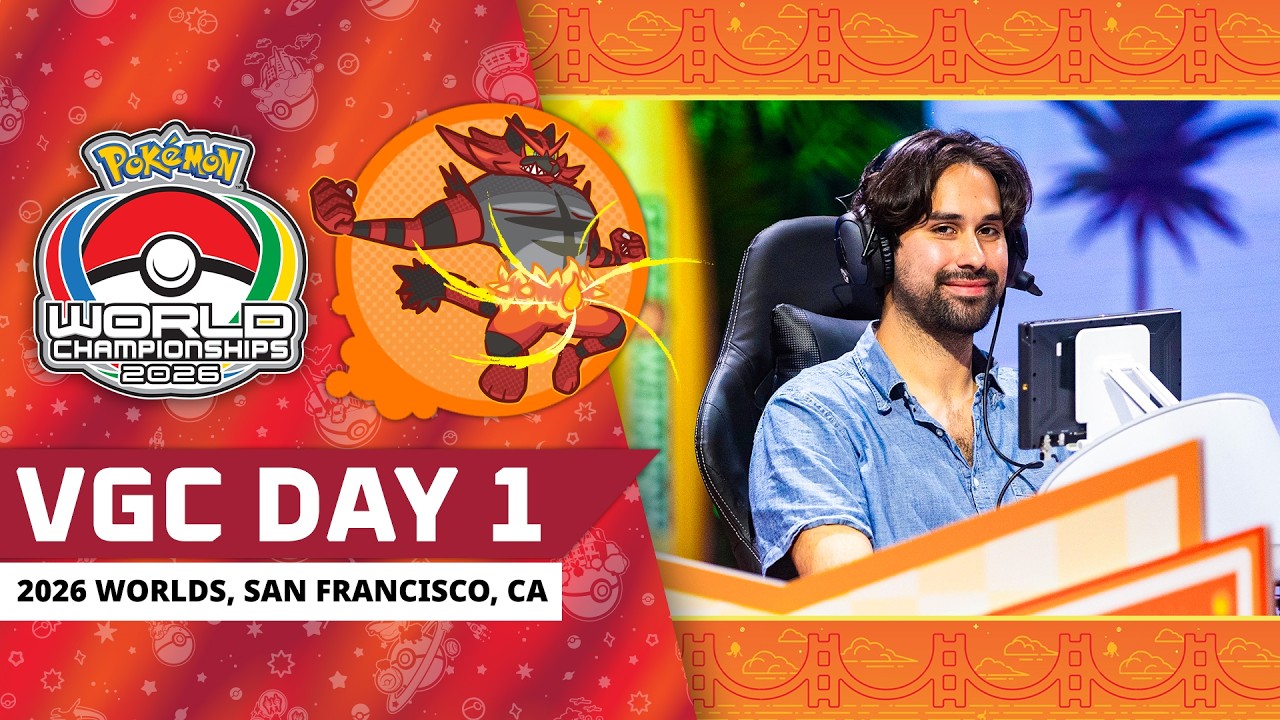
In the high-stakes environment of Pokémon Champions competitive play, victory is rarely decided by raw power alone. Instead, matches are won through the delicate balance of lead selection and board positioning. As seen in the 2026 World Championships, elite trainers distinguish themselves by forcing unfavorable trades, anticipating opponent switches, and maintaining momentum from the first turn to the last. This guide explores the advanced mechanics required to elevate your performance in the Pokémon Champions VGC format.
Prioritizing Strategic Lead Selection
The most critical phase of a Pokémon Champions match occurs before the first move is even made. Professional players at the World Championships prioritize lead selection based on the opponent’s team composition rather than simply defaulting to their own power-heavy favorites. Choosing a lead that pressures the opponent’s defensive core or mitigates early-game status threats is essential for establishing early momentum.
When selecting your starting duo, evaluate the potential for "speed ties" and priority move interactions. If your opponent relies on a specific weather-setting Pokémon or a terrain-controlling support, your lead must be capable of disrupting that setup immediately.
Key factors for lead selection:
- Synergy Check: Does your lead pair share common weaknesses? If both are weak to Ground-type moves, a single Earthquake could cripple your opening.
- Disruption Potential: Can your lead prevent the opponent’s "engine" from starting? (e.g., using Fake Out to stop a setup Pokémon).
- Speed Control: Do you have a way to dictate the speed tier (Tailwind, Trick Room, or Icy Wind) immediately?
- Redirection: If your primary attacker needs a turn to set up, do you have a partner with Follow Me or Rage Powder to absorb incoming pressure?
Players who successfully force a turn-one switch from their opponent gain a significant advantage, as they dictate the pace of the match while the opponent spends their first turn recovering from your initial pressure.
Executing Effective Board Positioning
Positioning in Pokémon Champions is about the synergy between your Pokémon's moves and the current state of the board. During high-stakes competition, the best players utilize defensive switching to preserve key attackers. If a Pokémon is threatened by a super-effective move, swapping it out for a resistance-type teammate is often more valuable than attempting to land a high-damage hit that may result in an immediate knockout.
Effective positioning also involves managing your field effects. If you are playing an aggressive, speed-oriented team, your positioning must focus on maintaining offensive pressure while avoiding "dead turns" where your Pokémon are stationary targets. Always anticipate the opponent’s target choice; if you suspect a double-target on one of your Pokémon, repositioning through a switch can turn a potential knockout into a wasted turn for your opponent.
Identifying and Neutralizing Core Threats
Every competitive team has a "win condition"—a core threat that the entire strategy revolves around. At the World Championships, top players identify these threats early. Whether it is a sweeper that relies on stat boosts or a bulky support that enables the rest of the team, neutralizing these targets is often the difference between winning and losing.
Focusing your attacks on the opponent’s support Pokémon can effectively disable their entire engine. If you can eliminate the Pokémon providing defensive utility, the rest of their team becomes vulnerable to your heavy hitters.
Strategic Tip: Be wary of redirection moves like Follow Me or Rage Powder, which can force your attacks away from your intended target. Always plan your turn with a secondary option in case your primary target is shielded by these tactics. If you know an opponent has a redirector, consider moves that hit both targets simultaneously, such as Spread Moves (e.g., Heat Wave or Dazzling Gleam), to bypass the redirection effect.
Managing Momentum through Resource Trading
Resource management in Pokémon Champions involves knowing when to sacrifice a Pokémon to secure a tactical advantage. A common mistake is trying to keep all six Pokémon healthy at the cost of board control. Instead, consider if sacrificing a weakened, low-HP Pokémon allows you to bring in a fresh attacker with a favorable matchup. This "trade" is a fundamental concept used by pros to shift the momentum of the game.
When trading, always look for the "knockout threshold." If you can guarantee a knockout on an opponent’s threat, it is often worth the exchange. However, avoid trading if it leaves you in a position where your remaining Pokémon are easily countered by the opponent’s reserves. Mastering this trade-off requires understanding your team’s stamina and knowing which Pokémon are expendable in specific matchups versus which ones are vital to closing the game.
Adapting to Mid-Game Complexity
As the match progresses, the board state becomes increasingly cluttered with hazards, terrain, and weather effects. The mid-game is where players must pivot their strategy based on the information gathered during the opening turns. If your initial plan is disrupted by an opponent’s unexpected coverage move, you must be prepared to adjust your win condition immediately.
The Role of Terastallization
In modern competitive Pokémon Champions play, the Tera type can completely flip a matchup. If an opponent has not used their Tera yet, assume they are holding it to survive a crucial hit or to boost a surprise move.
- Defensive Tera: Use this to remove a weakness or gain a resistance to survive an expected super-effective hit.
- Offensive Tera: Use this to guarantee a knockout on a bulkier threat that would otherwise survive your attack.
Keeping your own Tera usage in reserve allows you to respond to their shift, effectively resetting the neutral game and creating a new opening for your team to dominate the final turns.
Common Mistakes to Avoid
Even experienced players fall into patterns that can be exploited. To maintain a competitive edge:
- Over-predicting: Don't assume your opponent will always make the "optimal" play. Sometimes the best move is the simplest one.
- Ignoring the Timer: Pokémon Champions matches have a strict clock. Don't waste your limited turn time over-analyzing a situation; trust your preparation.
- Tunnel Vision: Focus on the entire board, not just your active Pokémon. A common mistake is forgetting about the opponent's back-line potential when deciding on a switch.
By mastering these elements—from the initial lead to the final Terastallization—you can control the flow of any Pokémon Champions match and secure your path to victory. Practice these concepts in casual modes first, then transition them to the high-pressure environment of the ranked ladder.

Free Pokémon Champions Codes
Current active codes and how to redeem them.

James Brown
James focuses on Android gaming on PC, emulator setup, controls, performance tuning, and practical troubleshooting for longer play sessions.
COMMUNITY
Player Comments
36 players commented on this guide.
This guide answered the exact question I had.
Good guide for Pokémon Champions players. The strategy part was useful.
I wish I had read this before upgrading the wrong thing.
This saved me time in the early game.