
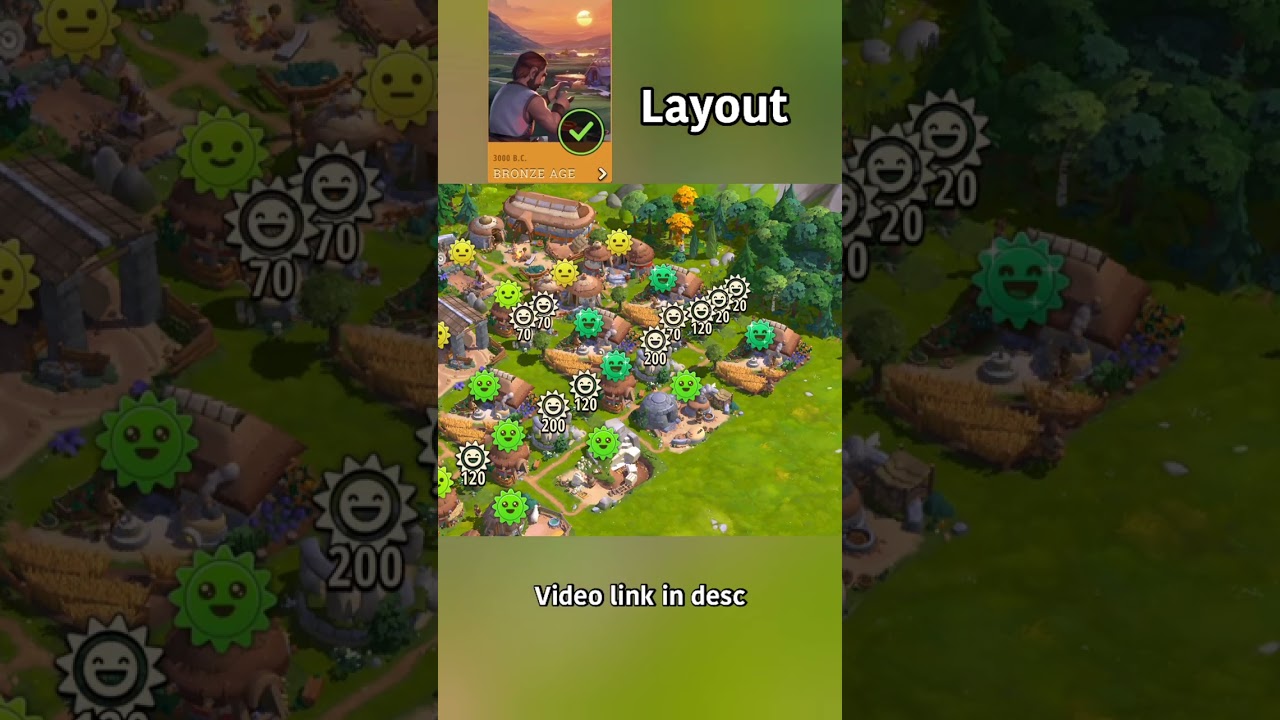
To maximize food and goods production during the Bronze Age in Rise of Cultures: Kingdom game, arrange your Rural Farms and goods workshops in tight clusters centered on roadless cultural sites, serviced by a single exterior access road. Cultural buildings emit a happiness aura that raises resource yields to enthusiastic levels without requiring a direct road connection to the Town Hall. Keeping cultural sites unpaved and embedded within production blocks preserves valuable land tiles and concentrates happiness multipliers where they accelerate progression most.
Roadless Cultural Sites and Happiness Distribution
Every productive building—including Rural Farms, goods workshops, and homes—must touch a road connected to your Town Hall to function. Cultural sites are the exception: they project happiness in all directions without needing street access.
Connecting a cultural monument to a road wastes street tiles and fragments building space. Instead, place cultural sites in the interior core of your production district. Because Bronze Age progression bottlenecks on food for military recruitment and era-specific goods for research, direct all available happiness bonuses to farms and workshops rather than spreading them across residential zones.
Designing the Combined Food and Goods Hub
Rural Farms and goods workshops (such as those producing Bronze Bracelets, Alabaster carvings, and Woolen Fabric) require significant space and multiple workers. Combining them into an integrated block ensures that high-value crafting cycles benefit continuously from elevated happiness.
To construct an efficient production block:
- Seat the cultural monuments in the center: Position cultural sites side by side in an unpaved inner row or core.
- Border the core with production structures: Place Rural Farms and goods workshops so their inner edges sit directly inside the cultural happiness radius.
- Run a single perimeter road: Lay a transit road along the outer edges of the farms and workshops to provide the mandatory connection to the Town Hall.
| Layout Factor | Standard Dispersed Setup | Optimized Centralized Hub |
|---|---|---|
| Road Usage | Encircles individual buildings | Single exterior line servicing multiple structures |
| Cultural Placement | Placed along street fronts | Embedded centrally with zero road connections |
| Happiness Coverage | Shared across homes and open space | Focused on Rural Farms and Goods Workshops |
| Space Efficiency | Fragmented by unnecessary intersections | Compact rectangular grid with minimal dead tiles |
Managing Residential Homes and Workers
Houses provide the coins and labor required to staff Rural Farms and workshops, but coins are rarely the limiting resource in the Bronze Age. Placing homes inside cultural happiness zones wastes limited aura capacity on low-priority coin generation.
- Isolate housing on the perimeter: Arrange Small Homes in straight rows along separate side streets connected to the Town Hall.
- Maintain an unassigned worker buffer: Keep a small pool of free workers available before rearranging your city. Rebuilding or relocating active facilities can interrupt production queues if all citizens are assigned.
Road Economy and Expansion Rules
Grid space is strictly limited prior to purchasing territory expansions on the campaign map. Reducing road usage directly increases the space available for workshops and farms.
- Avoid dead ends and parallel streets: Build straight corridors that service buildings on both sides rather than running duplicate streets.
- Keep edges flush: Align large structures against the outer borders of your unlocked territory to prevent narrow, unusable gaps.
- Relocate as a single unit: When new territory expands your settlement boundaries, move the entire core production block outward together to preserve its internal happiness alignment.

Free Rise of Cultures: Kingdom game Codes
Current active codes and how to redeem them.

Emily Johnson
Emily writes practical mobile strategy guides with a focus on resource planning, base progression, and the early decisions that shape a long-term account.
COMMUNITY
Player Comments
37 players commented on this guide.
Good guide for Rise of Cultures: Kingdom game players. The strategy part was useful.
This helped me understand strategy much better.
This saved me time in the early game.
The tips are practical and easy to follow.