
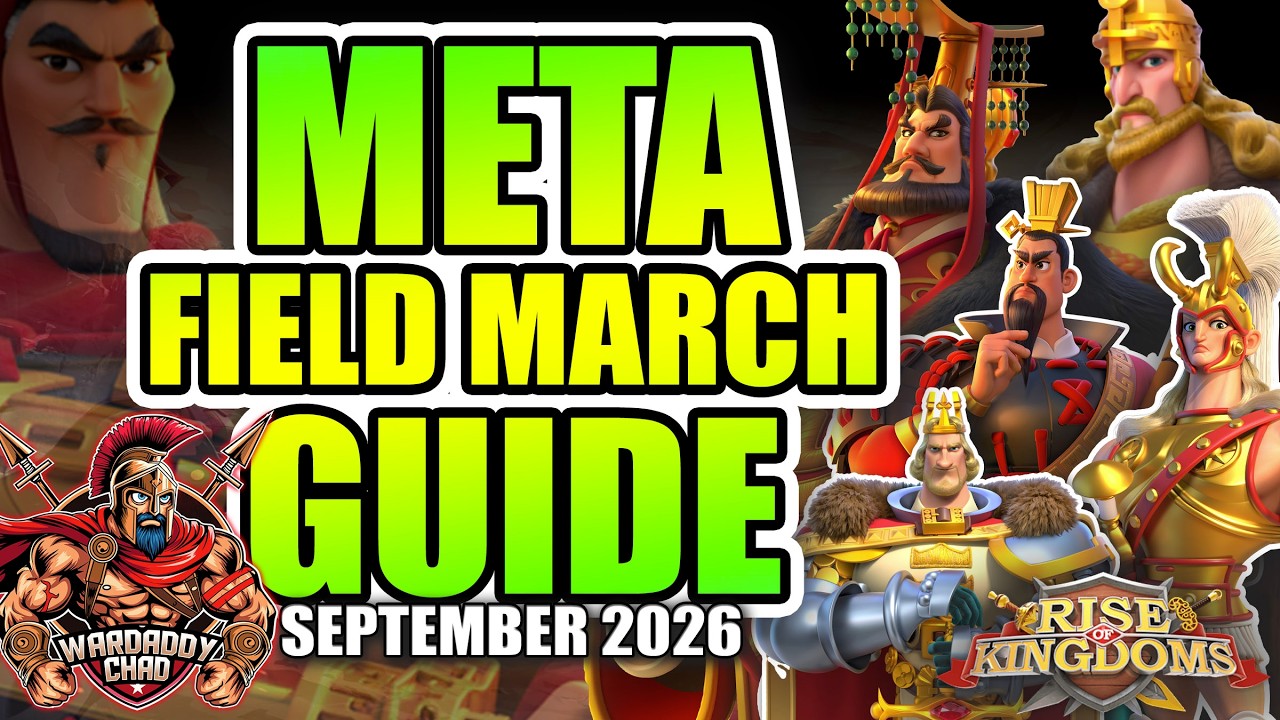
To dominate the open field in Rise of Kingdoms, you must move beyond generic pairings and adopt specialized commander lineups designed for the current meta. Success in large-scale engagements during Kingdom vs. Kingdom (KvK) events relies on selecting commanders that offer high utility, consistent damage output, and synergy within a specific troop type. By leveraging top-tier commander combinations and understanding the tactical strengths of your marches, you can significantly increase your kill point efficiency and battlefield impact.
The Cavalry Meta: Mobility and Burst Pressure
Cavalry remains the primary force for high-mobility field combat in Rise of Kingdoms. The current meta prioritizes commanders that offer a balance of burst damage, speed, and sustain. Commanders like Huo Qubing, William Marshal, and Ivan IV are essential for creating high-impact marches that can dictate the flow of battle.
When building cavalry, your objective is to maintain constant pressure. You should aim to pair commanders whose skill cycles align to avoid "overlapping" damage, which wastes potential kills.
- The "Tanky" Cav Approach: If you are running multiple marches, designate one as a "brawler" cavalry unit—using commanders with defense or health buffs—to absorb initial enemy aggression.
- The Nuking Role: Use your secondary or tertiary cavalry marches specifically for sniping high-value, squishy targets (like enemy archers) and then retreating before being swarmed.
- Strategic Tip: Always monitor the Evergreen InfoCat Tier List, as new commander releases frequently shift the optimal "best-in-slot" pairings for cavalry.
Archer March Synergy: Precision and Perimeter Combat
Archer marches are the premier choice for players looking to trade efficiently from the backline. Because archers are inherently fragile, your strategy must prioritize positioning and the use of commanders who provide AoE (Area of Effect) damage while maintaining maximum distance.
Effective archer play requires constant awareness of the battlefield. If your archer march is caught in the middle of a swarm, its effectiveness drops significantly.
- Perimeter Positioning: Use your archer marches to target high-value enemy units from the edge of the conflict. This allows you to pick off stragglers or damage clumps of enemies without drawing direct aggression from the enemy’s frontline infantry.
- The Skill Rotation: Prioritize pairings that maximize defense and health buffs, as these stats are vital for keeping your march alive long enough to utilize their full skill rotation.
- Positioning: Never lead the charge with archers. Always ensure your infantry or "tanky" cavalry marches are positioned between your archers and the enemy frontline.
Infantry Durability: The Backbone of the Frontline
Infantry marches serve as the anchor of any Rise of Kingdoms field engagement. Their primary role is to act as a damage sponge and provide crowd control (CC) to disrupt enemy formations. Commanders like Scipio Prime and Liu Che remain staples because of their ability to trade positively while soaking up significant incoming damage.
When building your infantry lineup, prioritize talent trees that boost health, defense, and counter-attack damage.
- "Peeling" Tactics: Use your infantry marches to "peel" (intercept) for your archers. If an enemy cavalry unit tries to dive your backline, moving your infantry to intercept them can trap the enemy and force them to take unfavorable trades.
- Holding the Line: Infantry is designed to sit in the thick of the fight. Avoid moving your infantry too deep into enemy territory unless you have sufficient support from allied marches to prevent being surrounded and focused down.
Understanding March Limitations and Trade-offs
No march is invincible, and understanding the weaknesses of your current roster is crucial for long-term survival. Every commander pairing has a counter, and recognizing these is key to winning skirmishes. If your marches are dying too quickly, it is often a sign of overextending or improper equipment optimization.
When evaluating your marches, consider these strategic trade-offs:
- Speed vs. Durability: High-mobility cavalry marches are excellent for picking off targets but lack the staying power required for prolonged "slug-fests."
- AoE vs. Single-Target: While AoE commanders generate more kill points, they can lack the focused damage needed to finish off a critical target.
- Investment Efficiency: Avoid spreading your legendary commander sculptures too thin. It is significantly better to have two "maxed" marches with top-tier equipment than four mediocre, half-invested marches that will be crushed in modern Rise of Kingdoms field combat.
Advanced Strategies: Analyzing Combat Logs
Adapting to the meta is a continuous process that requires staying updated with balance changes and new commander releases. Before committing precious resources, verify if a pairing aligns with your current goals using resources like the AQHQ Discord community.
The most important habit for an advanced player is analyzing combat logs. If your trades are consistently negative, perform a "march audit":
- Check Equipment: Are your legendary pieces refined? Is your gear specialized for the troop type?
- Review Talent Trees: Does your talent build emphasize survivability over useless stats?
- Evaluate Role: Were you using an Archer march to initiate a fight? (A common mistake that leads to instant troop loss).
By consistently iterating on your march composition based on actual field results, you will become a more effective force in your kingdom’s wars. Remember, in Rise of Kingdoms, the player who controls the engagement—by choosing when to fight and which target to focus—will always outperform the player who simply marches headlong into the fray.

Free Rise of Kingdoms Codes
Current active codes and how to redeem them.

James Brown
James focuses on Android gaming on PC, emulator setup, controls, performance tuning, and practical troubleshooting for longer play sessions.
COMMUNITY
Player Comments
47 players commented on this guide.
This guide answered the exact question I had.
I tried this today and it worked better than my old setup.
I wish I had read this before upgrading the wrong thing.
Can you add more details about strategy in a future update?