
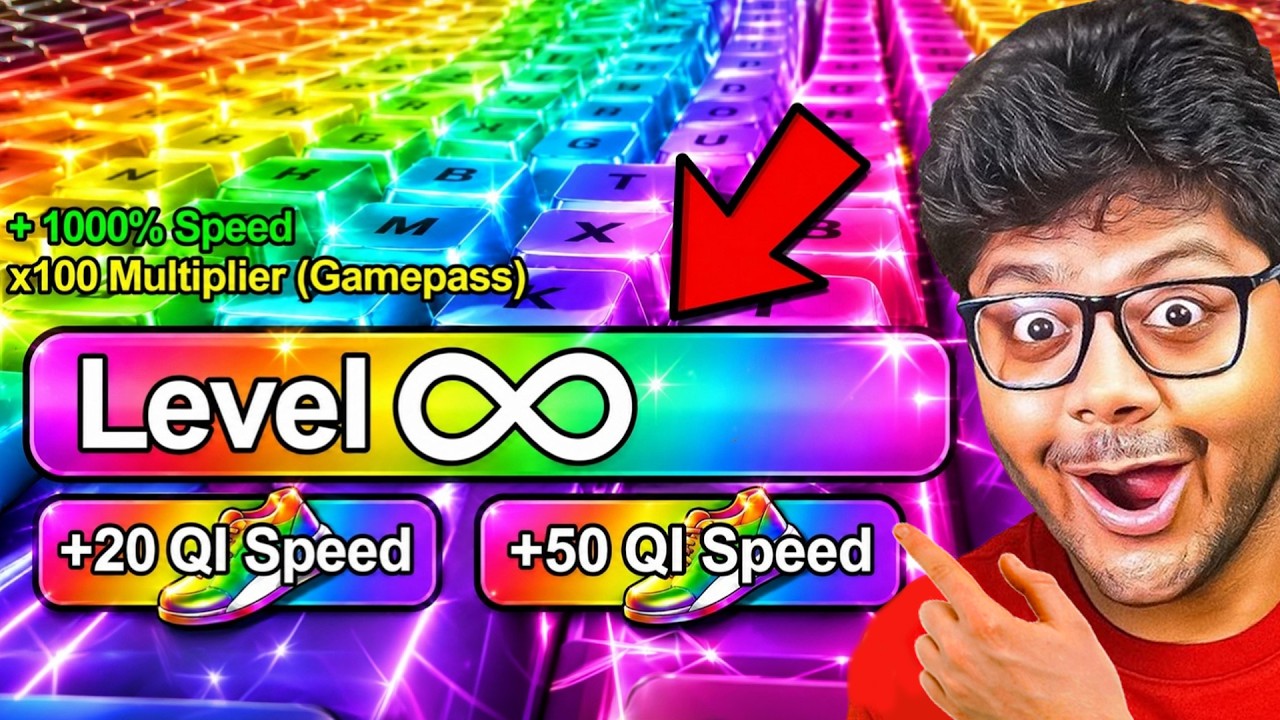
Successfully completing the +1 Keyboard Escape in Roblox requires a disciplined blend of rhythmic platforming and strategic speed management. As you scale the tower of keyboard-themed obstacles, you will find that your character’s movement speed increases, fundamentally changing how you must approach each jump. To reach the end, you must transition from aggressive, momentum-based movement to calculated, center-point landings. This guide provides the expert strategies needed to navigate the vertical layout, handle high-speed physics, and avoid the common pitfalls that send players falling back to their last checkpoint.
The Mechanics of +1 Keyboard Escape Physics
In the +1 Keyboard Escape, the "keyboard" isn't just aesthetic; the physical properties of the keys—their size, gaps, and surface friction—dictate the difficulty of your run. Unlike standard Roblox obbies, this game uses a cumulative speed mechanic. Every time you successfully land a jump or complete a section, your character becomes faster.
While increased speed makes clearing wide gaps easier, it drastically reduces your "stop-and-turn" capability. The secret to success is understanding that you do not need to maintain maximum speed at all times. If you feel like your character is becoming too "floaty" or difficult to control, slow down your input cadence. Land in the center of the key, take a half-second to realign your character, and then initiate the next jump. Treat the keyboard keys as individual landing zones rather than a continuous runway.
Mastering Jump Timing and Trajectory
The most common mistake in +1 Keyboard Escape is "panic jumping," where players react to a platform by tapping the jump button prematurely. Because of the game’s speed scaling, you will often find yourself overshooting your target if you jump too early.
- Edge-Jumping: Aim to jump when your character’s feet are at the absolute edge of the current key. This maximizes your distance and ensures you have the cleanest arc toward the next platform.
- The "Double-Tap" Technique: If you find that your character is skipping off the edge of a key upon landing, tap your jump button twice in quick succession. This can sometimes reset your momentum and "stick" you to the surface more effectively.
- Rhythm Over Rush: Ignore the urge to sprint through sections. The game is designed to reward players who maintain a consistent, rhythmic tempo. If you keep a steady pace, the platforming becomes predictable, even as your speed increases.
Camera Control: The Ultimate Tactical Tool
Your camera is your most valuable navigation tool. If you rely on a default third-person view, you will struggle to gauge the depth of the platforms ahead.
To improve your success rate:
- Zoom Out: Keep your camera fully zoomed out to see the vertical path ahead. Being able to see the next three or four keys allows you to adjust your trajectory mid-air.
- Use Side-Angles for Precision: If you are facing a particularly narrow gap between keys, rotate your camera to a side-view profile. This makes it significantly easier to see the gap distance and prevents you from over-jumping.
- Avoid First-Person: Never use first-person perspective. It removes your ability to see the landing zone beneath your character and makes it impossible to judge the "hang time" required for longer jumps.
Navigating Hazards and Environmental Obstacles
As you ascend, the +1 Keyboard Escape introduces environmental hazards, such as moving keys or disappearing platforms. These sections are tests of patience rather than mechanical skill.
When faced with moving platforms, prioritize the timing of the object over your speed. If a key is moving horizontally, wait for it to reach its closest point to you before jumping. For disappearing platforms, observe the cycle first. Most have a set timer; by watching one full cycle, you can memorize the pattern and jump precisely when the platform appears. Remember, there is no timer in the game—taking five extra seconds to analyze a hazard is better than losing five minutes of progress from a fall.
Strategic Decision Making: When to Slow Down
The most critical skill in higher levels is knowing when to intentionally curb your momentum. In sections with very narrow keys, high speed is your enemy. If you are struggling to land on a small key, try these adjustments:
- The "Stop-and-Reset": If you land on a stable, larger key platform, come to a complete stop. Resetting your character’s momentum helps clear the "floaty" feeling that high speed introduces.
- Pathing Awareness: If a path looks too risky, look around. Many obbies in Roblox include subtle "safe paths" or wider keys that allow you to skip the most difficult jumps. Observe the players ahead of you—if they are all falling at a specific jump, look for an alternative route.
- Center-Mass Targeting: Always aim for the center of the key. Even if your jump is slightly off-target, aiming for the center provides the largest margin for error, preventing you from sliding off the slanted edges of the keys.
Expert Tips for Consistent Runs
To master the +1 Keyboard Escape, you must treat it as a game of muscle memory.
- Checkpoint Awareness: Always check if a jump is worth the risk. If you are near a checkpoint, play conservatively.
- Don’t Follow the Crowd: Sometimes, watching others can lead you into their mistakes. Trust your own timing and keep your eyes on the platform you are landing on, not the player ahead of you.
- Stay Calm: Falling is part of the experience. The respawn system is designed to be instant. Use the reset as an opportunity to analyze why you missed the jump—did you jump too early? Was your camera angle off? Use that information to refine your approach on the second attempt.
By focusing on camera discipline, mastering the art of the center-landing, and keeping a steady rhythm despite your increasing speed, you will find that the +1 Keyboard Escape becomes much more manageable. Patience and practice are the only two requirements to reaching the final, crowning keyboard key.

Free Roblox Codes
Current active codes and how to redeem them.

Michael Smith
Michael covers live-service games, events, reward systems, and efficient daily routines, turning frequent updates into clear actions for players.
COMMUNITY
Player Comments
105 players commented on this guide.
This saved me time in the early game.
This guide answered the exact question I had.
I wish I had read this before upgrading the wrong thing.
I tried this today and it worked better than my old setup.