
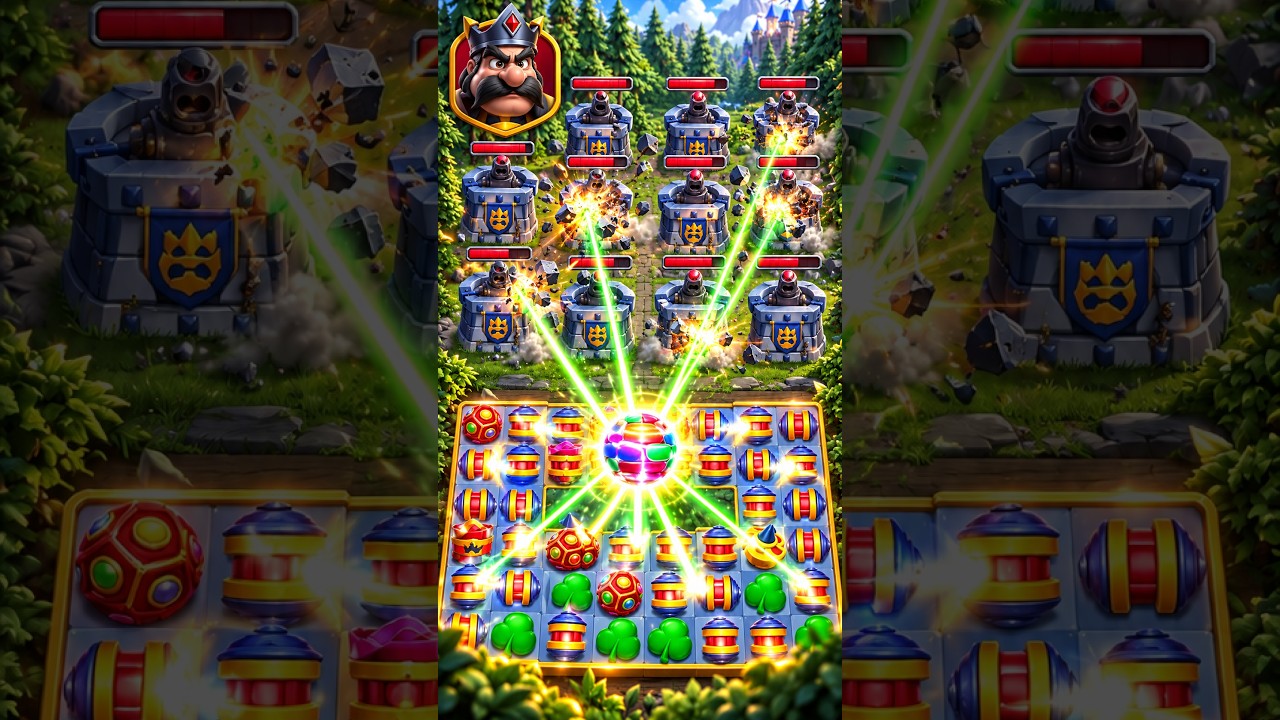
To beat Level 301 in Royal Kingdom without spending starter boosters, clear the central pumpkins first using low-board matches, then craft and combine in-level explosives to wipe out the remaining obstacles. Dismantling the center unlocks choked tile streams, giving you the board space needed to form natural Rockets and TNT barrels before your move count runs out.
Pumpkin Blocker Mechanics
Pumpkins are durable obstacles that block tile movement and restrict board space until broken.
- Durability: Each pumpkin requires three hits from adjacent matches or power-up blasts to disappear completely. The first impact chips the outer rind, the second creates visible cracks, and the third destroys the blocker.
- Tile Flow: Normal puzzle pieces cannot drop through or shift past pumpkins. When pumpkins sit beneath top spawn points, incoming pieces are constricted into narrow lanes.
- Space Restriction: Dense clusters prevent you from creating four-tile or five-tile combinations until you clear an open staging area.
Opening Turn Checklist
Targeting matches adjacent to or beneath the central pumpkins during your opening turns restores tile flow and generates passive cascades.
- Scan the Bottom Center: Find the lowest available three-piece match touching the central pumpkin cluster. Clearing pieces from the bottom forces tiles above to drop, which often triggers free secondary matches against adjacent pumpkins.
- Prioritize Vertical Matches: A vertical match against a pumpkin drops fresh pieces directly down its face, increasing your chances of an immediate follow-up match.
- Ignore Non-Productive Side Moves: Skip edge matches that neither contact a pumpkin nor create a power-up.
- Open the Core Grid: Focus strictly on destroying two or three central pumpkins to allow tiles to refill both halves of the board evenly.
In-Level Booster Combinations
Because you are playing without pre-selected starter boosters, relying only on basic three-tile matches consumes too many moves. You must form power-ups naturally by matching four tiles in a row for Rockets, L- or T-shapes for TNT barrels, and five in a row for Light Balls.
Detonating single boosters chips away at obstacles slowly. Sliding two adjacent power-ups together clears wide swaths of the board at once:
| Combination | Recipe | Blast Area | Best Use on Level 301 |
|---|---|---|---|
| Rocket + TNT | 4-in-a-row + L/T shape | 3 full rows and 3 full columns | Wiping out dense central clusters |
| TNT + TNT | Two L/T shapes | 5x5 square grid | Stripping multiple layers from grouped pumpkins |
| Rocket + Rocket | Two 4-in-a-row lines | 1 full row and 1 full column | Piercing isolated pumpkins in tight lanes |
| Light Ball + Rocket | 5-in-a-row + 4-in-a-row | Replaces matching colors with Rockets | Damaging pumpkins scattered across the screen |
Clearing Edge and Corner Pumpkins
Late in the stage, the center board is usually clear while damaged pumpkins remain stranded along the outer edges and corners. Outer columns receive fewer naturally falling tiles, making manual three-tile matches difficult and costly to assemble.
Instead of burning turns trying to line up normal pieces on the perimeter, use the spacious center to build directional Rockets. A horizontal Rocket aligned with a stranded pumpkin destroys it across the board in a single move. Similarly, pairing a Propeller with a TNT barrel automatically flies heavy explosive damage directly to remaining perimeter blockers.
Critical Mistakes to Avoid
- Detonating Single Power-Ups Early: Activating an isolated Rocket or TNT barrel removes only one layer from a few targets. Whenever possible, spend a turn maneuvering a second booster next to it to multiply the blast area.
- Playing from the Top: Making matches near the top of the board shifts pieces without affecting the lower layout, often ruining setups you are building below. Always verify and execute your lower-board moves first.

Free Royal Kingdom Codes
Current active codes and how to redeem them.

Emily Johnson
Emily writes practical mobile strategy guides with a focus on resource planning, base progression, and the early decisions that shape a long-term account.
COMMUNITY
Player Comments
120 players commented on this guide.
The explanation is clear, especially for beginners.
The tips are practical and easy to follow.
This guide answered the exact question I had.
Good guide for Royal Kingdom players. The strategy part was useful.