
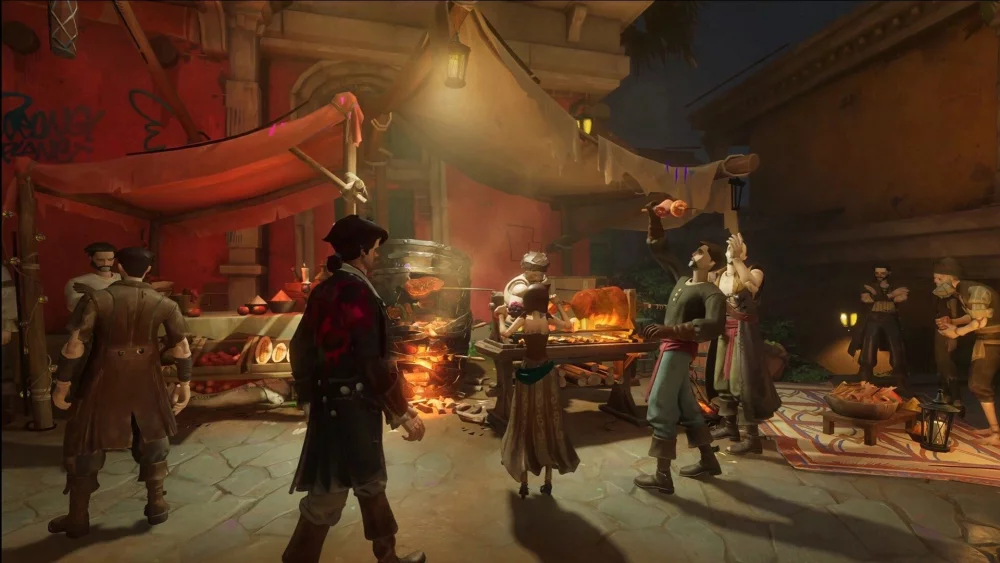
Success in Sea of Remnants is rarely determined by raw gear power alone; it is dictated by your ability to manage complex combat systems under pressure. To excel in high-level expeditions, you must transition from auto-combat reliance to a manual, tactical approach that emphasizes ability synchronization, environmental awareness, and precise hero positioning. This guide breaks down the core mechanics required to dominate the battlefield and maximize your efficiency in Sea of Remnants.
Mastering Hero Ability Synergies for Maximum DPS
The most effective way to clear zones in Sea of Remnants is to move away from isolated ability triggers and toward coordinated ability chains. Every hero in your roster possesses unique status-effect interactions—such as stuns, armor breaks, or elemental debuffs—that can drastically amplify your total damage output.
To maximize your DPS, focus on "Setup-Execution" loops. Use a crowd-control (CC) hero to apply a "Stun" or "Root" debuff first. This forces enemies to remain stationary, ensuring that your heavy-hitting, long-winded ultimate abilities land their full damage potential.
Expert Tip: When building your team, look for "Synergy Pairs." A common high-efficiency pairing involves a Support hero who can pull enemies into a single cluster, followed immediately by a Damage hero with high Area-of-Effect (AoE) scaling. Upgrading the skill levels of these pairs provides a multiplicative damage increase that far outclasses leveling individual hero stats during the early and mid-game.
Manipulating Environmental Hazards for Tactical Advantage
Sea of Remnants features dynamic environments that function as a force multiplier. Ignoring these hazards is a mistake that often forces players to rely on brute force. Instead, view the battlefield as a tactical board where you can lure aggressive AI into traps.
- Environmental Triggers: Many maps contain explosive barrels, electrified water patches, or unstable structures. Position your tankier heroes—those with high defensive stats or "Taunt" abilities—near these hazards to bait aggressive melee factions into walking directly into them.
- Chokepoint Management: Use the game’s terrain to your advantage by pulling enemies into narrow corridors. This forces swarming units to bunch up, making them perfect targets for your AoE skills and environmental traps.
- Pathing Awareness: Observe how enemy AI moves. Factions with "Charge" abilities will always take the shortest path to your backline. By placing a hazard between their spawn point and your support units, you can effectively neutralize their charge before they even make contact.
Managing Cooldowns and Resource Windows
A common pitfall for new players is "cooldown dumping," where all abilities are fired at the start of a fight. This leads to a "dead zone" where your team is left vulnerable, utilizing only basic attacks while the enemy regains momentum.
To maintain constant pressure, adopt a staggered rotation strategy:
- Staggered Rotation: Use low-cost, low-cooldown abilities to sustain steady damage, saving your high-impact ultimates for "Vulnerability Windows."
- Vulnerability Windows: Wait for an enemy boss to finish a heavy attack animation or for their shield bar to break. Once they enter their stunned or weakened state, unleash your primary burst damage.
- End-of-Battle Conservation: If a combat encounter is clearly won, cease using high-cost skills. Carrying full energy bars into the next wave is the difference between a smooth transition and getting overwhelmed by a surprise ambush.
Adapting Tactics for Specific Enemy Factions
Sea of Remnants features diverse factions that require distinct tactical responses. Using a "one-size-fits-all" strategy will result in unnecessary deaths. Tailor your approach based on the archetype you are facing:
- Armored Factions: These units have high damage resistance. Swap in heroes with "Defense Shred" or "Armor Piercing" passives. If you don't have these, focus on applying "Bleed" or "Burn" damage-over-time (DoT) effects, which often ignore flat armor values.
- Swarm Factions: These enemies rely on numbers. Prioritize heroes with "Life-Steal" or "On-Kill" reset abilities. The goal here is to chain kills to keep your team at full health while preventing the swarm from surrounding your backline.
- Ranged Suppressors: If the enemy team has long-range snipers, do not wait for them to whittle you down. Use high-mobility heroes to "dive" the backline, forcing the ranged units to engage in melee combat, where they are typically much weaker.
Tactical Positioning: The Art of the Peel
Positioning is the final pillar of combat strategy. Protecting your backline—your healers and high-DPS glass cannons—is essential for long-term survival in Sea of Remnants dungeons.
- Maximum Effective Range: Always position your support and ranged units at the absolute limit of their ability range. This creates a "buffer zone" that makes it harder for enemy assassins to reach them.
- The Peel Technique: When a high-mobility enemy targets your healer, do not just move the healer away. Use a "Peel" ability—typically a knockback, slow, or stun—from a secondary hero to create space.
- Formation Discipline: Resist the urge to let your heroes scatter across the screen. By keeping your party in a tight, disciplined formation, you ensure that your healer’s area-of-effect buffs cover every member of your team simultaneously, making resource management significantly easier.
Common Strategic Mistakes to Avoid
Even experienced players often fall into these repetitive traps. Correcting these errors will immediately improve your success rate:
- Ignoring the Shield Bar: Many bosses have two health pools: a shield and a core health bar. Never waste your ultimate while the shield is active, as it will often mitigate the damage significantly.
- Over-reliance on Auto-Combat: While auto-combat is convenient for farming, it is inefficient for progression. The AI often misses the timing on environmental triggers and wastes ultimates on nearly dead enemies.
- Neglecting Hero Types: Sea of Remnants utilizes a specific combat hierarchy. Ensure your team composition includes at least one "Tank" to absorb focus fire, one "Support" for sustainability, and one "Crowd Control" unit to dictate the flow of the battle.
By mastering these fundamental combat pillars, you will find that even the most difficult encounters in Sea of Remnants become manageable, allowing you to push further into the end-game with confidence.

Free Sea of Remnants Codes
Current active codes and how to redeem them.

Michael Smith
Michael covers live-service games, events, reward systems, and efficient daily routines, turning frequent updates into clear actions for players.
COMMUNITY
Player Comments
78 players commented on this guide.
Good guide for Sea of Remnants players. The heroes part was useful.
The explanation is clear, especially for beginners.
The tips are practical and easy to follow.
I tried this today and it worked better than my old setup.