
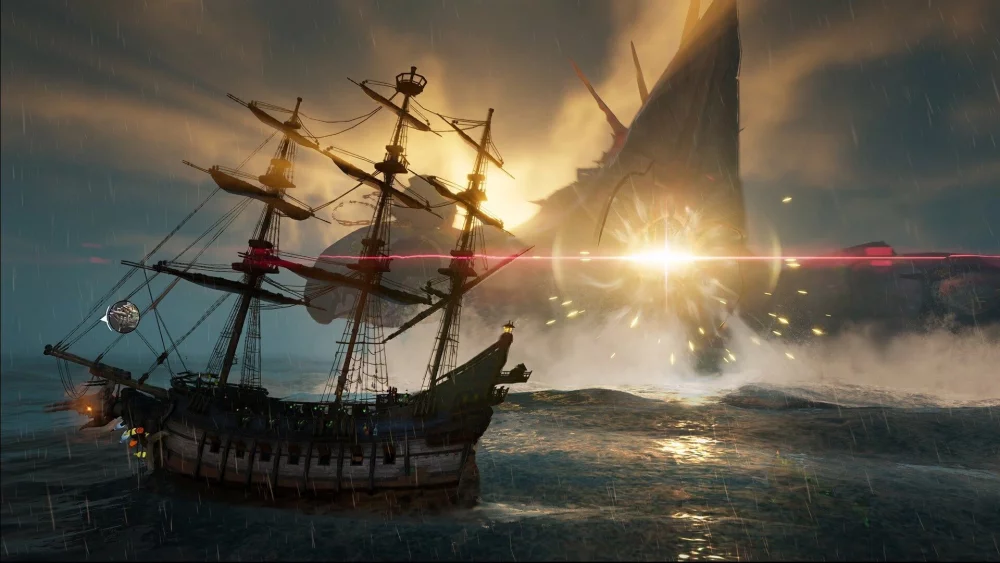
In Sea of Remnants, Gorilla-type enemies represent one of the most significant hurdles for players mastering team composition. These units are designed as "stat-check" encounters: they possess high health pools, aggressive pathing, and the ability to close gaps rapidly to punish passive play. If you allow a Gorilla-type enemy to dictate the pace of combat, your backline support characters—such as Gale—will quickly become overwhelmed.
Defeating these enemies requires a shift away from reactive play and toward proactive, turn-based resource management. By focusing on crowd control, exploiting recovery frames, and mastering the turn order queue, you can neutralize these threats before they snowball your defensive resources.
The Mechanics of Gorilla-Type Aggression
Gorilla-type enemies in Sea of Remnants operate on a predictable but punishing loop. They typically utilize a "Charging" phase that telegraphs their intent to close distance, followed by a high-damage melee slam that often applies a "Stagger" or "Armor Break" debuff to your units.
Understanding their mechanics is the first step to survival:
- Gap Closing: They prioritize the closest target if no backline units are exposed, but they possess "Target Switching" AI that will seek out your lowest-HP support unit if an opening exists.
- Momentum Buffs: Every successful hit they land often grants them a temporary damage buff. If you let them chain hits, their damage output scales exponentially.
- Resistance Nodes: These enemies often have innate physical resistance that makes raw damage inefficient. You must use defense-shredding abilities to bypass their damage reduction.
Tactical Target Prioritization
The biggest mistake players make when facing Gorilla-type enemies is ignoring them in favor of "easier" targets. In Sea of Remnants, an unchecked Gorilla-type unit is a ticking clock.
1. Isolate and Neutralize
Use displacement skills—such as knockbacks or gravity wells—to push these enemies into unfavorable terrain. If a map has narrow corridors or chokepoints, force the Gorilla-type unit to navigate these. This consumes their movement points, effectively granting you an extra turn to cycle your cooldowns or reposition your squishier characters.
2. Turn Order Manipulation
Always monitor the turn order bar at the top of the UI. If a Gorilla-type enemy is slated to move within the next two turns, do not commit your primary damage dealers to an offensive rotation that leaves them exposed. Instead, use this window to apply "Slow" or "Root" status effects. In Sea of Remnants, crowd control is not just a utility; it is your primary defensive layer.
Maximizing Burst Windows and Cooldown Efficiency
Gorilla-type enemies are most vulnerable immediately after their heavy attacks. When a unit performs a massive slam, they enter a "Recovery Frame." During this state, their evasion stats drop significantly.
To exploit these windows, adopt the following rotation strategy:
- Phase 1: Debuff Initiation. Before the enemy attacks, apply a defense-shredding debuff. Do not wait for the "vulnerable" window to apply these; you want the shred active the moment your DPS units take their turn.
- Phase 2: Stagger Application. If your team includes characters capable of interrupting animations, save these abilities specifically for when the Gorilla-type enemy is "charging." An interruption during a charge often forces the enemy into a "Dazed" state, skipping their turn entirely.
- Phase 3: The Execution. Unleash your ultimate abilities only after the defense-shred has landed and the enemy has entered their recovery animation.
Leveraging Support Characters: The Gale Strategy
Support characters like Gale are essential for maintaining your team's integrity against high-aggression foes. Gale’s kit is specifically tuned for damage mitigation and sustain, making her the perfect counter-battery for Gorilla-type units.
- Shielding for Impact: Use Gale’s shield abilities just before the enemy’s turn begins if you suspect they are within range of your backline.
- Heal-Over-Time (HoT) Management: Do not wait for your characters to be at low health to heal. Because Gorilla-type enemies hit so hard, a character at 50% HP is often one hit away from being downed. Use Gale’s HoT effects to keep your team topped off continuously.
- Synergy: If you have a character that can apply a "Taunt," pair them with Gale. The Taunt forces the Gorilla-type unit to target your tank, while Gale keeps that tank standing through the onslaught.
Managing Risks: When to Pivot to Defense
It is tempting to burn all your resources to eliminate a Gorilla-type enemy, but this strategy carries high risk. If your burst rotation fails to kill the target, you will be left with zero energy and no cooldowns, essentially handing the enemy a free turn to wipe your team.
The "Commitment Check" rule: Before you commit your entire team’s resources, ask yourself:
- Is the enemy below 30% HP? If yes, go for the kill.
- Does my team have active shielding? If no, prioritize defense.
- Are there secondary threats? If there are other enemies on the board, prioritize crowd-controlling the Gorilla-type unit rather than chasing the kill.
Common Mistakes to Avoid
- Overextending: Don't move your support characters forward just to get an extra attack in. Keep them at maximum range.
- Ignoring Environmental Buffs: Many maps in Sea of Remnants feature height advantages. Always position your ranged units on high ground. Gorilla-type enemies often have poor vertical mobility, meaning they will have to waste turns climbing, giving you a massive advantage.
- Saving Ultimates for "Too Long": Don't hoard ultimates for a boss fight if you are losing your support characters to a standard Gorilla-type enemy encounter. Use your resources to stay alive in the current skirmish.
Conclusion: Mastering the Flow of Combat
Success against Gorilla-type enemies in Sea of Remnants is defined by your ability to manage the ebb and flow of the battle. By treating these units as tactical puzzles rather than simple HP sponges, you can maintain control of the board. Prioritize their movement, respect their burst windows, and utilize your support characters like Gale to keep your team healthy. With a disciplined approach to cooldown management and target selection, even the most aggressive enemy encounters will become manageable milestones in your journey.

Free Sea of Remnants Codes
Current active codes and how to redeem them.

Emily Johnson
Emily writes practical mobile strategy guides with a focus on resource planning, base progression, and the early decisions that shape a long-term account.
COMMUNITY
Player Comments
156 players commented on this guide.
This helped me understand strategy much better.
The tips are practical and easy to follow.
Can you add more details about strategy in a future update?
Nice guide. I am checking the other Sea of Remnants articles next.