
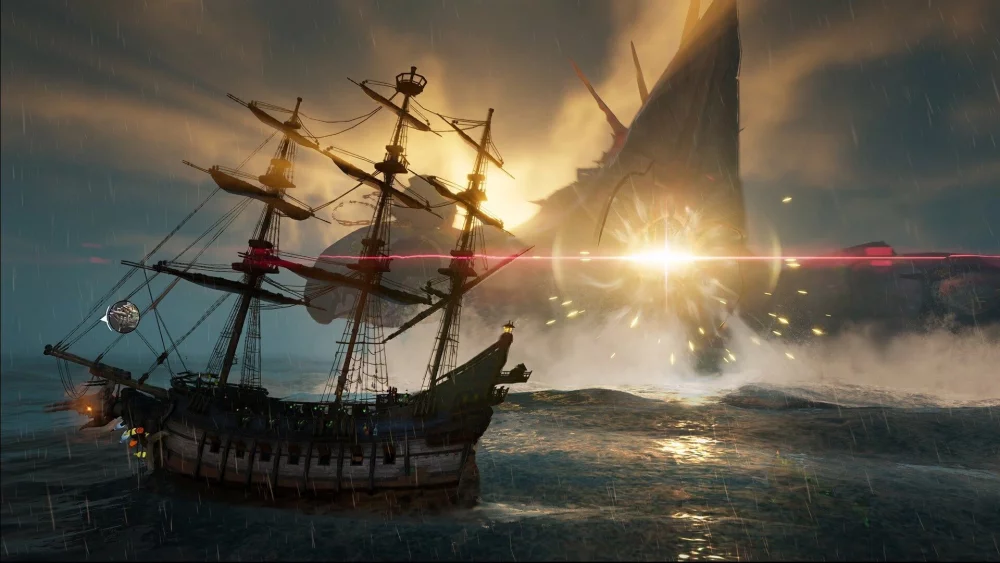
In Sea of Remnants, the key to unlocking the true scope of your adventure lies not in your cannons or your hull integrity, but in the scattered Memory Fragments hidden throughout the archipelago. These items are the primary catalyst for narrative advancement. If you treat them as optional collectibles, you will inevitably hit a progression wall; treat them as the core objective, and you will unlock hidden regions, exclusive dialogue branches, and essential character abilities.
To succeed, you must shift your playstyle from a standard pirate looter to a methodical explorer. This guide details how to locate, manage, and utilize these fragments to master the world of Sea of Remnants.
Locating Memory Fragments: The Art of Verticality
Memory Fragments in Sea of Remnants are rarely found on the main path. They are integrated into the environmental storytelling, often tucked away in areas that require deliberate traversal. Because these items emit a distinct, soft luminescence, your greatest tool is not your weapon, but your observation skills.
Key Strategies for Discovery:
- Prioritize Verticality: Developers have placed many fragments on high-altitude ledges, ruined watchtowers, and collapsed lighthouse interiors. If you see a structural peak, there is a high probability a fragment is waiting there.
- Search "Dead Zones": When you arrive at an island that lacks a primary combat mission, look closer. These "quiet" zones are specifically designed for exploration-based rewards. If the architecture looks like it held historical significance, check the interior corners and behind structural debris.
- Listen for Ambient Cues: Fragments often emit a faint, low-frequency hum when you are within a 10-meter radius. Turn down your music settings slightly to better isolate these auditory cues when exploring dense ruins.
Integrating Lore for Character Growth
Collecting a fragment is only the first step. In Sea of Remnants, these items serve as "narrative keys." Each piece you collect slowly restores the protagonist's identity, which in turn unlocks specific gameplay benefits.
When you return to your hub or a designated "Memory Archivist" NPC, the "Deciphering" process begins. This is not just flavor text. Deciphering fragments:
- Unlocks Skill Tiers: Certain character abilities are locked behind "Memory Gates." You cannot access higher-level navigation or combat skills without the necessary narrative context provided by these fragments.
- Expands Dialogue Options: By restoring your memories, you gain new ways to interact with regional NPCs, often unlocking peaceful solutions to quests that would otherwise require combat.
- Map Expansion: Reaching specific "Memory Sync" thresholds will trigger map updates, revealing previously hidden island clusters that contain high-tier loot.
Inventory Management and the "Narrative Run" Strategy
Inventory management is a frequent point of frustration for players in Sea of Remnants. Because Memory Fragments occupy precious inventory slots, it is vital to optimize your expeditions. We recommend adopting a dual-mode approach to your maritime ventures:
The Two-Run System
- The Salvage Run: Focus entirely on gathering resources, scrap, and trade goods. Ignore narrative markers to maximize your cargo space for profit.
- The Narrative Run: Empty your hold entirely before leaving port. Focus solely on island-hopping to secure Memory Fragments. By dedicating specific runs to narrative progression, you avoid the painful dilemma of dropping rare materials to make space for story items.
Pro-Tip: Always check your "Memory Sync" level in the quest menu before heading out. If you are close to a threshold, prioritize a Narrative Run immediately to unlock the next tier of the game’s world before you fill your hold with low-value loot.
Environmental Storytelling: Reading the Ruins
Sea of Remnants rewards players who treat the environment as a puzzle. Fragments are almost always placed in areas that reflect the history of the location.
- Sunken Decks: If you are diving near a shipwreck, check the captain’s quarters first.
- Abandoned Outposts: Look for areas where the architecture is overgrown. These sites are essentially "time capsules" for developers to hide lore items.
- Camera Mode as a Tool: Use your camera mode to scout ruins from a distance. The zoom function can help you spot the tell-tale glow of a fragment that might be obscured by high-density foliage or shadows.
Strategic Timing: The "Post-Combat Calm"
The most efficient time to hunt for fragments is immediately after clearing an area of hostiles. Combat in Sea of Remnants can be chaotic and destructive, often obscuring the subtle visual cues of the fragments.
Once the threat is neutralized, the environment enters a "calm" state. Use this window to perform a systematic sweep. Without the pressure of enemy AI, you can utilize traversal tools—such as grappling hooks or specific climbing gear—to reach those difficult, high-altitude locations without the risk of being knocked off by environmental damage or enemy fire.
Summary: The Path to Mastery
To truly master Sea of Remnants, you must look past the immediate urge to loot gold and focus on the fragments of your past. By separating your gameplay into distinct "Salvage" and "Narrative" runs, you ensure that you are never hindered by inventory constraints.
Remember, these fragments are the heartbeat of the game. Every time you return to port to decipher your findings, you aren't just reading lore—you are physically expanding the capabilities of your character and the boundaries of your map. Keep your eyes on the ruins, listen for the hum of your lost history, and prioritize your memory over your cargo. The sea is vast, but with a clear understanding of your own past, you will find it much easier to navigate the dangers ahead.

Free Sea of Remnants Codes
Current active codes and how to redeem them.

James Brown
James focuses on Android gaming on PC, emulator setup, controls, performance tuning, and practical troubleshooting for longer play sessions.
COMMUNITY
Player Comments
33 players commented on this guide.
I wish I had read this before upgrading the wrong thing.
Nice guide. I am checking the other Sea of Remnants articles next.
This helped me understand heroes much better.
This guide answered the exact question I had.