
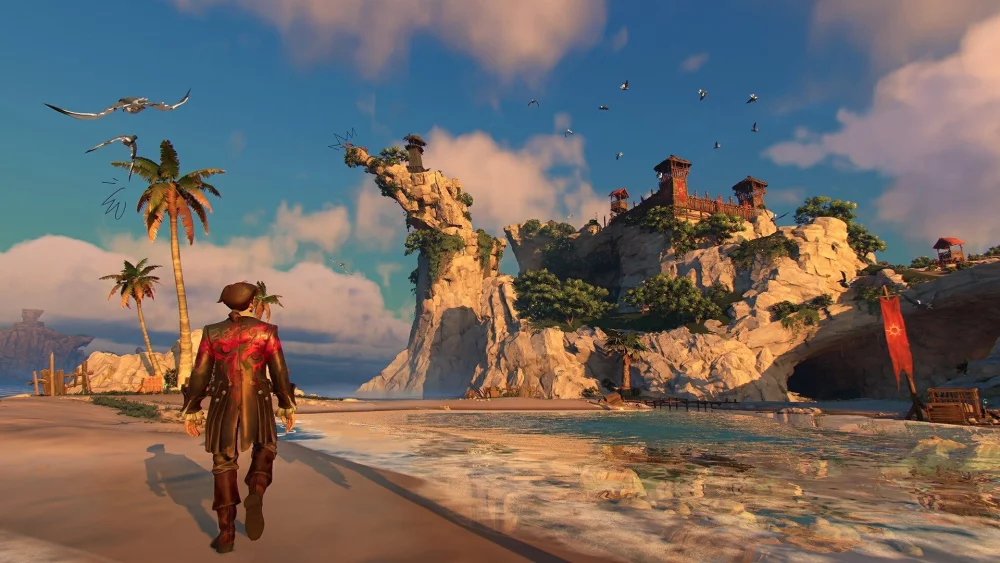
In Sea of Remnants, true progression begins the moment you abandon the safety of the shoreline. While the game provides a stable environment on land, this "ordinary" existence is a trap that limits your potential for high-tier loot, rare materials, and meaningful character advancement. To succeed, you must embrace the volatile, high-stakes nature of the open ocean. By shifting your focus from terrestrial security to maritime mastery, you unlock the core gameplay loop of Sea of Remnants, where the risks of the deep sea are directly proportional to the prestige and wealth you bring back to port.
Breaking the Cycle of Terrestrial Stagnation
The most common mistake new players make in Sea of Remnants is overstaying their welcome in safe zones. The game design explicitly positions the shore as a place of stagnation. If you find yourself lingering in coastal areas, you are effectively capping your own growth.
Advancement requires a paradigm shift: land is for preparation, while the sea is for production. Staying near the coast offers low-risk, low-reward gathering, but the most lucrative resources—the ones required for essential ship upgrades and endgame equipment—are found exclusively in the deep blue. Moving into the open ocean introduces dynamic weather systems, rival factions, and complex exploration events that simply do not trigger near the safety of the docks. To progress, you must treat your ship as your primary base of operations rather than a ferry for short trips.
The Sensory Mechanics: Reading the Ship
Sea of Remnants demands that players pay close attention to the ambient details of their environment. The game uses sensory cues to communicate the health and status of your vessel without relying solely on UI elements. Learning to interpret these cues is a hallmark of an expert captain.
- Sails and Wind: Listen for the rhythmic "flapping" of your sails. A crisp, consistent sound indicates efficient wind capture and optimal speed. If the rhythm falters, you are likely losing speed or navigating poorly against the current.
- Crew Auditory Cues: Pay attention to the background noise on your deck. If you hear the snoring of your crew, it indicates they are resting. However, if the deck is too quiet during a voyage, or if the "rhythm of work" (the sounds of ropes and movement) stops, your crew may be suffering from fatigue or low morale.
- Hull Integrity: Through visual and audio feedback, the game tells you if your ship is taking on water or structural damage. Ignoring these small, sensory-driven warnings is a recipe for disaster when you are miles away from a repair station.
Managing Crew Morale for Long-Haul Expeditions
Your crew is not merely a stat block; they are the living, breathing engine of your ship. In Sea of Remnants, neglecting the social and physical needs of your crew will lead to catastrophic inefficiencies during long voyages.
When morale dips—indicated by decreased activity on deck or silent, sluggish responses to commands—your ship’s performance suffers. Navigational speed drops, and your crew becomes less reactive to incoming hazards. To maintain efficiency:
- Scheduled Respite: When the weather is calm, allow your crew to rest. Do not push for maximum travel time if the crew is nearing exhaustion.
- Resource Allocation: Ensure your food and supply stocks include items that boost morale, not just caloric intake.
- Proactive Monitoring: If you notice a decline in interaction, look for a nearby safe harbor or calm waters to "reset" the crew's status before embarking on a dangerous segment of your journey.
Strategic Trade-offs: The Cost of the Open Sea
Venturing into the open sea is a commitment. Unlike land-based play, where you can often retreat to a tavern or a city guard for protection, the ocean is a "no-safety-net" environment.
The primary trade-off is your logistical tether. Once you leave the coast, you are entirely responsible for:
- Self-Sufficiency: You must carry enough repair materials to fix hull breaches mid-voyage.
- Inventory Logistics: Cargo space is limited. You must decide whether to fill your hold with trade goods, repair materials, or food. Prioritize repair materials for long-distance scouting and trade goods for known, safe, high-value routes.
- The Point of No Return: The game encourages a "forward-momentum" strategy. Committing to a deep-sea route often locks you into a series of challenges. Before you leave, calculate the distance you can cover with your current fuel and food. If the math doesn't support a return trip or a reach to a new port, scale back your ambitions to a coastal loop.
Timing Your Departure: The Professional Approach
In Sea of Remnants, you should never set sail just because you are bored. The most successful captains treat every voyage as a military operation.
The Pre-Departure Checklist:
- Ship Maintenance: Repair your hull to 100% at the dock. Never leave with existing damage; the ocean will exacerbate it.
- Inventory Audit: Cross-reference your supplies with your intended route. Are you prepared for at least one unexpected storm? If not, do not depart.
- Crew Status: Ensure morale is high before leaving. A high-morale crew acts faster during emergencies, which is vital when navigating through debris or hostile encounters.
- Environmental Awareness: Check the game’s weather forecasts if available. Departing during a storm is a high-risk, high-reward strategy that should only be attempted by experienced players with upgraded vessels.
By adhering to these standards, you transform Sea of Remnants from a game of chance into a game of calculated strategy. The rewards of the deep sea—unparalleled loot and the prestige of the high-seas explorer—are waiting for those who have the courage to leave the shore behind and the discipline to manage their ship with the precision of a true captain.

Free Sea of Remnants Codes
Current active codes and how to redeem them.

Emily Johnson
Emily writes practical mobile strategy guides with a focus on resource planning, base progression, and the early decisions that shape a long-term account.
COMMUNITY
Player Comments
78 players commented on this guide.
This saved me time in the early game.
Nice guide. I am checking the other Sea of Remnants articles next.
This guide answered the exact question I had.
Can you add more details about base building in a future update?