
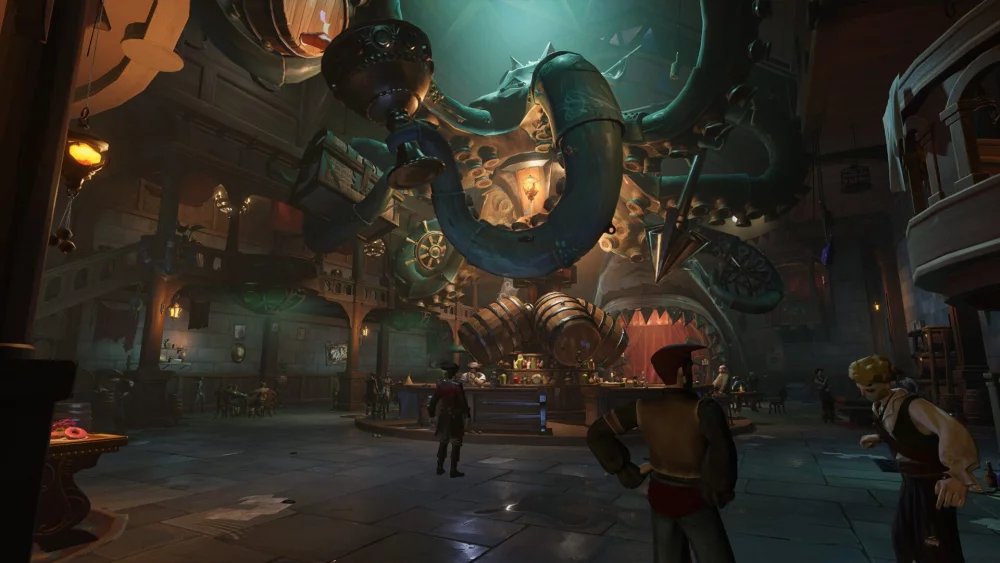
To dominate the vast, unpredictable waters of Sea of Remnants, you must shift your mindset from survival to subjugation. The game rewards players who embrace a high-aggression playstyle, prioritizing mobility, proactive environmental disruption, and the ability to dictate the pace of every skirmish. By leveraging specialized character kits to initiate combat on your own terms, you can bypass standard defensive play and force factions into disadvantageous positions, effectively controlling the flow of the game through sheer tactical momentum.
Mastering Aggressive Combat Initiation
Aggression in Sea of Remnants is not merely about raw damage output; it is a tool for controlling the tempo of an encounter. The game’s combat system is designed to reward players who strike first and strike hard. By utilizing characters with high movement speed and rapid gap-closing abilities—such as dash-strikes or grapple-hooks—you can dictate exactly when and where a fight begins.
This strategy is paramount when facing roaming mobs or guarding factions that rely on ranged defensive structures. When preparing for an encounter, your priority must be identifying key targets, such as healers, flag-bearers, or elite units that provide passive buffs to their cohorts. Using dash-based abilities allows you to bypass front-line defenders, putting you directly on top of these high-priority targets. By disrupting the enemy's formation early, you force them to pivot their focus, creating chaos that opens them up to devastating follow-up strikes from your crew.
Environmental Manipulation and Tactical Chaos
The open-world environments in Sea of Remnants are highly interactive, offering a sandbox of tools for players who choose to play disruptively. Beyond standard weapon combat, you can utilize the terrain to bridge the power gap between you and tougher, higher-level enemies.
- Luring: Pull enemies toward cliff edges or narrow bridges where their movement is restricted. This limits their ability to flank you and creates a "kill zone" where your area-of-effect (AoE) abilities can hit multiple targets simultaneously.
- Explosive Synergies: The seas are littered with volatile cargo and explosive barrels. Use ranged abilities or specialized crew members to trigger these hazards from a distance. Softening up an enemy cluster with an explosion before you commit to close-quarters combat is a staple tactic for efficient clearing.
- Verticality: Sea of Remnants features a sophisticated physics engine where gravity and elevation play a significant role. Always look for the high ground. Attacking from above often grants bonuses to accuracy and knockback potential, making it significantly harder for enemies to retaliate effectively.
Prioritizing Mobility Over Raw Defense
In many RPGs, a shield-heavy, defensive build is the safest path to victory. In Sea of Remnants, a static defense is often a death sentence. The game’s combat system heavily favors characters who stay in motion. Instead of relying on damage reduction, prioritize gear and character traits that boost movement speed, evasion, and dash cooldown reduction.
By staying mobile, you become a difficult target for projectiles and slow-moving heavy units. This mobility-first approach changes your role from a defensive participant to a disruptor. When moving between islands, ensure your ship is equipped with modules that favor acceleration and maneuverability over raw armor. The ability to escape a losing fight or chase down a fleeing target is infinitely more valuable in the early and mid-game than the ability to soak up a few extra hits while standing still.
Managing Aggression Levels During Quests
While high-intensity aggression is the fastest way to clear content, it comes with a logistical cost. Constant combat drains your crew’s stamina and morale far faster than methodical play. To maintain this "high-octane" lifestyle without stalling your progression, you must master the rhythm of the game.
Adopt a cycle of "Burst and Scavenge." During your combat bursts, play with maximum intensity to clear objectives and elite camps. Once the immediate threat is neutralized, transition into "scavenging mode." During this phase, resist the urge to engage every minor mob you see. Focus on gathering materials, scouting for treasure, and allowing your crew's morale to stabilize. This rhythmic cycle ensures you remain powerful enough to clear difficult encounters without hitting the burnout threshold associated with unmanaged aggression.
Scaling Your Aggression for Late-Game Encounters
As you reach the mid-to-late game, the complexity of enemy factions increases, and standard "run-and-gun" tactics may begin to falter. Late-game enemies in Sea of Remnants often possess resistances to knockback or stun effects, requiring you to refine your approach.
To maintain dominance as the difficulty curve sharpens, integrate specialized skill chains that apply debuffs before you initiate your primary damage sequence. For example, if an elite enemy has a high-armor threshold, use a mobility-based armor-shredding ability to open the window for your main damage dealer. Combining high mobility with consistent debuff application is the key to maintaining your edge.
Always monitor the "Threat Level" of the regions you explore. If you are entering a high-threat zone, your team composition should shift toward "Burst Efficiency." Aggressive play is a high-risk, high-reward strategy that thrives on ending fights before the enemy can utilize their full toolkit. By focusing on rapid execution and constant movement, you ensure that you are the one setting the rules of engagement, forcing the world of Sea of Remnants to adapt to you, rather than the other way around.

Free Sea of Remnants Codes
Current active codes and how to redeem them.

Michael Smith
Michael covers live-service games, events, reward systems, and efficient daily routines, turning frequent updates into clear actions for players.
COMMUNITY
Player Comments
124 players commented on this guide.
I tried this today and it worked better than my old setup.
This saved me time in the early game.
The explanation is clear, especially for beginners.
I wish I had read this before upgrading the wrong thing.