
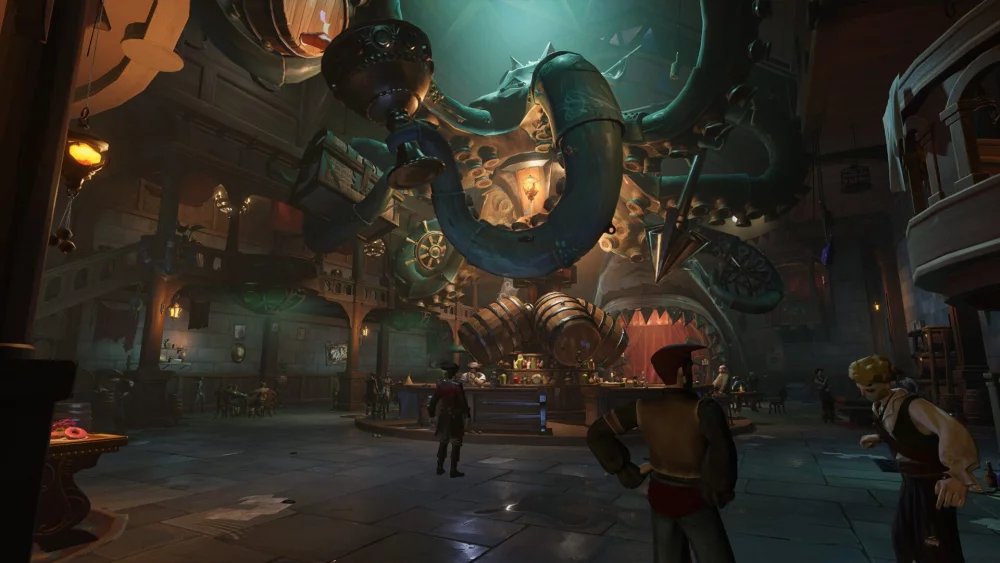
In Sea of Remnants, the traditional constraints of role-playing games are discarded in favor of radical player agency. Unlike titles that protect "essential" NPCs with invincibility frames or scripted barriers, Sea of Remnants allows you to interact with—or permanently eliminate—virtually any character in the game world. This isn't just a mechanic for chaos; it is a sophisticated, high-risk, high-reward system of world manipulation that allows players to curate their own experience, bypass tedious requirements, and claim resources that would otherwise be locked behind long-term quest chains.
Understanding the Scope of NPC Interaction
The core innovation of Sea of Remnants is the removal of the "essential" tag. In most RPGs, you are told who is important through game design; here, the importance of an NPC is defined entirely by the utility they provide to your specific build and strategy.
When you encounter an NPC, you are essentially looking at a resource node. Is this character a merchant who sells rare materials? Are they a quest-giver who unlocks a new area? Or are they simply an obstacle occupying valuable space? Because these choices are permanent, every encounter carries the weight of a long-term strategic decision. If you eliminate a key blacksmith, you are not just killing a character—you are effectively closing a service branch in that specific settlement for the duration of your save file.
Strategic Benefits of Aggressive Play
For players who favor efficiency, the ability to eliminate NPCs serves as a powerful tool to circumvent the game’s "soft" progression gates.
- Immediate Resource Acquisition: Many NPCs carry high-tier equipment or rare currencies that are intended to be earned through extensive favor-based questing. By opting for a hostile approach, you can acquire these assets immediately, potentially shortening your "gearing-up" phase by dozens of hours.
- Bypassing Social Hurdles: Some narrative paths require complex reputation farming or dialogue-heavy interactions to unlock. Eliminating the gatekeeper NPC can, in specific scenarios, bypass the requirement entirely, allowing you to access new zones or objectives without fulfilling the developer's intended social prerequisites.
- Decluttering the Environment: In high-density hubs, the sheer volume of interactive NPCs can lead to interface noise and navigation errors. If you find yourself frequently misclicking on dialogue prompts, clearing out redundant NPCs can streamline your movement and focus within the game’s most active settlements.
The Consequences of World Manipulation
While the freedom to remove NPCs is absolute, the consequences are equally permanent. Sea of Remnants does not reset your world state; if you burn a bridge, it stays burned.
The Cost of Convenience
Before you initiate combat, you must conduct a "Service Audit." Ask yourself:
- Does this NPC provide a unique service? If they are the only merchant who sells specific upgrade components, eliminating them is a self-inflicted debuff.
- Are they a narrative anchor? Some NPCs act as triggers for regional events or faction progression. Removing them might lock you out of entire endgame storylines, making it impossible to see certain endings or unlock late-game regions.
- Will the settlement become hostile? In some zones, the NPCs share a collective security network. Striking one individual can cause the entire local population—including those you might need later—to turn against you, effectively forcing you into a "lone wolf" status in that region.
Tactical Execution: Eliminating NPCs Efficiently
When you decide that an NPC must be removed, treat the encounter as a tactical operation. Because you cannot "save scum" your way out of a bad decision once the world state has updated, you must ensure your execution is flawless.
- Isolate the Target: Never initiate combat in the center of a crowded market or a heavily guarded base. Lure your target into an alleyway or a secluded area where their death won't trigger an immediate, overwhelming response from neighboring NPCs.
- Use Support Characters: Characters like Gale, who excel in crowd control and localized combat efficiency, are invaluable for these maneuvers. Use Gale’s abilities to silence or immobilize the target, preventing them from calling for help or fleeing.
- Prioritize Stealth: If your build allows, a silent takedown is always superior to an open confrontation. It preserves your standing with the rest of the settlement and keeps your options open for future interactions.
Comparing Approaches: The "Diplomat" vs. The "Remnant"
Players in Sea of Remnants generally fall into two categories: those who prioritize the "Diplomat" path and those who embrace the "Remnant" playstyle.
- The Diplomat: This player views the game as a complex web of relationships. They preserve NPC lives to maximize access to shops, side quests, and lore. This is the optimal path for players who want to experience the full breadth of the world’s narrative.
- The Remnant: This player treats the world as a sandbox to be conquered. They are willing to sacrifice narrative depth for tactical control and resource dominance. This playstyle is significantly more difficult, as it requires the player to be more self-sufficient, but it offers a unique, player-authored challenge that few other games can provide.
Final Recommendations for Your Playthrough
If you are aiming for a successful run in Sea of Remnants, follow these three rules:
- Designate "Safe" Zones: Pick one or two base settlements where you will strictly avoid NPC elimination. Use these as your logistical hubs for crafting, repairing, and trading.
- Scout Before You Strike: If you encounter a new NPC, interact with them at least once to determine their utility. Never strike an unknown NPC; gather information first, then decide if they are an asset to be kept or a resource to be seized.
- Accept the Void: If you find yourself regretting the loss of an NPC, accept the reality of the game world. Sea of Remnants is designed to be played with the consequences of your actions. A world where you’ve removed everyone is a valid, if lonely, way to play, and it forces you to adapt your playstyle to survive without the services you’ve destroyed.
By mastering these mechanics, you transition from a player simply moving through the world to an architect who shapes it. Use your freedom wisely—the Sea of Remnants will remember exactly what you did.

Free Sea of Remnants Codes
Current active codes and how to redeem them.

Emily Johnson
Emily writes practical mobile strategy guides with a focus on resource planning, base progression, and the early decisions that shape a long-term account.
COMMUNITY
Player Comments
140 players commented on this guide.
I wish I had read this before upgrading the wrong thing.
I tried this today and it worked better than my old setup.
This helped me understand strategy much better.
Nice guide. I am checking the other Sea of Remnants articles next.