
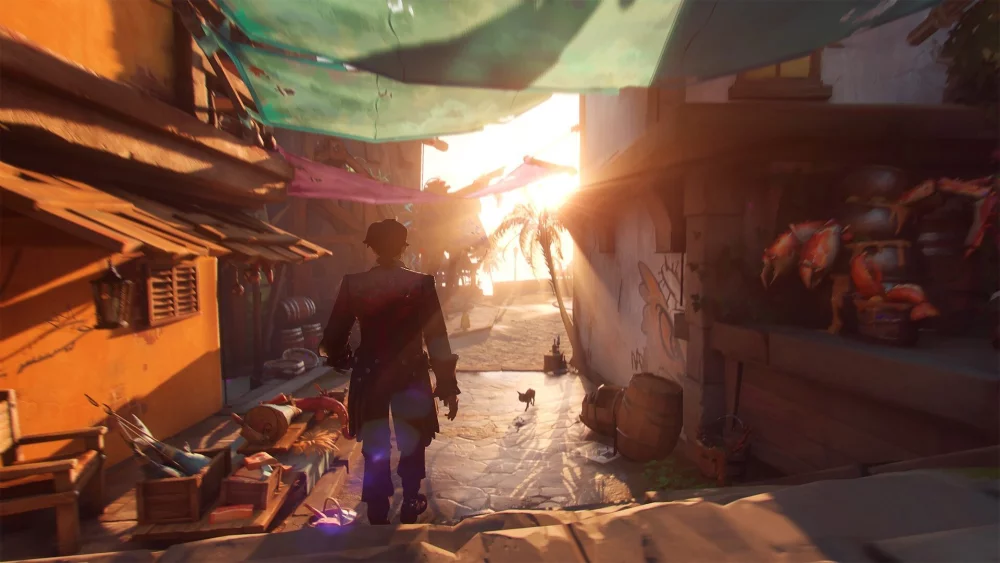
To effectively navigate the vast, perilous world of Sea of Remnants, you must treat character interaction as a core progression mechanic rather than a secondary activity. Developed by the creative minds behind Identity V, this open-world pirate RPG tasks you with more than just sailing and combat; it requires you to piece together a fragmented history. Engaging with the diverse cast of NPCs reveals critical memory fragments that serve as the backbone of your journey. By focusing your efforts on these dialogue trees and environmental puzzles, you unlock unique rewards essential for long-term character development and world-building.
Prioritizing Narrative-Driven Character Connections
In Sea of Remnants, your primary objective should be to actively seek out characters with unique dialogue prompts. These interactions are the gateway to unlocking hidden lore and essential gameplay benefits. Instead of rushing through the open world, take the time to converse with NPCs in major port hubs and isolated outposts. These conversations are not merely flavor text; they provide the necessary context to understand why certain regions are locked or how specific relics function within the game’s complex ecosystem.
Focusing on these interactions early allows you to build a network of informants who offer guidance on navigating the treacherous sea. When approaching an NPC, observe their visual cues and tone. Characters who possess "memory fragments" often have distinct animations or stand in areas that suggest they have been waiting for someone with your specific background. Prioritizing these individuals ensures you do not miss out on vital clues that inform your next major move. If an NPC mentions a specific landmark, mark it on your map immediately; these are rarely incidental mentions.
Utilizing Memory Fragments for World Progression
Memory fragments are the fundamental currency of your character’s growth in Sea of Remnants. Unlike standard experience points, these items act as keys to unlocking the narrative past, which in turn grants you access to new abilities or areas. You should treat every fragment you discover as a high-priority asset. When you collect a fragment, visit your log immediately to synthesize the information. This process often triggers new quest markers leading to high-value loot or previously unreachable locations.
The trade-off for focusing on memory retrieval is time, as you will spend less time in direct combat during these sequences. However, the limitation of ignoring this mechanic is severe. Players who bypass the narrative puzzles often find themselves under-leveled or lacking the situational knowledge required to defeat stronger oceanic foes. By balancing your exploration with memory synthesis, you maintain a steady power curve that keeps you prepared for the challenges of the deep sea. Think of your memory log as your primary toolset for navigating the game’s difficulty spikes.
Navigating Complex Dialogue and Decision Trees
The dialogue system in Sea of Remnants requires careful consideration, as your choices can influence how NPCs react to you throughout your voyage. Some characters are hesitant to share information, requiring you to select responses that build trust or demonstrate your knowledge of the sea. Always read the prompts thoroughly; picking the wrong dialogue option might temporarily lock you out of a specific interaction or force you to complete an additional side task to regain favor.
When engaging in these exchanges, look for:
- Key Phrases: Recurring topics that hint at the character's past or current motivations.
- Emotional Cues: Subtle changes in character posture or voice lines that indicate whether you are pushing them for information too aggressively.
- Contextual Items: Objects in the environment that can be referenced during the conversation to gain a "persuasion" advantage.
If you find yourself stuck, pay attention to the NPC's profession. A grizzled harbor master will respond differently to inquiries about weather patterns compared to a merchant concerned with trade routes. Aligning your questions with their expertise is the fastest way to extract the information you need.
Maximizing Environmental Clues During Exploration
Beyond direct conversations, the game’s environment is filled with visual storytelling elements that act as silent NPCs. While exploring islands or shipwrecks, pay close attention to the placement of debris, the state of local outposts, and the markings on ancient ruins. These environmental clues are often linked to the memory fragments you collect, creating a cohesive narrative experience that bridges the gap between exploration and character development.
This approach is particularly important when you reach new, uncharted territories. Before charging into a fight or looting a chest, survey the area for anomalies that might be related to your current memory quest. Players who combine their findings from NPC dialogue with these environmental observations often uncover shortcuts or secret paths that significantly reduce travel time. This synergy between observation and interaction is the key to mastering the game's expansive world without getting lost in the grind.
The Strategy of Information Management
Effective players in Sea of Remnants do not treat their quest log as a simple checklist. Instead, they treat it as a map of potential connections. When you synthesize a memory fragment, look for the "Echo Effect." This occurs when two separate fragments correlate to the same geographical region or character archetype.
When you discover an Echo Effect, you often unlock "Legacy Talents." These are unique stat boosts or combat modifiers that cannot be obtained through standard leveling. To maximize this:
- Catalog your fragments: Use the in-game sorting tool to group fragments by region.
- Consult the archives: Visit the main library or hub periodically to cross-reference your findings.
- Revisit NPCs: After synthesizing a major fragment, return to characters you spoke with earlier. They often have new dialogue options that open up once you have the "key" (the fragment) to their secret.
Avoiding Common Pitfalls
New players often fall into the trap of treating Sea of Remnants like a traditional action RPG, where combat is the only path to progression. This is the quickest way to hit a narrative and mechanical wall.
- Don't ignore the side-quests: Many side-quests provide the "social currency" needed to unlock high-level NPC dialogue.
- Don't rush the main quest: The main narrative is gated by your ability to understand the world. If you skip the "flavor" text, you will likely struggle with the environmental puzzles later.
- Don't hoard fragments: There is no benefit to keeping fragments in your inventory. Synthesize them as soon as you reach a safe zone to ensure your character remains at peak capability.
By following these strategies, you move from being a mere pirate drifting on the tides to a master of the Sea of Remnants, capable of uncovering the darkest secrets hidden beneath the waves. Every interaction is a step forward, and every fragment is a piece of the power you need to conquer the ocean.

Free Sea of Remnants Codes
Current active codes and how to redeem them.

James Brown
James focuses on Android gaming on PC, emulator setup, controls, performance tuning, and practical troubleshooting for longer play sessions.
COMMUNITY
Player Comments
76 players commented on this guide.
The explanation is clear, especially for beginners.
Can you add more details about heroes in a future update?
This saved me time in the early game.
This guide answered the exact question I had.