
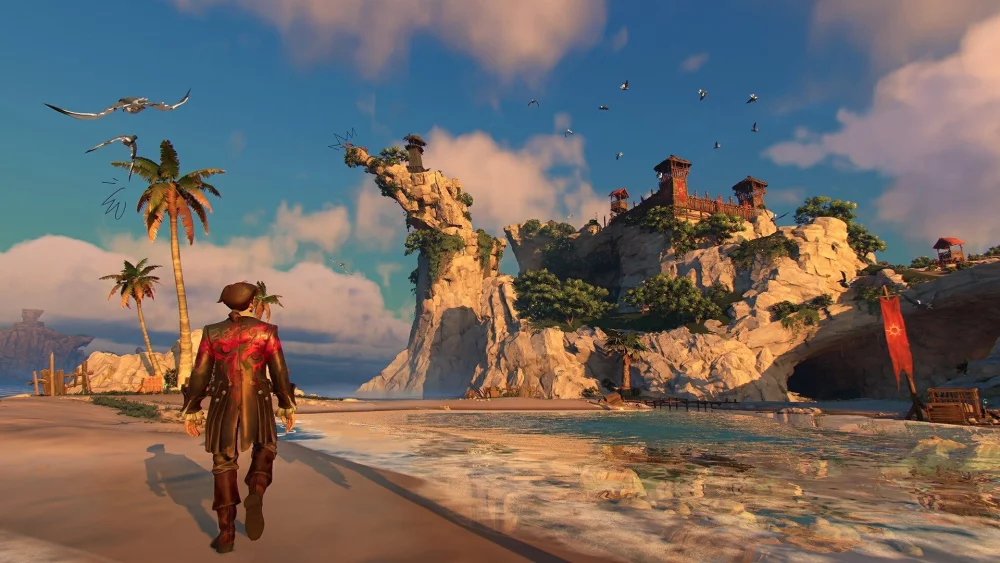
In Sea of Remnants, the ocean is a living, breathing entity rather than a static map to be crossed. Successfully navigating this world requires more than just pointing your ship toward a quest marker; it demands an understanding of how to interpret environmental cues, manage your crew’s readiness, and make split-second decisions when random events interrupt your journey. Whether you are encountering hostile sea creatures, mysterious merchants, or environmental anomalies, mastering these encounters is the key to accumulating the rare resources and experience necessary for late-game success.
Understanding the Mechanics of Dynamic Encounter Zones
In Sea of Remnants, encounter zones are not entirely random. They are tethered to specific geographic parameters and current patterns. To master the seas, you must move away from the "autopilot" mindset and begin observing the game world for subtle visual indicators.
Identifying Trigger Cues
The game often provides environmental warnings before an encounter begins. Pay close attention to:
- Water Discoloration: Shifts in water hue or turbulence often indicate a high-activity zone where encounters are more frequent.
- Current Shifts: Areas where the water flow changes direction frequently are prime locations for drift-based encounters.
- Horizon Activity: Scanning the distance for birds, floating debris, or unnatural silhouettes allows you to anticipate an encounter before the prompt forces a transition.
By slowing your ship’s speed as you approach these markers, you gain a tactical advantage. A slower ship is more maneuverable, allowing you to position yourself favorably before a combat encounter starts, or to navigate around hazards that might appear during the event.
Strategic Decision-Making: Combat vs. Diplomacy
Every encounter in Sea of Remnants is a branching narrative path. A common mistake for new players is assuming every hostile entity must be fought. The game’s design emphasizes choice, and your decision should be dictated by your current status, not just the potential reward.
Evaluating the Risk-Reward Ratio
When a dialogue prompt appears, perform a quick "Status Check" before clicking:
- Crew Condition: Is your team at full HP and Stamina? If yes, combat is a viable option for extra loot. If not, prioritize the "Diplomatic" or "Avoid" options to prevent unnecessary exhaustion.
- Resource Buffer: Does the encounter demand a "toll" (fuel, food, or supplies)? Always keep a 20% resource reserve. If the event demands more than you can comfortably lose, do not hesitate to decline.
- Reputation and Alignment: Certain choices in random encounters impact how factions view you. Think of these encounters as long-term reputation investments rather than just immediate resource gains.
Tactical Combat in Constrained Environments
When an encounter does turn into a fight, the battlefield is often dictated by the location of the trigger. You might find yourself fighting in the middle of a swirling whirlpool, near jagged reefs, or within a dense fog bank.
Utilizing Environmental Hazards
Instead of focusing solely on direct damage, look for ways to manipulate the environment to your favor:
- Whirlpools: These can be used to pull enemies out of position, forcing them to waste turns repositioning rather than attacking you.
- Rocky Outcrops: Use these to break the line of sight for ranged enemies, effectively neutralizing their offensive capabilities while you close the distance.
- Current Manipulation: In some battles, the sea current will shift your ship’s position each round. Plan your attacks with the current in mind to ensure you end your turn in a defensive, rather than exposed, position.
Managing Crew Stamina for Long-Haul Success
Your crew is your most important asset, and their stamina is the primary resource that determines the outcome of any random encounter. If your crew is fatigued, their accuracy, evasion, and special ability cooldowns are all negatively impacted.
The Art of the "Rest Stop"
Do not wait for your crew to reach exhaustion. Incorporate "Rest Stops" into your route planning. Even if your destination is close, if you pass a calm, safe-looking bay or a quiet island, stop for a few moments. This replenishment ensures that when you hit a high-difficulty random encounter, you are operating at 100% capacity.
If your morale is low due to previous failed encounters or resource shortages, adopt a "stealth-first" traversal style. Avoid high-speed travel through unpredictable zones, and prioritize dialogue options that minimize direct confrontation until your crew is rested.
Maximizing Loot and Event-Specific Rewards
Random encounters are the primary source of unique, high-tier loot in Sea of Remnants. Because these rewards are often tied to specific event outcomes, you should treat them as "timed opportunities."
Looting Best Practices
- Sweep the Area: After a combat encounter, do not immediately exit the event screen. Move your vessel around the immediate perimeter to check for floating crates or salvaged goods that may have drifted away during the skirmish.
- Prioritize Rare Materials: Some encounters yield crafting components that are impossible to find in standard store inventories. If a choice leads to a "rare material" reward, it is almost always worth the risk, provided your crew is in reasonable health.
- Buff Management: Occasionally, an encounter will grant a temporary buff (e.g., increased speed or hull integrity). If you receive such a buff, adjust your route immediately to reach your next main quest objective while the effect is still active.
Avoiding Common Pitfalls
To truly master Sea of Remnants, you must avoid the most common traps that lead to early-game frustration:
- The "Full Speed" Trap: Moving at maximum speed makes it impossible to react to environmental triggers, often leading to ship damage or losing the initiative in combat.
- Ignoring Resource Costs: Players often enter a "gambler's mindset" during dialogue choices. Remember that losing your ship to a lack of fuel is a permanent setback. When in doubt, save your resources.
- Over-reliance on Auto-Attack: While auto-attack is useful for low-risk encounters, it ignores environmental advantages. Take control in high-stakes situations to ensure you are utilizing the map to your benefit.
By treating every journey as a series of calculated risks rather than a linear path, you will find that Sea of Remnants becomes significantly more rewarding. Focus on your crew’s stamina, read the environmental cues, and choose your battles wisely to conquer the unpredictable tides.

Free Sea of Remnants Codes
Current active codes and how to redeem them.

James Brown
James focuses on Android gaming on PC, emulator setup, controls, performance tuning, and practical troubleshooting for longer play sessions.
COMMUNITY
Player Comments
91 players commented on this guide.
This helped me understand updates much better.
I tried this today and it worked better than my old setup.
I wish I had read this before upgrading the wrong thing.
The explanation is clear, especially for beginners.