
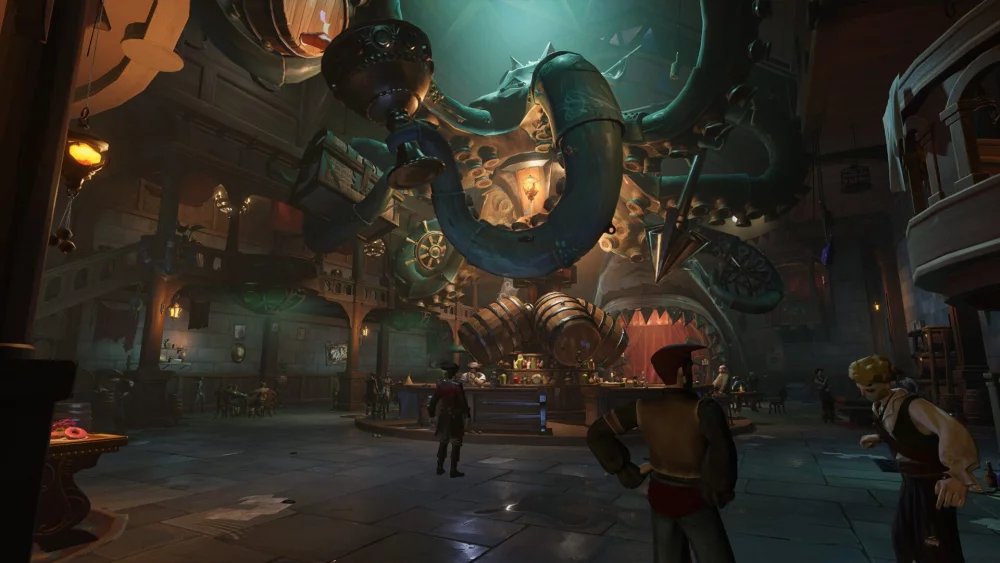
Mastering the high seas in Sea of Remnants requires a proactive approach to environmental navigation and vessel positioning. Success in this open-world title depends on your ability to pilot through turbulent waters while simultaneously managing intense combat engagements. By focusing on your ship’s orientation relative to incoming hazards and enemy fire, you can mitigate structural damage and maintain optimal speed during tense explorations. This guide breaks down the core mechanics required to dominate the waves and survive the challenges of the Sea of Remnants beta.
Navigating Dynamic Marine Environments
Success in Sea of Remnants begins with recognizing the hazards embedded within the open-world map. As you sail through different sectors, the water is not merely a static background but a dynamic force that dictates your ship's movement. You must constantly monitor the color and turbulence of the water to identify patches of debris or rocky shoals that can severely hamper your navigation speed or damage your hull if struck directly.
When navigating these hazardous zones, prioritize a clear line of sight to open water. Avoid hugging the edges of map boundaries, as these areas often feature tighter channels and frequent environmental obstacles. By maintaining a central path, you gain the necessary room to maneuver if you suddenly encounter aggressive NPCs or unexpected weather shifts that force a change in your intended course.
Tactical Positioning During Ship-to-Ship Combat
Combat in Sea of Remnants is fundamentally tied to how effectively you manage your ship’s broadside potential. Because your primary cannons are mounted along the sides of your hull, sailing directly toward or away from an enemy vessel is a tactical error that limits your output.
- Broadside Alignment: Always orient your ship to keep the enemy within the firing arc of your primary cannons. This lateral positioning allows you to unleash maximum firepower while minimizing the surface area your ship presents to incoming enemy projectiles.
- The Defensive Pivot: Effective positioning acts as a defensive measure. By constantly drifting or turning your ship while reloading, you make it significantly harder for enemy AI to land consistent hits on your critical systems.
- Forcing the Reset: If you find yourself taking heavy fire, use the ship's momentum to pivot into a defensive posture. This forces the enemy to adjust their course, potentially causing them to miss their next volley while you prepare for a counter-attack.
Managing Ship Momentum and Speed
Maintaining control over your ship's momentum is the difference between a successful escape and a sinking wreck. In Sea of Remnants, the ship’s handling is intentionally weighted, meaning you cannot rely on sharp, sudden turns to dodge incoming hazards. You must plan your maneuvers several seconds in advance, especially when navigating narrow passages or approaching shallow waters where grounding is a high risk.
If you are engaged in combat, use the environment to your advantage by slowing down before turning. Reducing your speed allows for a tighter turning radius, which is essential when you need to align your broadside cannons quickly. Once your target is in range and your weapons are ready, resume full speed to maintain the distance required to stay out of the enemy’s effective boarding range.
Utilizing the Minimap for Environmental Awareness
Your minimap is the most critical tool for survival beyond the immediate 3D view. It provides real-time data on nearby hazards, potential loot locations, and enemy movement patterns. Use the minimap to track the "threat radius" of enemy ships before they enter your visual range. This allows you to plan your approach or decide whether to engage in combat based on the proximity of surrounding environmental hazards that might restrict your mobility.
When exploring, keep an eye on the minimap for markers indicating shallow water or dense rock formations. While the 3D graphics in Sea of Remnants offer high fidelity, they can sometimes obscure underwater obstacles until it is too late to steer clear. Relying on the overhead perspective of the minimap ensures you don't accidentally run your ship aground, which is a common cause of lost momentum and unnecessary hull repairs during the early stages of the game.
Prioritizing Structural Integrity Over Aggression
While the temptation to pursue every enemy ship is high, maintaining your ship’s structural integrity is the primary objective for long-term progression. Engaging in combat when your hull is already damaged significantly increases the risk of total loss.
- Breaking Line-of-Sight: If your ship’s health drops during a skirmish, prioritize breaking line-of-sight with the enemy by using natural cover like large rock formations or dense debris fields.
- Strategic Disengagement: Once you have successfully disengaged, take the time to evaluate your ship’s condition. Repairs are not instantaneous, and you may need to find a safe zone to stabilize your vessel.
- Risk Assessment: Avoiding unnecessary combat when your hull is compromised is a key strategy for ensuring you reach your destination with your cargo—and your ship—intact. By choosing your battles based on your current structural status rather than potential loot, you ensure consistent progress across the game's open world.
Advanced Maneuvering Decisions
As you progress, you will encounter more complex ship types with varying turn rates and weapon loads. Understanding the "weight" of your specific vessel is crucial. A larger, more heavily armored ship will require a much wider berth when maneuvering around islands, whereas smaller, faster vessels can navigate tight, shallow channels to lose pursuers.
When deciding between combat and evasion, consider the following checklist:
- Hull Integrity: Is your ship at 50% or lower? If so, seek repairs before engaging.
- Environmental Hazard Proximity: Are you currently near rocky shoals or narrow passages? If so, prioritize navigation over broadside alignment.
- Enemy Class: Are you outgunned? Use the environment to force the enemy into a narrow channel where their maneuverability will be hindered, giving you the upper hand in a retreat.
By mastering these fundamental navigation and combat strategies, you will transform from a novice captain into a dominant force in Sea of Remnants. Always prioritize the safety of your vessel, plan your routes using the minimap, and remember that sometimes the most effective way to win a battle is to position yourself so the enemy cannot land a hit.

Free Sea of Remnants Codes
Current active codes and how to redeem them.

James Brown
James focuses on Android gaming on PC, emulator setup, controls, performance tuning, and practical troubleshooting for longer play sessions.
COMMUNITY
Player Comments
105 players commented on this guide.
Nice guide. I am checking the other Sea of Remnants articles next.
This saved me time in the early game.
This helped me understand strategy much better.
The tips are practical and easy to follow.