
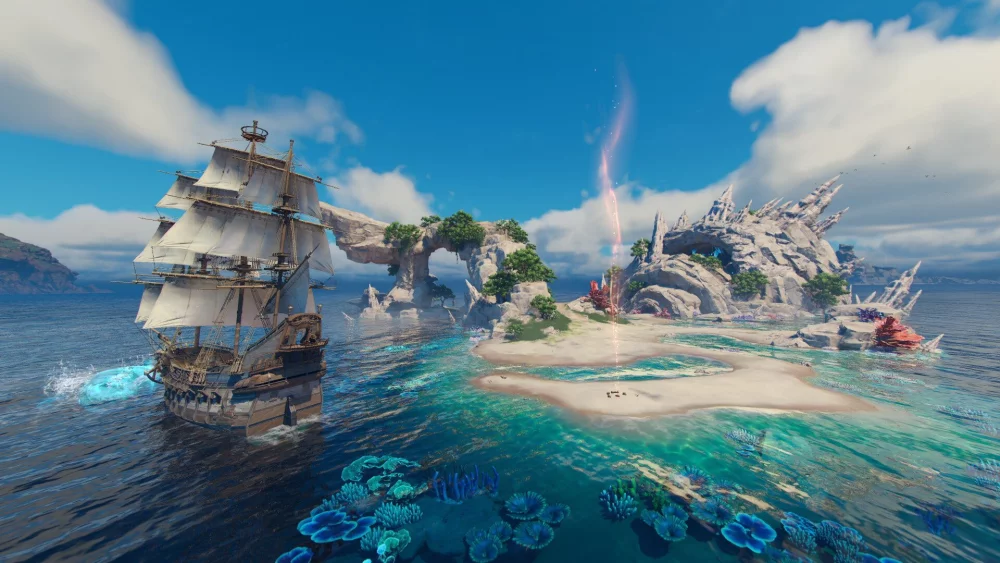
Stepping into the vast, unpredictable waters of Sea of Remnants can be overwhelming for new players. Because the game blends deep open-world exploration with roguelike stakes and tactical command-based combat, your first 24 hours are critical for establishing a sustainable foundation. To succeed, you must move beyond aimless sailing and adopt a structured approach to resource management and combat efficiency.
This guide provides the expert framework needed to navigate your first day in Sea of Remnants, ensuring you unlock essential gameplay loops without falling into common progression traps.
Prioritizing Initial Story and Quest Chains
The most frequent mistake new players make in Sea of Remnants is attempting to explore the open ocean too early. The game’s progression is gated behind "milestone quests" that act as tutorials for essential mechanics—such as ship maintenance, salvage operations, and advanced squad management.
- Follow the Narrative Path: Do not deviate from the main quest line during your first few hours. These missions are designed to provide the specific materials needed to upgrade your ship’s hull and navigation, both of which are required to survive in deeper waters.
- Unlock Gated Features: Many essential UI elements and resource-farming locations remain hidden until you complete introductory narrative checkpoints. Treat these as your highest priority.
- Avoid "Distraction" Loops: While it is tempting to chase every ship silhouette on the horizon, doing so early on often leads to resource depletion. Stick to the mission markers; the game will naturally guide you toward high-value areas once you have the requisite gear to survive there.
Mastering the Command-Battle Combat System
Combat in Sea of Remnants is not a test of pure stats; it is a tactical puzzle. You are managing a squad where every command point spent has a long-term impact on your voyage’s success.
Tactical Decision-Making
- Analyze Threat Telegraphs: Before confirming your commands, observe the enemy’s intent icons. If a foe is telegraphing a high-damage ability, prioritize crowd control or defensive buffs over raw damage.
- Synergy Over Stats: Early in the game, focus on building squads that complement each other. For example, pair a character with high "Breach" damage (for breaking shields) with one that excels at high-burst damage. A team with good synergy will outperform a team of high-level units that lack tactical cohesion.
- Positioning Matters: Use the command menu to manipulate your squad’s positioning. Many enemies have directional weaknesses; shifting your team to exploit these can turn a difficult encounter into a trivial one.
Managing Roguelike Exploration Loops
Sea of Remnants incorporates roguelike elements, meaning risk is a constant factor. Every time you leave the safety of your harbor, you are making a calculated gamble.
- The "Return-Threshold" Rule: Establish a hard limit for your hull integrity. If your ship drops below 40% health, consider it a signal to return to harbor. Pushing your luck to find "one more piece of loot" often leads to losing everything you’ve already collected during that sortie.
- Resource Banking: Treat your harbor as a bank. You should not be carrying massive stockpiles of upgrade materials in your cargo hold while exploring. If your hold is 70% full, head back to base. Inventory space is a resource in itself, and failing to manage it effectively limits your ability to pick up rare salvage.
- Learning the Map: Use your first day to identify "Safe Zones" versus "High-Risk Zones." Mark these on your mental map (or take notes) to help plan future, longer-range expeditions.
Strategic Resource Allocation
Resource scarcity is the primary bottleneck in the early game. You will be bombarded with different currencies and materials; the key to success is knowing exactly where to funnel them.
- Hull and Navigation Upgrades: Always prioritize ship survivability and speed over aesthetic or secondary combat upgrades. If you cannot reach the objective or survive the journey, your combat stats won't matter.
- Core Squad Advancement: Choose a "main" squad early and dump your experience materials into them. Do not spread your resources thin across a dozen characters. A singular, highly leveled squad is far more efficient at clearing high-value loot than a broad roster of under-leveled units.
- Avoid Cosmetic Spending: In the first 24 hours, ignore the shop's cosmetic or "convenience" items. Every point of currency should be redirected into permanent power increases for your ship or squad.
Navigating Progression Trade-offs
Progression in Sea of Remnants is a constant balancing act between speed and sustainability. If you focus exclusively on rushing the main quest, you will eventually hit a "gear wall" where your ship is too weak to reach the next narrative node. If you focus too much on grinding, you will fall behind in the meta.
- The "Side-Grind" Rule: Only engage in side activities (like salvaging shipwrecks or hunting minor bounties) if they are directly on your path to the next main quest objective.
- When to Upgrade: If you find yourself losing consistently in combat, check your ship components before blaming your squad. Often, a new engine or hull plating provides the necessary tactical advantage to survive longer in combat, giving your squad more turns to act.
- The Power Spike: Look for "Power Spikes" in your upgrade tree—these are specific ship or squad upgrades that significantly change your combat capabilities (e.g., unlocking a new skill slot or a critical ship ability). Plan your resource spending to reach these spikes as quickly as possible.
By maintaining focus on these core pillars, you will ensure that your time in Sea of Remnants is spent progressing rather than recovering. Remember: the ocean is unforgiving, but with calculated planning and disciplined resource management, you can dominate the tides from day one.

Free Sea of Remnants Codes
Current active codes and how to redeem them.

Michael Smith
Michael covers live-service games, events, reward systems, and efficient daily routines, turning frequent updates into clear actions for players.
COMMUNITY
Player Comments
85 players commented on this guide.
Can you add more details about early game in a future update?
This guide answered the exact question I had.
This saved me time in the early game.
This helped me understand early game much better.