
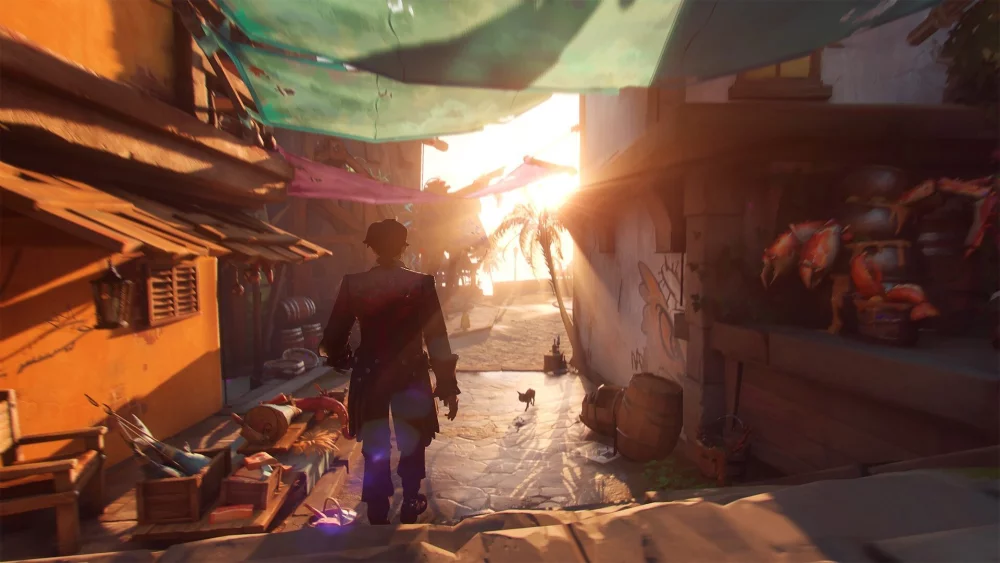
Sea of Remnants is a complex hybrid RPG that demands more than just raw power; it requires a sophisticated understanding of resource management, tactical positioning, and long-term expedition planning. To succeed in this oceanic world, you must stop viewing the game as a linear journey and start treating it as a series of calculated voyages. By prioritizing NPC-driven narrative choices, optimizing your team’s synergy, and mastering the cyclical roguelike nature of the game, you can turn the tide of your exploration from a struggle for survival into a path of consistent progression.
Mastering the Hybrid Combat Structure
Combat in Sea of Remnants is a turn-based affair that feels fundamentally different from traditional RPGs due to the emphasis on 3D spatial awareness. The battlefield is not a static grid; it is a tactical space where positioning dictates the viability of your skill chains.
Key Tactical Pillars
- Environmental Synergy: Never view an enemy as an isolated stat block. Always scan the terrain for environmental interactions, such as water hazards or structural weaknesses that can be exploited by your character’s specific movement abilities.
- The Chain-Reaction Mindset: Combat efficiency relies on status effect sequencing. For example, if a character like Gale applies a debuff that increases elemental damage, your primary damage dealer should follow immediately in the turn order to capitalize on that vulnerability.
- Support-Centric Compositions: In late-game encounters, raw damage often falls short. Prioritizing a support character who can manipulate turn order or provide defensive buffs is the key to preventing team wipes during boss encounters.
Leveraging NPC Interaction for World Control
You are an active agent in Sea of Remnants. Your interactions with NPCs are not merely for flavor text; they are strategic tools used to manipulate the state of the game world.
Strategic Influence Steps
- Narrative Weight: Every dialogue choice impacts your reputation with specific factions. A friendly settlement can provide cheaper repairs and rare resources, while a hostile one might block access to vital trade routes.
- Settlement Manipulation: Certain quest paths allow you to influence the economy of a town. By shifting a town’s focus toward commerce or defense, you change the inventory available to you at vendors, which is essential for gear progression.
- Lore as Utility: Pay attention to the history provided by NPCs. Often, the descriptions of ancient ruins or lost shipwrecks contain specific environmental clues required to bypass puzzles that would otherwise drain your resources.
Navigating the Open-World Roguelike Loop
The "voyage" mechanic in Sea of Remnants is the engine of your progression. Because the game utilizes a cyclical structure, your goal is to extract maximum value from every excursion before the reset.
The Voyage Strategy
- Incremental Progression: Do not aim to conquer the entire map in a single run. Instead, focus on gathering permanent currency or blueprints that persist after the reset. These items are the only way to scale your power for deeper, more dangerous waters.
- Inventory Efficiency: Space is limited. Prioritize items that offer the highest "Return on Investment" (ROI). Early in your journey, prioritize raw materials for ship upgrades; later, prioritize character-specific artifacts that unlock new combat archetypes.
- Resource Buffer: Never spend your last unit of fuel or food. Keeping a 20% resource buffer is the difference between a successful return to a safe harbor and losing your collected progress in the deep sea.
Optimizing Character Growth and Archetypes
Building a team in Sea of Remnants requires balancing diverse archetypes to handle the shifting threats of the ocean.
Balancing Your Roster
- The Versatility Rule: A team that excels at single-target damage but lacks AOE (Area of Effect) will eventually hit a wall. Ensure your composition features at least one character capable of crowd control or multi-target debuffs.
- Support Character Efficiency: Characters like Gale act as the backbone of your combat effectiveness. Invest in their skill trees first to maximize their "utility-per-turn." A support character who can grant extra actions or cleanse debuffs is exponentially more valuable than a secondary DPS who only adds raw damage.
- Specialization vs. Generalization: While you should remain flexible, specialization is required for endgame content. Once you identify a combat style you enjoy—such as heavy debuffing or high-mobility flanking—focus your equipment and skill points entirely on reinforcing that theme.
Common Mistakes and How to Avoid Them
Even experienced players fall into traps that hinder long-term progress. Avoiding these common pitfalls will save you hours of wasted effort.
- Ignoring the "Hub-and-Spoke" Strategy: Players often try to push into high-threat zones too early. Always establish a secure base of operations and build your supply chain before attempting long-range expeditions.
- Underestimating Passive Abilities: Many players focus solely on active combat skills. However, passives that increase resource gathering efficiency or reduce the cost of movement are vital for the roguelike loop.
- Hoarding Currency: Do not save your gacha or upgrade currency indefinitely. Using resources to upgrade your early-game gear allows you to farm more efficiently, which in turn earns you more resources. The "snowball effect" is critical in Sea of Remnants.
Decision-Making: The Art of the Reset
The most difficult decision in Sea of Remnants is knowing when to end your voyage. If your supplies are low and you have collected a significant amount of permanent progression materials, do not risk them for a minor gain. Returning to port early is not a failure; it is a tactical retreat that ensures your continued growth.
Before ending your voyage, check your inventory one final time:
- Have you banked your rare blueprints?
- Have you maximized your character experience?
- Is your ship’s durability sufficient to reach the extraction point?
By mastering these mechanics, you will find that Sea of Remnants is not a game of random chance, but a deep, rewarding test of your ability to plan, pivot, and persist in an ever-changing oceanic world.

Free Sea of Remnants Codes
Current active codes and how to redeem them.

Sarah Williams
Sarah specializes in RPG and collection games, explaining team building, character growth, and beginner-friendly ways to avoid expensive early mistakes.
COMMUNITY
Player Comments
39 players commented on this guide.
Nice guide. I am checking the other Sea of Remnants articles next.
Can you add more details about resources in a future update?
This saved me time in the early game.
The explanation is clear, especially for beginners.