
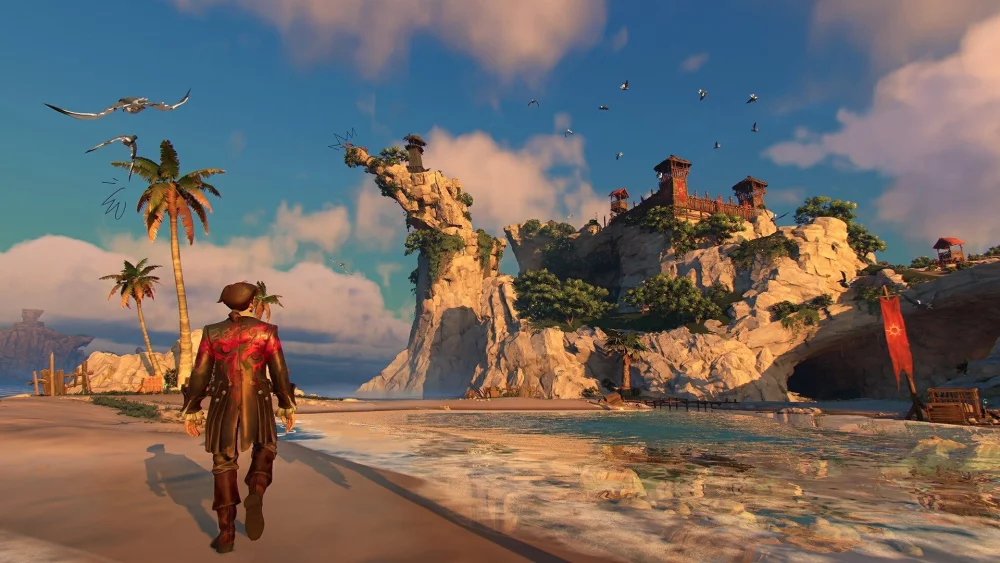
Sea of Remnants represents a sophisticated evolution in the tactical RPG genre, blending high-stakes, turn-based combat with immersive 3D open-world exploration. Developed with the atmospheric pedigree of the team behind Identity V, this game demands more than just raw power; it requires a deep understanding of team composition, spatial awareness, and resource management. Whether you are navigating the post-apocalyptic tides or optimizing your squad for elite encounters, this guide provides the professional framework needed to succeed.
Mastering the Hybrid Combat and Exploration Loop
The defining feature of Sea of Remnants is the seamless—yet mechanically demanding—transition between open-world exploration and tactical turn-based combat. Many players treat these as two separate games, but the most efficient players treat them as a single, cohesive engine.
The Scouting Advantage
Before engaging in combat, the game allows for free-roam movement. Use this to your advantage by surveying the terrain for environmental hazards or tactical high ground.
- Initiative Positioning: Engaging an enemy from behind or from a superior elevation often grants your party the "Ambush" status, allowing your team to act first in the turn-based sequence.
- Environmental Bottlenecks: Use the 3D space to lure groups of enemies into narrow corridors. If you initiate combat here, your area-of-effect (AoE) abilities become significantly more efficient, hitting multiple targets that were previously spread out in the open world.
Strategic Team Composition: The "Gale" Support Meta
In Sea of Remnants, damage dealers are plentiful, but support units are the backbone of high-tier performance. Characters like Gale are essential for long-term progression. Gale serves as a cornerstone for turn-order manipulation and defensive mitigation.
Why Gale is Mandatory
Gale’s utility lies in his ability to "delay" enemy actions and "accelerate" ally turns. In a turn-based system, controlling the turn queue is equivalent to controlling the board state.
- Turn Order Manipulation: By utilizing Gale’s signature skills to push back enemy turns, you can effectively "stunlock" high-threat targets, preventing them from using their ultimate abilities.
- Defensive Synergy: Gale should always be paired with a high-burst DPS unit. Because Gale provides the setup, your DPS unit can focus entirely on offensive stats (ATK/Crit) rather than sacrificing gear slots for survivability, as Gale’s shields will mitigate the incoming damage.
Building Your Core Trio
A balanced team in Sea of Remnants should always follow the 1-1-1 Rule:
- The Anchor (Support/Gale): Keeps the team alive and controls turn order.
- The Engine (Utility/Debuffer): Breaks enemy shields and applies status ailments.
- The Executioner (Main DPS): Focuses on single-target nuking or broad AoE clearing.
Gacha Banner Pulls and Resource Management
Currency management is the silent killer of progression in Sea of Remnants. With the gacha system being the primary method for acquiring top-tier characters and equipment, "pity-pulling" without a plan is a fast track to stagnation.
- The 80-Pull Rule: Never pull on a banner unless you have enough currency to reach the hard pity threshold. Splitting your resources across multiple banners is the most common mistake made by new players.
- The Second Playthrough Strategy: If you are planning a second playthrough or a secondary account, prioritize spending your starting currency on "Rate-Up" support banners. Damage dealers often become power-crept by new releases, but top-tier support characters (like Gale) remain relevant in the meta for much longer.
- Resource Hoarding: Save your "Remnant Essence" for limited-time events. The gear sets found in event shops often provide unique set bonuses that are unattainable through standard dungeon drops.
Advanced Tactical Decision Making
Progression in Sea of Remnants is gated by your ability to adapt to complex combat scenarios. As you move into the mid-to-late game, you will face "Elite Encounters" that punish static playstyles.
When to Hold and When to Burn
- Skill Economy: Do not use your ultimate abilities in the first round of combat unless you are certain it will result in a kill. Instead, use basic attacks or low-cost skills to "prime" the enemy (stripping their armor).
- Target Prioritization: Always eliminate healers or turn-manipulators on the enemy side first. If an enemy has a "Cure" or "Shield" icon, they are your primary target regardless of their health pool.
Managing Verticality
The game’s 3D environments feature significant verticality. If you are struggling with a difficult boss, look for nearby cliffs or structures. Using a character with "Knockback" abilities near a ledge can result in environmental kills, which bypass the enemy’s remaining health entirely—a vital tactic for F2P (Free-to-Play) players trying to punch above their weight class.
Avoiding Common Pitfalls
Even experienced RPG players often fall into these specific traps:
- Over-leveling DPS at the cost of Support: Leveling your damage dealer to max level while leaving your support unit at base level will lead to "glass cannon" syndrome where your team wipes before your DPS can move. Keep your team levels balanced.
- Ignoring Gear Sub-stats: In Sea of Remnants, the primary stat on your gear is only half the story. Look for gear with "Speed" or "Turn Recovery" sub-stats. In a turn-based game, speed is often the most valuable stat in the entire code.
- The "Auto-Battle" Trap: While the game features an auto-battle system for farming, never use it for story bosses or new content. The AI struggles with target prioritization and skill chaining, often wasting your best abilities on low-health minions.
Conclusion: Setting the Foundation for Success
Sea of Remnants is a game of depth and patience. By mastering the transition from exploration to combat, prioritizing support units like Gale, and practicing disciplined resource management, you ensure that your account remains competitive without requiring excessive spending. Treat every encounter as a puzzle to be solved, and remember that in this ocean of remnants, it is the player who controls the turn order who ultimately dictates the outcome of the battle. Keep your eyes on the horizon, manage your team’s synergy, and you will dominate the tides of the game’s ever-evolving meta.

Free Sea of Remnants Codes
Current active codes and how to redeem them.

Emily Johnson
Emily writes practical mobile strategy guides with a focus on resource planning, base progression, and the early decisions that shape a long-term account.
COMMUNITY
Player Comments
96 players commented on this guide.
The explanation is clear, especially for beginners.
The tips are practical and easy to follow.
I tried this today and it worked better than my old setup.
This saved me time in the early game.