
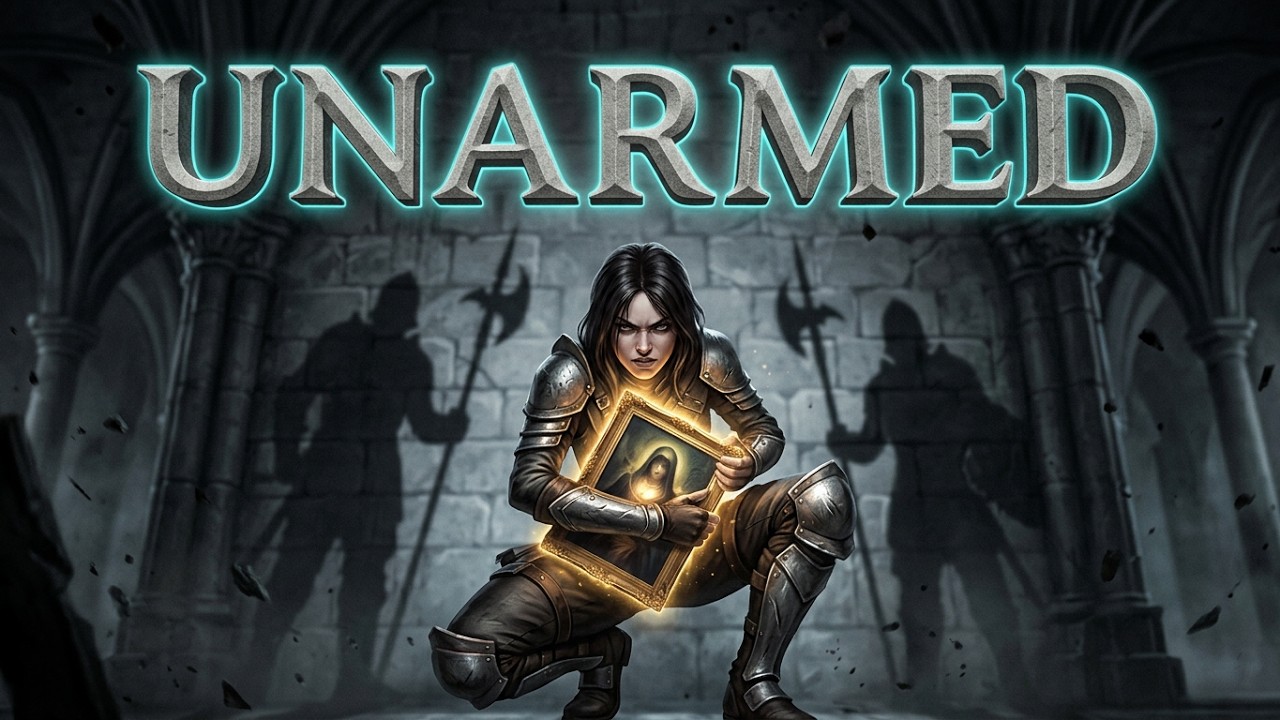
In Shadowborn, the Rogue’s true power isn't found in the edge of a blade, but in the silence of her footsteps. Completing the "Unarmed Manor Extraction" challenge on Hell difficulty is the ultimate test of your mastery over the game’s stealth systems. By choosing to go unarmed, you shed the noise and weight penalties associated with weaponry, transforming your character into a high-mobility ghost. This guide provides the expert strategies needed to navigate the unforgiving patrol patterns of Hell difficulty and secure every painting without triggering a single alarm.
The Mechanics of Unarmed Stealth in Shadowborn
In Shadowborn, your equipment load directly affects your noise profile and detection radius. When you unequip all weapons, you receive a passive "Lightfoot" bonus, which significantly decreases your character's footstep audio and increases stamina regeneration. On Hell difficulty, where guard senses are heightened, this reduction is the difference between a successful heist and an immediate extraction failure.
- Noise Suppression: Without the "clinking" sound of weapons, you can crouch-walk closer to guard patrol routes than any other build.
- Stamina Efficiency: The lack of weapon-weight burden allows you to sprint for longer durations, which is vital for "dash-and-grab" maneuvers in high-traffic hallways.
- Detection Radius: Enemies have a smaller line-of-sight threshold for unarmed characters, allowing you to skirt the edges of their gaze cones with greater forgiveness.
Analyzing Guard Patterns on Hell Difficulty
On Hell difficulty, Shadowborn guards do not follow static loops; they utilize a randomized AI routine that reacts to your proximity. To survive, you must treat the manor as a living, breathing puzzle.
- Observation Phase: Before grabbing your first painting, spend 60 seconds from a high vantage point or a safe alcove observing the guard rotations. Note which guards pause at intersections and which ones turn their heads periodically.
- The "Lull" Window: Every guard pattern in the manor has a "reset" point—a moment where they turn back or stop to investigate a wall. This is your narrow window of opportunity.
- Environmental Triggers: If a guard is blocking your path to a painting, do not engage. Instead, throw a nearby object or trigger a light fixture. This forces the guard to rotate away from your target area, giving you the space to move in.
Strategic Trade-offs: Why Unarmed Works
Choosing to be unarmed is a high-skill commitment. You lose the ability to defend yourself, meaning your "Fail State" becomes an absolute death sentence. However, this shift in philosophy is what makes the strategy work.
- Zero-Engagement Playstyle: By removing combat options from your kit, you force yourself to prioritize pathing over confrontation. You stop looking for ways to kill guards and start looking for the fastest route between shadows.
- Risk-Reward Balance: While you lack damage, the trade-off in stamina allows for a "hit-and-run" style that is impossible for heavily armored classes. You are playing Shadowborn as a pure stealth-puzzle game rather than an action RPG.
- The "Panic" Exit: Since you cannot fight, your only defense is evasion. Always identify two exit routes for every room you enter. If you are spotted, your priority is to break line-of-sight immediately, not to stand your ground.
Step-by-Step Extraction Strategy
To clear the manor of all paintings without being detected, follow this professional-grade routing plan:
1. Perimeter Scouting
Start by hugging the exterior walls of the map. Paintings located in corners or distant wings are usually guarded by solitary sentries rather than the larger patrols found in the main hall. Clear these first to minimize your risk while you still have full stamina.
2. The "Shadow-Hopping" Technique
Never move through the center of a room. Even if it looks empty, Shadowborn generates random "hidden" guards on Hell difficulty who may emerge from doorways. Always move from shadow to shadow, ensuring at least 50% of your character model is obscured by environmental lighting at all times.
3. Execution of the Theft
When you reach a painting, do not rush. Wait for the patrol to pass, then tap the interaction button. If you are spotted during the interaction, abort the attempt immediately. A failed theft is better than a triggered alarm that forces a restart.
4. The Final Dash
Once the final painting is in your inventory, the "Alert" status of the level may increase. Do not try to sneak back the way you came. Use your saved stamina to sprint through the paths you have already cleared, focusing on the shortest line to the exit.
Common Mistakes to Avoid
- Sprinting in Silence: Many players sprint too early. Only sprint when you have a clear path or have successfully broken line-of-sight. Sprinting creates a sound radius that guards on Hell difficulty will investigate.
- Ignoring the Map Overlay: The map is your best tool. Use it to track guard icons before entering a new room. If you see two icons converging on your location, wait for them to split before moving.
- Over-reliance on Corners: While hugging walls is good, some guards are programmed to check corners. If a guard is walking toward your corner, move to the ceiling rafters or a different piece of furniture.
Conclusion: Mastering the Unarmed Rogue
Success in Shadowborn is rarely about how hard you hit; it is about how effectively you disappear. By going unarmed, you are embracing the core of the Rogue class. This challenge requires patience, precise timing, and a deep understanding of the manor’s layout. Once you master these maneuvers, you will find that the highest difficulty settings in the game are not just beatable—they become a canvas for your own silent, efficient style of play. Remember: if they don't see you, they can't stop you.

Free Shadowborn Codes
Current active codes and how to redeem them.

Emily Johnson
Emily writes practical mobile strategy guides with a focus on resource planning, base progression, and the early decisions that shape a long-term account.
COMMUNITY
Player Comments
48 players commented on this guide.
The tips are practical and easy to follow.
I tried this today and it worked better than my old setup.
This helped me understand strategy much better.
This saved me time in the early game.