
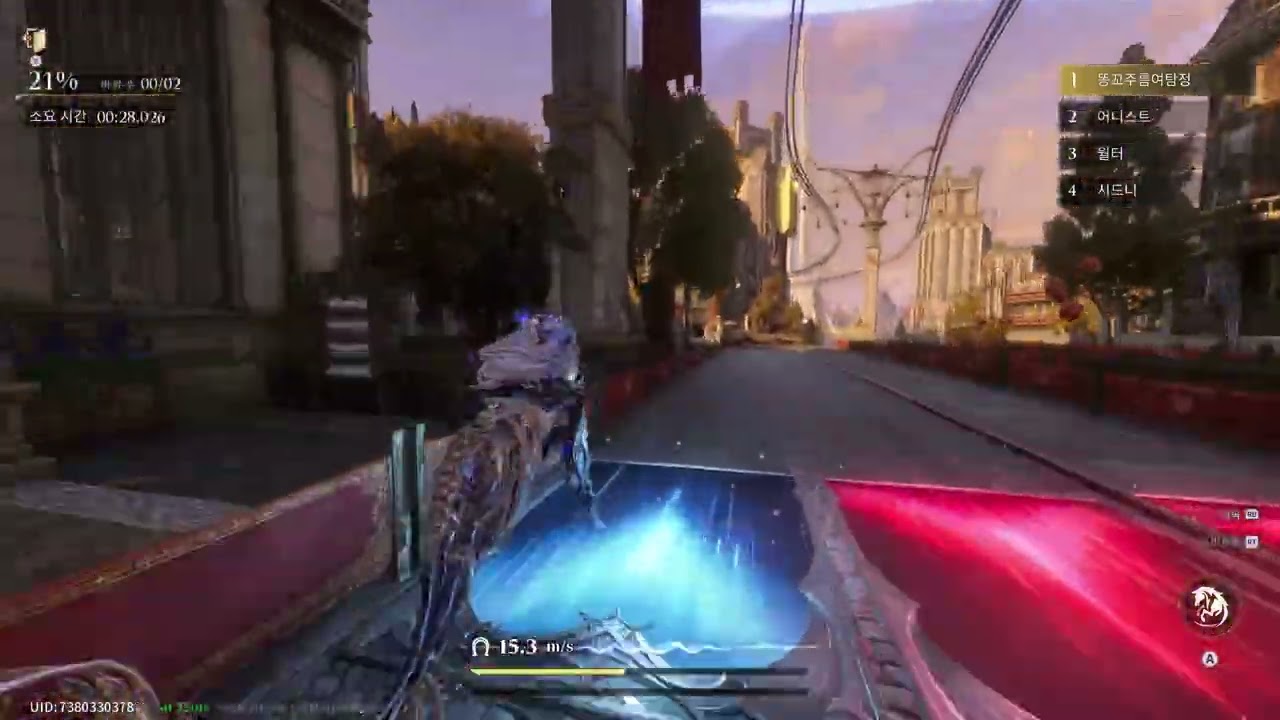
To win Royal Equestrian Tournament courses in Silver Palace, prioritize clean track lines and stamina management over constant sprinting. Because horseback movement features momentum and a wider turning radius than foot travel, you must initiate turns early, feather your directional inputs, and save speed bursts strictly for long straightaways.
Understanding Horse Controls and Momentum
Horseback navigation uses an inertia system that prevents instant directional changes. To maintain maximum momentum throughout a race, follow these foundational handling principles:
- Initiate Turns Early: Begin steering before the corner starts to account for the horse's turning radius.
- Maintain Center-Line Positioning: Stay near the center of the track. Weaving aggressively to avoid minor debris disrupts your stride, whereas staying centered maintains a high-speed gallop.
- Avoid Early Rushing: Pushing for maximum speed at the start of a course often leads to obstacle collisions, resetting your speed buildup.
Stamina Management and Boost Timing
Horse stamina drains rapidly during manual sprinting or while crossing difficult terrain. Depleting your stamina improperly leads to severe time penalties.
| Technique | Action | Consequence of Failure |
|---|---|---|
| Straightaway Boost | Activate sprint only on long, open paths. | Sprinting into turns triggers a stumble animation that costs significant time. |
| Corner Recovery | Maintain a controlled pace through turns. | Over-boosting on corners forces an unnecessary recovery phase right before obstacles. |
| Cooldown Buffer | Allow acceleration to recover after a burst. | Approaching a jump during a cooldown leaves insufficient speed to clear the height. |
Cornering with the Feathering Technique
Sharp turns are the most common failure point on tournament tracks. Holding down a turn key at high speed causes the horse to drift wide into boundary walls, stopping momentum entirely.
- Tap Directional Inputs: Use short taps ("feathering") on your movement keys rather than holding them down. This adjusts your trajectory while keeping forward speed.
- Release Acceleration for Tight Corners: If your horse drifts toward the outer track boundary, briefly let go of the acceleration input.
- Re-center Before Boosting: Confirm your horse is aligned with the center of the track before activating your next sprint.
Obstacle Jumping and Defensive Pacing
Clearing barriers requires precise timing rather than late reactions. Keep your camera angled forward to track upcoming obstacles early.
- Jump Timing: Input the jump command before reaching the barrier. The input window is generous, but jumping too late causes a direct collision and severe speed reduction.
- Filter Aesthetic Debris: Focus only on tall structural barriers that block the path, as minor ground clutter does not penalize your movement.
- Adopt Defensive Runs First: When attempting a new course, complete a run focused entirely on clean lines and jump execution without manual sprinting. Once you can finish without stumbling or colliding with walls, gradually add stamina bursts on known straightaways.

Free Silver Palace Codes
Current active codes and how to redeem them.

Emily Johnson
Emily writes practical mobile strategy guides with a focus on resource planning, base progression, and the early decisions that shape a long-term account.
COMMUNITY
Player Comments
153 players commented on this guide.
I tried this today and it worked better than my old setup.
Good guide for Silver Palace players. The strategy part was useful.
This helped me understand strategy much better.
Can you add more details about strategy in a future update?