
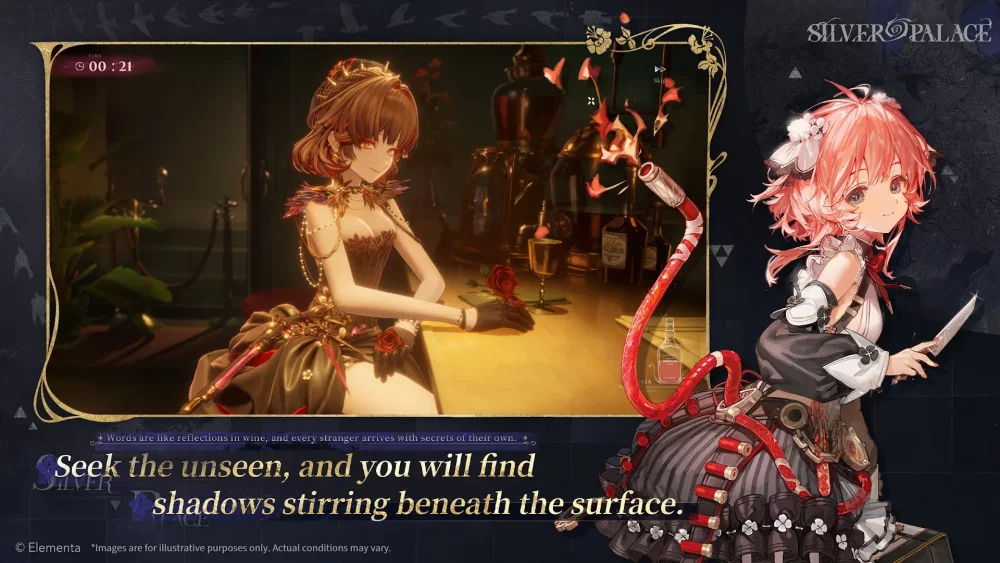
The opening of SilverPalace, specifically the first chapter titled "Ashes of Cinderella," serves as a definitive trial for players to understand the game’s core loop: observant exploration paired with deliberate character interaction. Unlike many titles that lead players by the hand, SilverPalace expects you to act as an investigator, piecing together the narrative through environmental cues. If you find yourself stuck at the "Return" stage, it is almost certainly because a required narrative node—an object or a specific dialogue line—has been overlooked. This guide breaks down the mechanics of the prologue to ensure you move through the opening act efficiently.
Understanding the Narrative Structure of SilverPalace
SilverPalace utilizes a gated narrative design where progression is tethered to your level of environmental engagement. The "Ashes of Cinderella" chapter is not merely a cinematic introduction; it is a foundational lesson in how the game handles world-building.
The primary mechanic you must grasp early is the "Investigation Cycle." You cannot simply walk to an objective marker and expect a cutscene to trigger. Instead, the game employs "narrative locks." These locks require you to:
- Scan the environment for interactive nodes (indicated by subtle visual pulses or highlights).
- Exhaust all dialogue trees with present NPCs, as some interactions are hidden behind secondary prompts.
- Confirm internal monologue triggers, which often occur after inspecting a cluster of related objects.
If you attempt to bypass these tasks, the game will prevent you from reaching the "Return" objective, effectively stalling your progress. Recognizing this structure early on is the key to preventing "progression drift," where players wander aimlessly because they missed an essential item in a previous area.
Mastering Environmental Investigation Mechanics
Environmental investigation in SilverPalace is a tactile experience. You are not just looking for loot; you are looking for context. During the "Ashes of Cinderella" prologue, the game places objects within the ruins that provide necessary lore or technical keys to move forward.
To optimize your traversal and discovery, follow these expert strategies:
- Prioritize Visual Cues: When entering a new sub-area, stop moving for a moment. Look for subtle light pulses or shimmering effects on debris. These are not merely aesthetic; they are mandatory interaction points.
- The "Sweep and Clear" Method: Don’t assume a single interaction is sufficient. Often, an object will require two clicks: one to inspect, and one to conclude the character's reflection on the item.
- Check the Mission Log: When stuck, the game’s mission log is your most reliable tool. It often changes from a general objective to a specific request (e.g., "Search the remnants of the plaza") once you have completed the initial, unprompted investigation.
Leveraging Dialogue as a Progression Gate
In SilverPalace, NPCs are not just flavor text providers—they are the gatekeepers of the narrative. You will find that certain characters refuse to speak about the "Return" until you have gathered specific items or information from the environment.
A common pitfall for new players is skipping dialogue to get back to the action. In this game, skipping dialogue is a guaranteed way to hit a dead end. Every character interaction in the prologue provides a piece of the puzzle. If an NPC mentions a specific location or a memory, that is your direct instruction for where to go next. If you exhaust an NPC's dialogue and the objective hasn't updated, check your nearby environment—there is likely a physical object near that NPC that you have yet to interact with, which will then unlock a second layer of dialogue.
Managing Pacing and Avoiding Progression Traps
The pacing of SilverPalace is intentionally deliberate. The game forces you to inhabit the space of the "Ashes of Cinderella" chapter, creating a sense of weight behind the story. Many players, used to faster-paced action games, often rush through the environment, missing the "trigger zones" that the game requires to move to the next act.
If you find that the objective marker is not updating or you are being "reset" to a previous point, you have likely moved too far, too fast. The game’s logic depends on a sequential trigger system. You must complete the actions in the intended order to unlock the subsequent scene. If you are stuck, return to the last area where you felt a sense of discovery and re-examine the surroundings. Most players find that a single missed piece of rubble or a secondary dialogue prompt was the missing link.
Strategic Benefits of Early Mastery
Treating the prologue as a training ground for your observational skills will pay dividends throughout the rest of SilverPalace. By mastering the search-and-dialogue loop now, you are building the intuition required for the complex investigative puzzles found in later chapters.
When you finish the "Ashes of Cinderella" prologue, take a moment to reflect on what worked. Did you notice how certain objects were clustered near specific NPCs? Did you see how the game used lighting to draw your eye to essential clues? These are the design patterns that will repeat throughout the campaign.
By investing time in understanding these mechanics now, you gain several long-term advantages:
- Increased Efficiency: You will spend less time wandering and more time progressing.
- Deeper Lore Understanding: You will actually understand the "Cinderella" narrative rather than just clicking through it.
- Systemic Familiarity: You will learn to distinguish between "static" environmental objects (background) and "active" investigative objects (progression triggers) at a glance.
The SilverPalace experience is designed for players who pay attention to detail. By approaching the first act with a critical eye, you stop fighting the game’s design and start working with it, ensuring that you see every piece of the story as it unfolds. Whether you are navigating the ruins or engaging in high-stakes dialogue, remember that in this world, curiosity is not just a trait—it is the primary mechanic of survival and success.

Free SilverPalace Codes
Current active codes and how to redeem them.

Sarah Williams
Sarah specializes in RPG and collection games, explaining team building, character growth, and beginner-friendly ways to avoid expensive early mistakes.
COMMUNITY
Player Comments
34 players commented on this guide.
This guide answered the exact question I had.
The tips are practical and easy to follow.
This saved me time in the early game.
I wish I had read this before upgrading the wrong thing.