
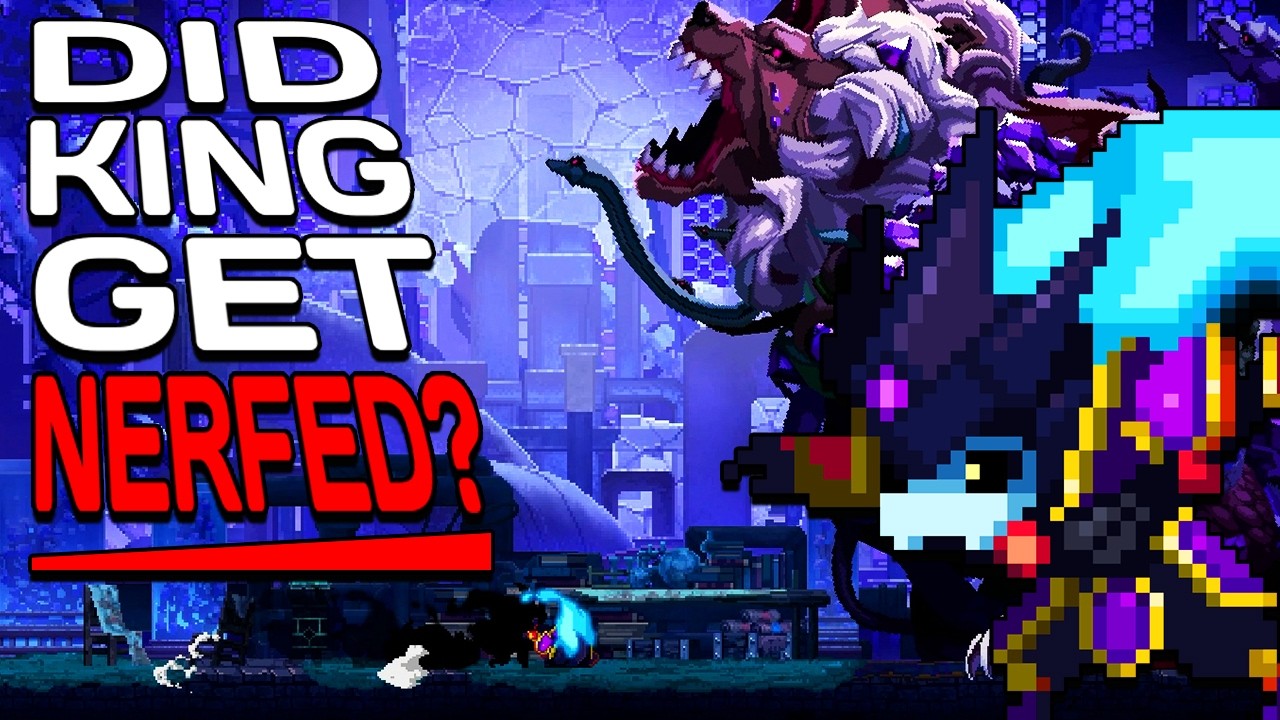
In Skul: The Hero Slayer, the King skull—the legendary reward for completing the Dead Cells crossover challenges—is one of the most potent and unique units in the game. Unlike standard skulls that rely on skill-swapping or basic attack chains, King functions as a "summoner" archetype, calling upon various heroes to execute devastating screen-clearing attacks. Because King’s power ceiling is tied to his ability to survive long enough to cycle his summons, interacting with Cursed Chests requires a disciplined, high-level approach.
Cursed Chests are the primary source of the game's most powerful "Dark Quartz" items, but they come at the cost of permanent, run-altering curses. To successfully pilot the King, you must treat these chests not as random loot sources, but as calculated investments.
The Mechanics of Cursed Chests and King
Cursed Chests offer a binary choice: a massive power spike or a permanent penalty. For the King, who lacks the traditional defensive utility of skulls like the Shield or the mobility of the Ninja, these curses can be lethal.
The King’s damage output scales primarily with Physical Attack and Cooldown Speed. When you open a Cursed Chest, you are looking for items that amplify his summon frequency. If a chest offers a legendary item that provides, for example, massive magic damage but forces a curse that reduces your Physical Attack, it is an objective "trap" item. Always analyze the item’s synergy with the King’s "Hero Summon" mechanic before accepting the trade-off.
How Many Cursed Chests Should You Take?
There is no hard cap on how many Cursed Chests you can open, but there is a "viability cap." In a typical run, most high-level players limit themselves to three to four Cursed Chests.
Taking more than this often results in "curse stacking," where the cumulative debuffs (such as reduced movement speed or increased damage taken) make it impossible to dodge late-game boss patterns, such as the Dark Hero’s rapid-fire attacks. Because the King’s animation lock during his summons can leave you vulnerable, you cannot afford to take a curse that slows your dash recovery or increases the damage you take while stationary.
Strategic Timing: When to Open
The timing of your Cursed Chest interactions determines the flow of your entire run:
- The Early Game (Chapter 1 & 2): You should prioritize opening Cursed Chests here. At this stage, your build is flexible. If you receive a detrimental curse that doesn't fit your desired path, you can pivot your build early without having wasted gold or boss-drop resources.
- Mid-Game (Chapter 3): Only open a chest if you are struggling with clear speeds. By Chapter 3, you should have a core set of items (e.g., items that boost Physical Attack or Critical Damage). If a chest offers an item that breaks your synergy, skip it.
- Late Game (Chapter 4 & 5): Avoid Cursed Chests. At this point, your build should be finalized. The risk of a "run-ending" curse—such as those that limit your dash distance or reduce your overall HP—far outweighs the benefit of a single item.
Evaluating Cursed Rewards: The King’s Priority List
Not all curses are created equal. When faced with a Cursed Chest, categorize the potential rewards and penalties using this expert hierarchy:
- S-Tier (Accept the Curse): Items that grant Flat Physical Attack, Crit Rate, or Cooldown Reduction. These directly multiply the damage of your summons.
- A-Tier (Conditional Accept): Items that provide defensive utility (e.g., HP recovery or damage reduction) if you are currently running a "Glass Cannon" King build.
- F-Tier (Avoid): Any curse that reduces movement speed or dash distance. King relies on spacing to keep his summons safe and effective; if you lose mobility, you lose the ability to play the King effectively.
Common Mistakes to Avoid
Many players fall into the "More is Better" trap. Here is how to avoid common pitfalls:
- The "Item Hoarding" Fallacy: Don't take a Cursed Chest just because the item is legendary. If the item provides "Magic Damage" but you are running a "Physical King" build, the item is useless. The curse, however, is permanent.
- Ignoring Boss Patterns: Never open a Cursed Chest immediately before a boss room unless you are confident you can clear the fight without getting hit. Some curses drastically change how you interact with boss attack hitboxes; you do not want to learn those changes while fighting the Chimera or the First Hero.
- Neglecting Cooldowns: The King is defined by the uptime of his summons. If your curse list makes your cooldowns longer, you are effectively turning a top-tier character into a low-tier one. Prioritize Cooldown Speed over raw damage if the choice arises.
Building for the Dark Mirror
In the Dark Mirror mode, the difficulty spike is significant. Enemy HP and damage are tuned to punish players who cannot maintain high DPS. When playing King in Dark Mirror, your Cursed Chest strategy must shift toward Defensive Integrity.
Because enemies deal more damage, you can no longer afford to take multiple "Increase Damage Taken" curses. Focus on items that provide "Damage Reduction" or "HP Shields" from your Cursed Chests. If the chest offers a trade-off that increases your vulnerability, skip it. In Dark Mirror, the best King build is one that stays alive long enough to exhaust the boss's health bar, not one that dies in two hits while chasing a high-damage, high-risk item.
Final Expert Insights
To master the King in Skul: The Hero Slayer, remember that the character is a rhythmic summoner. Every item you take from a Cursed Chest should either make your summons happen faster or hit harder. If the curse associated with an item forces you to play differently—like forcing you to stay still when you should be dashing—the item will ultimately lower your win rate.
Treat your item slots as a precious resource. Before opening that chest, ask yourself: "Does this item improve my ability to summon, or does this curse ruin my ability to move?" If the answer is the latter, leave the chest closed. A clean run with optimal gear will always outperform a cursed run filled with conflicting, useless legendary items.

Free Skul: The Hero Slayer Codes
Current active codes and how to redeem them.

Michael Smith
Michael covers live-service games, events, reward systems, and efficient daily routines, turning frequent updates into clear actions for players.
COMMUNITY
Player Comments
100 players commented on this guide.
Can you add more details about heroes in a future update?
This saved me time in the early game.
This helped me understand heroes much better.
The tips are practical and easy to follow.