
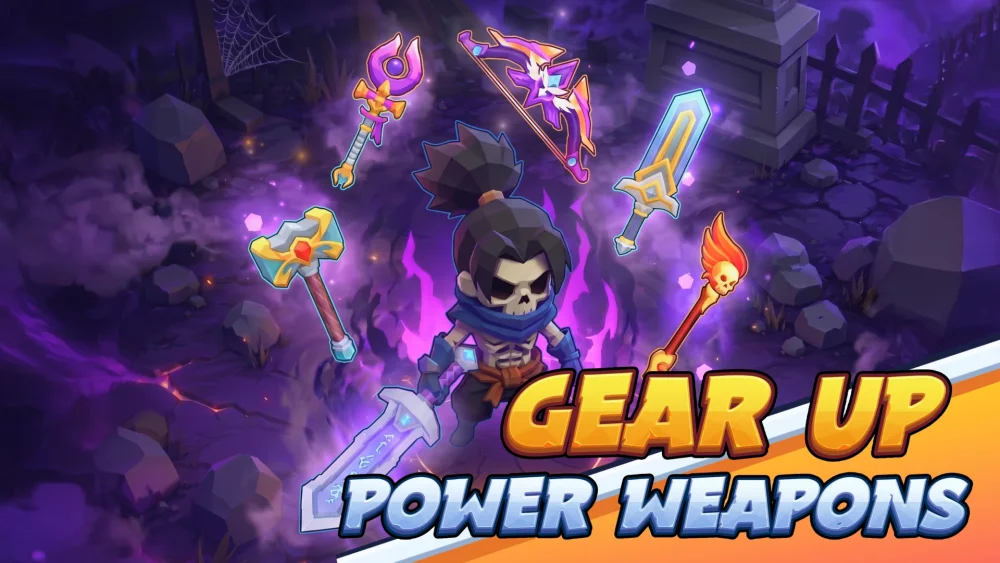
In Skull Hero, survival depends on far more than your ability to spam attacks or upgrade your equipment. While the core gameplay loop focuses on farming experience and defeating monsters, the mysterious lands you traverse are filled with deceptive, high-risk hazards. Among the most dangerous of these are gaze-based enemy mechanics and environmental specimen traps—two hazards that can instantly turn a successful run into a "game over" screen.
This guide provides the tactical knowledge required to navigate these threats, identify visual cues before they become lethal, and avoid the "reversal" scenarios that punish unwary adventurers.
Identifying Gaze-Based Enemy Triggers
The most insidious enemies in Skull Hero are those that utilize gaze-based crowd control. These entities, often modeled after alluring "beauty" archetypes, use visual contact as a weapon. When you make direct eye contact with these units, the game initiates a forced interaction—often termed a "son-in-law" state—that locks your movement, disables your ability to switch skulls, and forces you into a disadvantageous combat loop from which it is difficult to recover.
To prevent falling victim to these gaze locks, employ the following defensive strategies:
- Master Peripheral Awareness: Stop centering your character in the middle of your screen. Instead, track enemy animations from the periphery. By keeping your focal point on enemy movement rather than the center of the field, you can dodge gaze projectiles before they register as a "hit."
- Utilize Line-of-Sight Breaking: Skull Hero maps are filled with pillars, statues, and terrain geometry. If you see an enemy charging a gaze attack, treat it like a projectile. Use a dash move to break their line of sight behind a piece of cover immediately.
- Recognize Visual Cues: Watch for specific icons above your character’s head, such as hearts or shimmering pulses. These are your final warning signs that a gaze lock is moments away. If you see these icons, stop attacking and prioritize movement to reset the encounter.
Navigating Environmental Specimen Traps
Beyond active combatants, Skull Hero utilizes environmental "trophy" traps to punish players who move too quickly through rooms. You may encounter areas filled with preserved creatures, stationary wildmen, or odd NPC placements. These are frequently not just decorative elements; they are lures designed to bait you into an ambush.
Treat any room that feels suspiciously "curated" with extreme caution. If a room contains an abundance of trophies or preserved specimens, assume it is an active trap zone.
Tactical Scouting Steps:
- Stop at the Entrance: Do not rush into the center of a room filled with specimens.
- Ranged Probing: Use a ranged skull ability to strike the stationary specimens from a distance. If they trigger an animation or reveal a hidden trap door, you have successfully avoided the ambush.
- Pathing Efficiency: If the area looks like a "dead end" trap, it often is. Whenever possible, path around these rooms to save your health and resources for high-value boss encounters where your mechanical skill will be rewarded.
Bypassing Narrative-Based "Reversal" Encounters
Skull Hero features specific short-story encounter sequences where the game lures you into a dialogue or a "recruitment" scenario. While these might appear to offer rewards, they are frequently traps designed to finalize a negative status effect, effectively ending your run through a narrative twist.
To bypass these unfavorable reversals, follow these rules:
- Refuse Engagement: If an NPC initiates a dialogue tree that mentions "recruitment" or "marriage," do not engage. The game design here is a trap; the dialogue is simply a timer for your character’s status penalty to take hold.
- Interrupt the Scene: If you are caught in a forced animation, attempt to execute a dash or attack. In some instances, you can hit the source of the trap—the "beauty" entity or the specimen—to interrupt the script before it finishes, potentially saving your run.
- Prioritize Exit Paths: If a room feels like a narrative trap, identify the nearest exit the moment you enter. If the game begins a cinematic zoom or a forced text box, immediately use your mobility skill in the direction of the door.
Tactical Trade-offs and Survival Limitations
The temptation to engage with these unique encounters is high, especially if you suspect they might drop rare loot. However, the design philosophy of Skull Hero regarding these specific traps is skewed heavily against the player. The "reversal" mechanics are specifically tuned to punish greed.
Why Avoidance is the Best Strategy:
- Irreversibility: Once a gaze-based trap or a specimen ambush triggers, your core recovery mechanics—such as swapping skulls or using healing items—are often disabled. You are essentially fighting with one hand tied behind your back.
- Resource Management: Every HP point lost to a trap is a resource you cannot use in a genuine boss fight. Because these "reversal" encounters rarely yield loot worth the risk, they represent a net loss to your efficiency.
- The "No-Go" Policy: Treat these encounters as "no-go" zones. If a quest does not explicitly require you to clear these specific rooms, pathing around them is the most professional and strategic choice.
By identifying the visual cues of gaze-based enemies, treating static specimens as active threats, and refusing to engage in trap-heavy narrative sequences, you will significantly improve your survival rate in Skull Hero. Focus your energy on the boss encounters where your ability to dodge, weave, and counter-attack actually dictates the outcome of the battle, rather than falling for the game's deceptive environmental traps.

Free Skull Hero Codes
Current active codes and how to redeem them.

Sarah Williams
Sarah specializes in RPG and collection games, explaining team building, character growth, and beginner-friendly ways to avoid expensive early mistakes.
COMMUNITY
Player Comments
35 players commented on this guide.
The tips are practical and easy to follow.
The explanation is clear, especially for beginners.
This saved me time in the early game.
Can you add more details about heroes in a future update?