
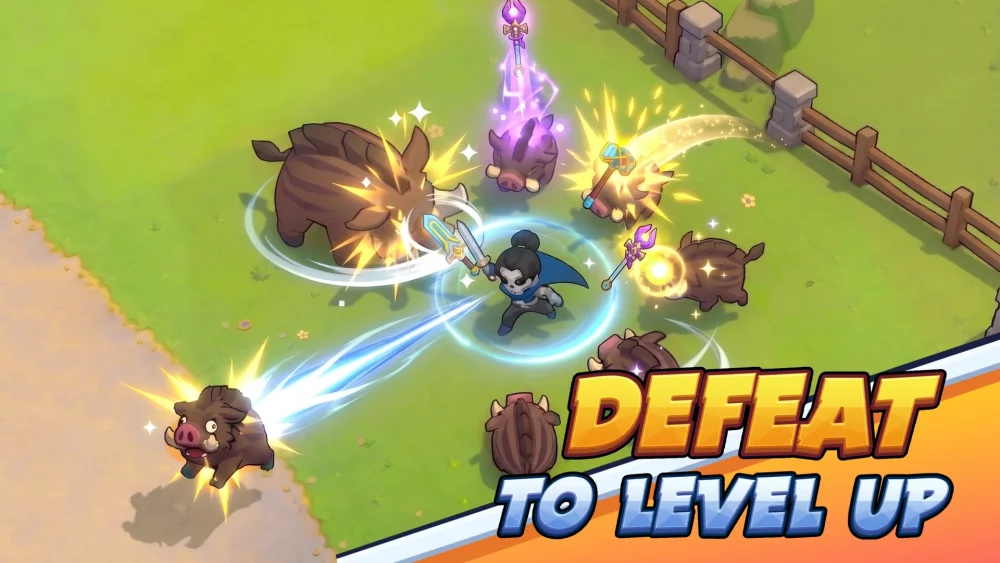
Clearing Floor 40 of the Skull Hero tower in a duo setting is the ultimate test of mechanical coordination, team synergy, and positioning. While Skull Hero provides a straightforward action-adventure experience, the jump in difficulty at the higher tower floors is significant, requiring players to move beyond solo-play habits. Because boss scaling at Floor 40 is designed to punish uncoordinated teams, success depends on your ability to split enemy focus, manage damage windows, and maintain composure during high-intensity bullet-hell phases.
The Foundation of Duo Success: Pincer Positioning
The most common reason for failure on Floor 40 is "stacking," where both players stand in the same area. This error is fatal because it causes boss projectiles and area-of-effect (AoE) attacks to hit both players simultaneously, limiting your team's ability to dodge and effectively doubling the damage the team takes.
To succeed, adopt a "pincer" strategy. Both players should occupy opposite sides of the arena. This positioning forces the boss AI to pivot constantly. As the boss turns to face one player, the other player gains a clear window to deal damage from the flank without being targeted. If the boss switches focus, the targeted player should transition into a defensive "kiting" mode, leading the boss away from the center, while the non-targeted player transitions to maximum damage output.
Synchronizing Skill Rotations for Maximum DPS
In Skull Hero, your skills are your greatest assets, but they are finite resources that must be managed with timing. Dumping all your abilities simultaneously is a classic mistake. If the boss survives your initial burst, you will be left with no crowd control or damage mitigation tools while your cooldowns reset.
Instead, stagger your skill rotations. Coordinate with your partner via voice or quick-chat to maintain constant damage uptime:
- The Debuff Phase: Player A initiates with crowd-control skills or armor-reduction debuffs. This lowers the boss's effective health and prevents them from performing high-damage mechanics.
- The Burst Phase: While the boss is slowed or debuffed, Player B executes their heavy-hitting ultimate abilities.
- The Reset Phase: Once the burst is complete, both players must prioritize movement. Stop attacking if your skills are on cooldown and focus entirely on dodging. Do not force damage during this phase; survival is the only goal until your rotations are ready again.
Building for the Floor 40 Meta: Support vs. Carry
At Floor 40, raw attack power is often less valuable than survivability. While it is tempting to build both players for maximum damage, the most consistent duo clears often utilize a "Support-Carry" split.
In this setup, one player acts as the "Tank/Support," prioritizing gear with passive movement speed, dodge chance, or health regeneration. Their goal is to maintain the boss's attention and survive hits. The second player acts as the "Carry," building for pure damage output. Because the Support player can soak up pressure, the Carry can safely remain stationary during their burst windows, leading to significantly higher overall DPS and a lower chance of a team wipe.
Analyzing Enemy Patterns and Telegraphed Attacks
The enemies and bosses in Skull Hero are predictable, but their damage output is punishing. By Floor 40, you should not be reacting to attacks; you should be anticipating them. Watch for the subtle telegraphs—animations or sound cues—that precede every major boss attack.
- Wind-up Animations: Most bosses have a distinct frame animation before a large AoE attack. Use this moment to dash away from the boss's center.
- Wave Management: Between boss phases, you will be swarmed by smaller enemies. Do not let these minions surround you. Use your knockback skills to keep a clear perimeter. If you get pinned against the wall, you lose your ability to dodge, which is almost always a death sentence at this stage.
Practical Tips for Long-Term Tower Climbing
Since Skull Hero is currently stable with no major balance changes, the strategies for Floor 40 are well-established. Use this period of consistency to refine your mechanics rather than searching for "hidden" power spikes.
- Movement is Life: Never stay stationary for more than one second. Even if you are attacking, keep your character moving in small circles. This makes it significantly harder for enemy projectiles to track you.
- Resource Management: Save your invulnerability frames (i-frames) for the moments when you are trapped in a corner or when the boss enters an enrage phase. Do not waste them early in the fight.
- Communication: In a duo run, silence is your enemy. Call out your cooldowns. If your ultimate is ready, tell your partner so they can hold their own debuffs to maximize your burst.
- Analyze the Wipe: If you die, don't restart immediately. Take 30 seconds to discuss why you were hit. Was it a positioning error? Did you run out of skills at the wrong time? Understanding the "why" is more important than the "how" when pushing high-floor content.
By focusing on spacing, staggering your cooldowns, and maintaining a clear communication loop, even the most daunting floors in Skull Hero become manageable. Consistency in your rotation and discipline in your positioning will eventually lead you to victory.

Free Skull Hero Codes
Current active codes and how to redeem them.

Sarah Williams
Sarah specializes in RPG and collection games, explaining team building, character growth, and beginner-friendly ways to avoid expensive early mistakes.
COMMUNITY
Player Comments
135 players commented on this guide.
This saved me time in the early game.
The tips are practical and easy to follow.
Good guide for Skull Hero players. The heroes part was useful.
This guide answered the exact question I had.