
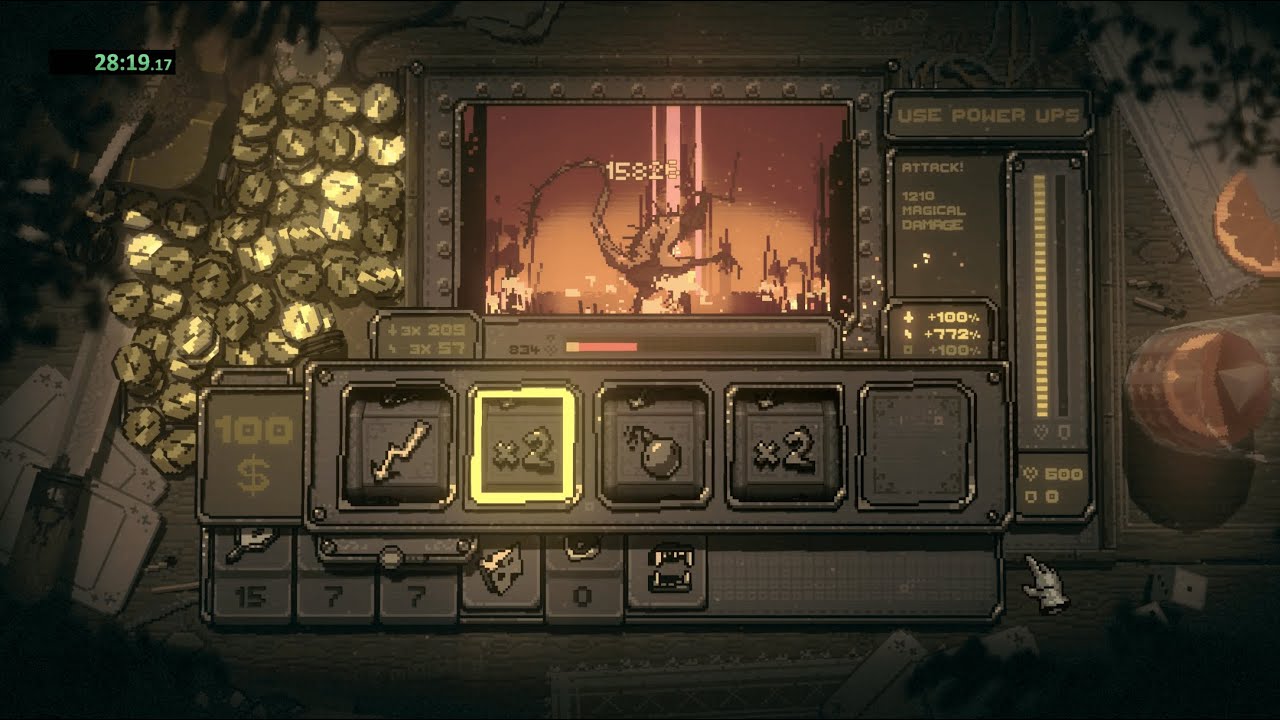
To achieve a competitive Any% time in Slots & Daggers, you must pivot your build toward the high-damage "bomb strategy" during the third stage of your run. While early-game consistency relies on basic scaling, the bomb-centric approach allows you to clear waves significantly faster than standard melee or dagger builds. By focusing your resource management on explosive item acquisition, you minimize combat duration and navigate the game’s increasing difficulty spikes without needing to manually grind every individual enemy encounter.
Leveraging the Bomb Strat for Mid-Game Acceleration
The bomb strategy is the undisputed meta for runners aiming to bypass the defensive scaling that occurs in the later stages of Slots & Daggers. By transitioning into a bomb-heavy loadout, you shift your damage output from incremental, single-target attacks to burst-focused, board-clearing explosions.
This transition is mandatory because relying on standard weapon hits slows down your progression as enemy health pools inflate. When executing this build, your primary goal is to maximize the frequency and power of explosive items. These items allow you to clear large sections of the screen instantly, which is vital for maintaining the pace required for a sub-20-minute run. Success hinges on precise placement; missing your bomb radius or failing to reroll for explosive synergies during the third stage shop can lead to a drastic loss in time efficiency.
Managing RNG and Reroll Economy
RNG is an inherent factor in any Slots & Daggers fresh start, and your ability to manage your reroll economy determines the reliability of your bomb setup. Runners often fall into the trap of spending too many coins early on, leaving them unable to purchase the necessary explosive components when they appear in the shop.
To mitigate this, follow these resource management rules:
- Stage 1 & 2: Focus exclusively on coin accumulation. Do not overspend on Tier-1 damage items that will be replaced.
- The Shop Threshold: Always keep a buffer of 15–20 coins before entering the Stage 3 shop. This ensures you can refresh the store enough times to hit your core explosive synergies.
- Knowing When to Pivot: If you reach the shop and hit a "dry" roll, do not burn your entire bank. Evaluate if your current board can limp through to the next level. A successful speedrun hinges on knowing when to accept a suboptimal board to move on rather than fishing for the "perfect" setup.
Strategic Stage Navigation and Scaling
Effective navigation through Slots & Daggers requires knowing when to stop investing in minor upgrades and start committing to your core build. In an Any% context, you should cease purchasing low-tier damage items as soon as you have the baseline requirements for your bombs. Over-investing in smaller, incremental buffs is a common mistake that consumes valuable time and currency without providing the necessary power spike to clear bosses quickly.
Pay close attention to environmental shifts. Certain stages feature board layouts that favor explosive placement, while others may restrict your movement or item usage. By aligning your bomb usage with stage-specific patterns, you can optimize your damage potential and ensure that you are spending as little time as possible on non-boss encounters.
Minimizing Time Loss in Combat Transitions
Combat transitions are the most frequent source of time loss for intermediate runners. Between stages, your focus should be on clearing your board of debris and placing your bombs in the most efficient positions for the upcoming wave.
Pro Tips for Efficiency:
- Inventory Automation: Practice the habit of dragging and dropping your items into their optimized slots immediately after a wave ends. This eliminates "dead air" where you are neither combatting enemies nor progressing.
- The "Clean-Up" Habit: Get into the rhythm of clearing your board of low-value, non-explosive items before the start of the next stage. A cluttered board decreases your ability to react to sudden enemy spawns.
- Secondary Cycling: If you encounter an unlucky streak where the shop fails to provide key bomb components, avoid over-correcting. Adopting a flexible secondary strategy—such as high-speed dagger cycling—can serve as a backup to keep your run alive until you reach the next shop refresh.
When to Abandon the Bomb Strat
While the bomb strategy is the primary engine for speed, it is not infallible. Recognizing when a run has "bricked" is a high-level skill. If you reach the final third of the game without achieving at least two of your core explosive synergies, the bomb strategy will actually slow you down due to the high setup time of suboptimal explosions.
In these specific instances, pivot immediately into a high-attack-speed build. While it may not result in a World Record time, it provides the consistency needed to finish the run, gain experience, and refine your pathing for the next attempt. Remember that in Slots & Daggers, a completed, steady run is often more valuable for learning the enemy spawn patterns than a reset-heavy, failed attempt at a "perfect" bomb run.
Final Thoughts on Execution
The path to a sub-20-minute Slots & Daggers run is paved with discipline. Do not let the thrill of a potential bomb synergy blind you to your economy. Keep your movements fluid, your shop rerolls calculated, and your focus on the timer. By treating every stage transition as an opportunity to shave off seconds, you will eventually find the rhythm that separates casual players from the leaderboard elite.

Free Slots & Daggers Codes
Current active codes and how to redeem them.

Sarah Williams
Sarah specializes in RPG and collection games, explaining team building, character growth, and beginner-friendly ways to avoid expensive early mistakes.
COMMUNITY
Player Comments
71 players commented on this guide.
The explanation is clear, especially for beginners.
I wish I had read this before upgrading the wrong thing.
Nice guide. I am checking the other Slots & Daggers articles next.
The tips are practical and easy to follow.