
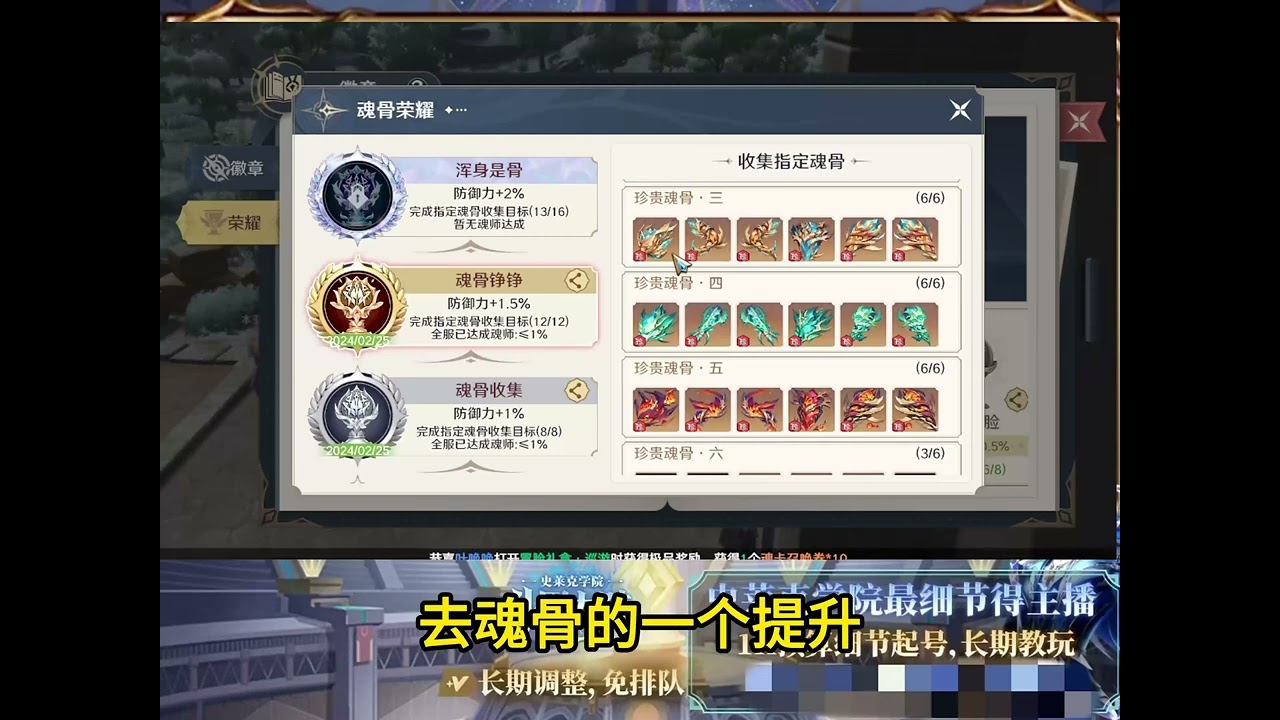
In Soul Land: New World, your Soul Bone configuration is the single most impactful factor in determining your character’s damage ceiling. Unlike standard gear, Soul Bones provide the multiplicative scaling necessary to transition from a mid-game player to an end-game powerhouse. To maximize your damage-per-second (DPS), you must move beyond simple gear scores and focus on the strategic selection of primary stats, set bonuses, and tier-based resource management.
The Foundation of DPS: Prioritizing Offensive Main Stats
The most fundamental rule for any DPS build in Soul Land: New World is prioritizing primary stat rolls that amplify your base damage. While it is tempting to equip higher-tier gear regardless of its stats, doing so often leads to "bloated" combat power that lacks actual output efficiency.
Why Attack % Rules
In the math of Soul Land: New World, flat Attack (ATK) provides a solid baseline, but percentage-based Attack (ATK %) increases are what allow your character to scale into the late game. As your base character level and weapon strength increase, your ATK % modifiers act as a multiplier for that growing base.
- Primary Slot Priority: Always prioritize pieces that offer Attack % as the main stat.
- The "Dead Stat" Trap: Avoid Soul Bones that roll into flat defensive stats (like Health or Physical Defense) in your primary slots. Even a slightly lower-tier Soul Bone with an offensive primary stat will almost always outperform a high-tier piece with defensive main stats in a pure DPS role.
Mastering Soul Bone Set Bonuses
Individual high-stat pieces are important, but the true power spikes in Soul Land: New World come from completing full Soul Bone sets. Set bonuses provide unique passive triggers that cannot be replicated by individual items.
The DPS Set Hierarchy
When planning your character's progression, you should categorize your sets based on the content you are currently tackling:
- Attack-Focused Sets (Early to Mid-Game): These sets provide raw, flat, or percentage-based boosts to your Attack. They are the most consistent performers because they increase your damage in every combat scenario, from solo mob farming to dungeon clearing.
- Critical Damage Sets (Late Game): Once your character reaches a threshold where your Critical Hit Rate (crit chance) is consistently above 40–50%, you must transition to Critical Damage sets. These sets multiply the damage of your critical strikes, allowing you to bypass the base attack ceiling.
- Penetration Sets (Bossing & PVP): These are situational but essential. As you face high-level bosses with significant damage reduction or players with high defensive stats, raw Attack becomes less effective. Penetration sets reduce the target's damage mitigation, ensuring your attacks land for their full potential.
Managing Quality, Tiers, and Resource Allocation
One of the most common mistakes players make in Soul Land: New World is over-investing in low-tier Soul Bones. Because enhancement materials are scarce, you must be surgical with your upgrades.
The "Good-Enough" Rule
Do not fully upgrade a Soul Bone unless it has at least two of your desired "best-in-slot" secondary stats. If a Soul Bone has the correct primary stat but poor secondary rolls (such as Healing Bonus or purely defensive stats), take it to a "mid-level" upgrade state and stop. Save your high-level enhancement ores for pieces that have perfect or near-perfect rolls.
- Tier 1 (Rare/Common): Use these only to bridge the gap during early leveling. Do not waste rare enhancement materials here.
- Tier 2 (Epic/Elite): Only invest if you have a clear path to a 4-piece set bonus.
- Tier 3 (Legendary/Mythic): These are your long-term investments. Only commit your rarest, time-gated materials to these pieces.
Balancing DPS with Survivability
It is a common pitfall for DPS players to push exclusively for damage, only to find themselves dying instantly in high-level dungeons. Soul Land: New World requires a "survivability threshold" before you can effectively utilize your DPS.
The Defensive Trade-Off
If you find that you are constantly being one-shot by boss mechanics, you are not doing any damage while you are dead. Use this strategy to balance your build:
- The 5+1 Rule: If you are using a 6-piece set, consider breaking it for one or two pieces of gear that provide HP % or Damage Reduction. Often, losing 5% of your total damage output to gain 20% more survivability is a net gain because you can remain in the fight to cast your full rotation.
- PVP vs. PVE Tuning: Create two distinct loadouts if the game's interface allows. Your PVE build should focus on pure sustain-damage, while your PVP build should incorporate more Penetration and Critical Resistance to survive against other players who are also running high-crit builds.
Expert Tips for Consistent Progression
- Check the Sub-stats: Always look for "Critical Hit Rate" and "Critical Damage" as secondary stats on your attack-based Soul Bones. If a piece has high Attack % but also has Crit Rate, it is significantly more valuable than a piece with only Attack %.
- Don't Ignore Refining: Use the refining system to re-roll unwanted defensive secondary stats. While this can be costly, refining a core piece of your set is often more efficient than hunting for a new drop with perfect stats.
- Synergy with Martial Souls: Ensure your Soul Bones complement your chosen Martial Soul. If your Martial Soul relies on fast attack speed, prioritize Attack and Penetration. If it relies on heavy, singular hits (burst), prioritize Critical Damage above all else.
By methodically focusing on Attack scaling, prioritizing critical-based sets in the late game, and managing your resources to avoid wasting materials on sub-par gear, you will maximize your damage output in Soul Land: New World. Remember: in this game, your gear is only as strong as the synergy between your set bonuses and your primary stats.

Free Soul Land: New World Codes
Current active codes and how to redeem them.

Emily Johnson
Emily writes practical mobile strategy guides with a focus on resource planning, base progression, and the early decisions that shape a long-term account.
COMMUNITY
Player Comments
107 players commented on this guide.
I tried this today and it worked better than my old setup.
This guide answered the exact question I had.
The explanation is clear, especially for beginners.
This saved me time in the early game.