
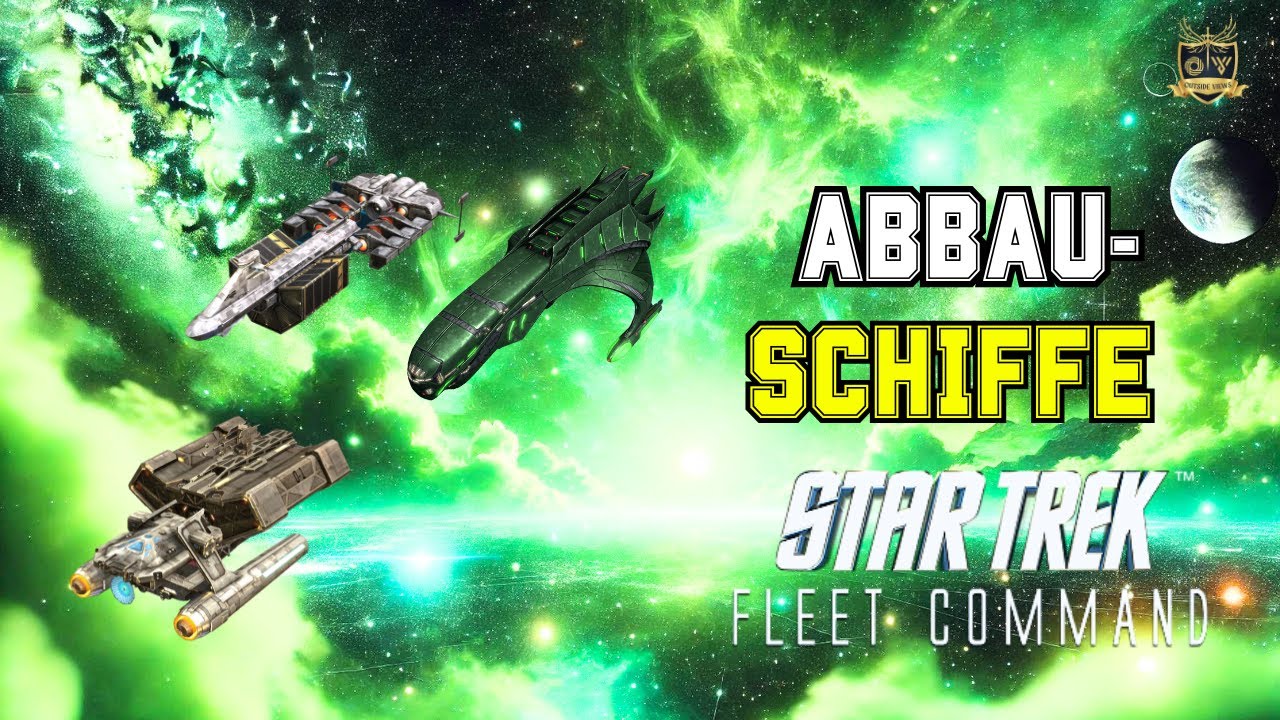
To establish an efficient early resource economy in Star Trek Fleet Command, stop investing upgrade materials into the starter ECS Fortunate as soon as you unlock the ECS Envoy at Operations level 16. Building two to three Envoys provides the cargo capacity, warp range, and mining speed required to supply your station refinery with 2-star and early 3-star materials without needlessly risking gathered cargo to enemy raiders.
Upgrading from the ECS Fortunate to the ECS Envoy
The ECS Fortunate unlocks at Operations level 7 to introduce basic mining and fulfill initial daily goals for Parsteel, Tritanium, and Dilithium. However, its small cargo hold, low warp range, and negligible protected cargo ceiling make heavy investment inefficient. Spend only enough resources on the Fortunate to clear local progression tasks, then reserve your materials for the ECS Envoy.
At Operations level 16, construct at least two ECS Envoy hulls. The Envoy provides significantly higher warp range, faster base extraction rates, and a much larger cargo capacity. Tier your primary Envoy sequentially to reach 2-star and early 3-star resource systems. Running multiple Envoys enables continuous refinery cycles while meeting daily mining requirements.
| Survey Ship | Unlock Threshold | Primary Resource Grade | Strategic Role | Upgrade Recommendation |
|---|---|---|---|---|
| ECS Fortunate | Operations 7 | Grade 2 Common / Basic | Local system mining and tutorial tasks | Stop upgrading once range reaches basic nodes |
| ECS Envoy | Operations 16 | Grade 2 & Grade 3 Nodes | Fleet extraction and daily cargo loops | Build 2 to 3 hulls and tier sequentially |
| Horizon | Operations 26 | Grade 3 Common & Uncommon | Mid-game heavy extraction and deep systems | Replace active Envoy hulls upon construction |
Managing Protected Cargo to Prevent Node Raiding
Every survey ship has a total cargo capacity and a protected cargo ceiling. Resources mined beneath the protected cargo limit remain secure if your ship is destroyed. Any materials collected beyond that limit enter Over-Protected Cargo (OPC), making your vessel a target for raiders under standard server Rules of Engagement (ROE).
To avoid losing cargo and incurring repair costs:
- Verify your ship's protected cargo limit in its stats panel before sending it to a node.
- Monitor extraction rates and calculate when your hold will cross into OPC status.
- Recall your ship to the station before excess cargo becomes vulnerable.
- Reset your miner on an active node or recall it immediately once a node is depleted to avoid idling on empty zero-nodes.
Early Mining Officer Assignments
Assigning specialized survey officers to the captain's chair substantially increases extraction rates compared to generic combat officers. Match each officer's specific ability to the resource node being harvested:
- Stonn (Captain): Maximizes extraction speed on Ore nodes.
- T'Pring (Captain): Maximizes extraction speed on Gas nodes.
- Barot (Captain): Maximizes extraction speed on Crystal nodes.
- Bridge Wing Seats: Assign officers such as Helvia and K'Temasch to increase warp and impulse speeds, shortening transit times to and from mining systems.
Transitioning to Specialty Miners and the Horizon
Avoid fully maxing out three Envoys to their final tiers, as the required 2-star and 3-star materials are better spent on station research, combat ships, and specialized survey hulls:
- Botany Bay: Dedicated to harvesting Corrupted and Decoded Data in Augment space to advance Augment faction reputation and earn officer shards.
- Ferengi D'Vor: Built specifically for mining Raw Latinum, which refines into Latinum used to speed up construction and research.
- Horizon Preparation: Beginning at Operations level 24, save your 3-star survey parts and refined Ore so you can construct and upgrade the Horizon immediately upon reaching Operations level 26.

Free Star Trek Fleet Command Codes
Current active codes and how to redeem them.

Emily Johnson
Emily writes practical mobile strategy guides with a focus on resource planning, base progression, and the early decisions that shape a long-term account.
COMMUNITY
Player Comments
62 players commented on this guide.
I wish I had read this before upgrading the wrong thing.
This helped me understand early game much better.
Good guide for Star Trek Fleet Command players. The early game part was useful.
Nice guide. I am checking the other Star Trek Fleet Command articles next.