
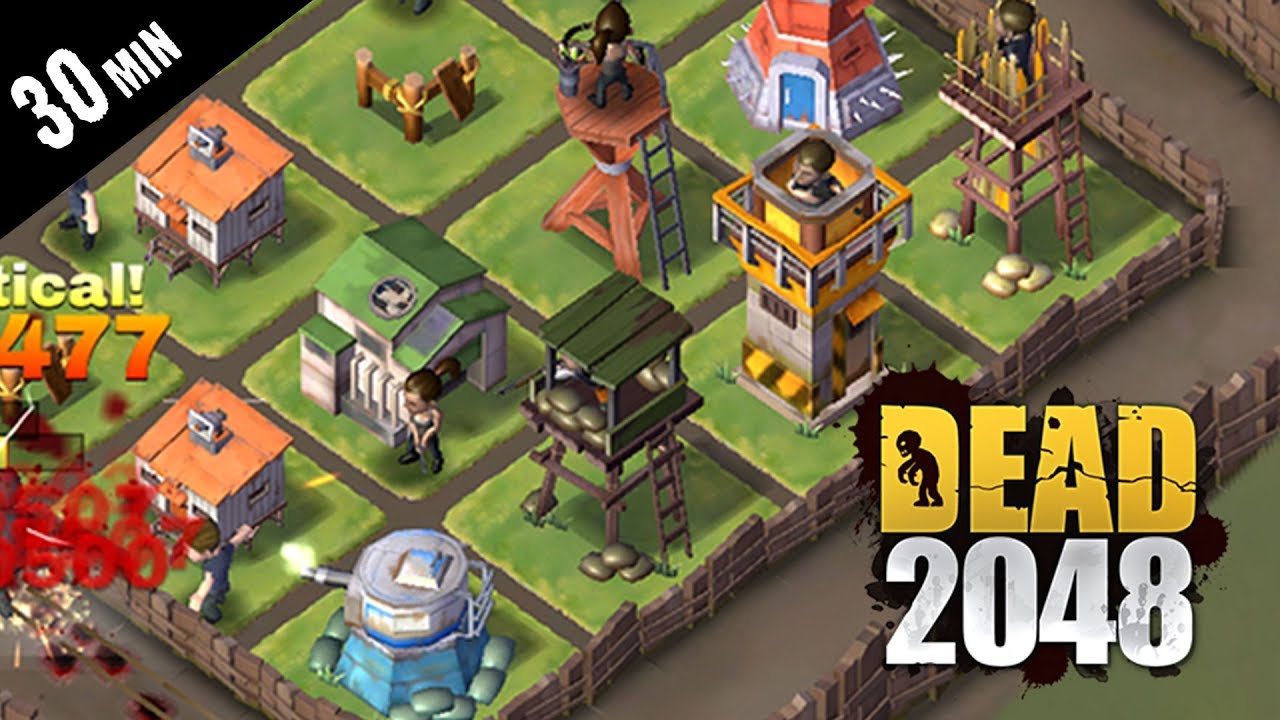
Reaching the 2048 Tower in Starguard: Evo Merge TD is the ultimate test of spatial awareness and tactical planning. Unlike standard tower defense games that rely on rapid-fire placement, this title demands a disciplined approach to grid management and structural hierarchy. To reach the elusive 2048 milestone, you must transition from reactive gameplay to a predictive, logic-based construction strategy. This guide breaks down the mechanics and advanced maneuvers required to synthesize your elite troopers into a singular, game-ending 2048 defensive structure.
The Corner-Loading Anchor Strategy
The foundation of any successful 2048 run is the "Anchor Point." If you place your highest-value units randomly across the grid, you will inevitably run out of space, as these large structures become "islands" that cannot interact.
To succeed, you must fix your most advanced structures in one specific corner of the grid. By committing to this anchor, you create a dedicated "growth path." When your highest unit is tucked into a corner, every subsequent merge should be designed to feed into that corner.
Expert Tip: Think of your board as a funnel. Your base-level units enter the grid, move through the mid-tier synthesis phase in the empty, non-anchor sections of the grid, and finally migrate toward the corner to merge with your largest tower. This prevents the "clutter effect" where high-value units are stranded in the center of the board, blocking the movement of smaller units needed for the next evolution.
Mastering Grid Density and Movement
Grid stagnation is the number one cause of failure in Starguard: Evo Merge TD. This occurs when the board is filled with low-tier units that cannot be merged, essentially locking your grid and preventing further evolution.
To maintain fluidity, adhere to the "Two-Tile Rule": Never allow your board to have fewer than two empty squares. If you have only one or zero empty tiles, you lose the ability to shift units around to set up chain merges.
Strategies for maintaining board flow:
- The Chain Merge Priority: Always look for merges that trigger further merges. If merging two "2" units creates a "4," which then automatically merges with an existing "4" to create an "8," you have saved a turn and gained space.
- Horizontal vs. Vertical Clearing: In the early game, pick a consistent direction for your merges. If you force your units to move primarily in one direction (e.g., always merging toward the bottom-right corner), you maintain a predictable board state that allows for easier planning.
- Avoid "Trash" Accumulation: Do not let low-level units occupy the inner rows of your grid. Keep the center for mid-tier structures and the outer edges for your nascent units.
The Tiered Evolution Hierarchy
You cannot build a 2048 Tower in a vacuum; you need a sustainable ecosystem of units. Treat your board as an assembly line. When you look at your grid, categorize every unit into one of three tiers:
- Feeders (Base Units): These occupy the peripheral zones. Their only purpose is to be merged into mid-tier units.
- Buffers (Mid-Tier): These occupy the intermediate zones. They act as the "backup" for your anchor tower. If your anchor is an "8," your goal should be to have at least two "4s" nearby, ready to jump to an "8."
- The Anchor (High-Tier): The singular, largest structure located in your corner.
By maintaining this hierarchy, you ensure that you are never "missing a piece" when a high-wave threat appears. If you focus only on the 2048 Tower and ignore the mid-tier buffers, a sudden wave of mechanical invaders can easily overwhelm your board before you have the chance to synthesize the next level.
Handling Tactical Trade-offs and Gridlock
The greatest risk of the corner-loading strategy is "Anchor Trapping." If you miscalculate and place a low-value unit in your corner, or if you accidentally merge a piece that locks your largest tower behind a wall of non-mergeable units, you risk a total board stall.
How to recover from a stall:
- Sacrificial Merges: If you are blocked, perform "sub-optimal" merges. It is better to merge two units that aren't part of your main growth path just to open up a single square than to keep the board frozen.
- Anticipatory Positioning: Before making a major merge, look at the tiles surrounding your anchor. If the squares around your 2048-in-progress are filled with "dead" units that don't match, you must prioritize clearing those specific tiles before continuing your growth.
- The "Reset" Logic: If you reach a state where you have no possible moves, the game is lost. Always prioritize moves that increase your future mobility, even if it means delaying a merge for one turn.
Strategic Mistakes to Avoid
Many players fail because they treat Starguard: Evo Merge TD like a race. In reality, it is a game of resource management.
- The "Random Merge" Trap: Do not merge units just because you can. Every merge should serve the specific goal of getting a unit closer to your anchor point. Merging two units in the wrong corner of the board creates a new, high-tier "island" that will eventually block your growth.
- Ignoring Wave Pressure: While you focus on the 2048, do not ignore the invaders. If your board is too focused on the 2048, you may lack the defensive coverage to stop incoming threats. Ensure your "Buffers" are placed strategically to maximize their defensive reach while you move them toward the anchor.
- Over-filling the Grid: The biggest mistake is filling all 16 squares. Once you have less than two moves available, your ability to react to the randomized unit spawns drops to nearly zero. Keep the board lean, keep the units moving, and keep your anchor corner protected.
By mastering these techniques, you will find that the 2048 Tower is not a matter of luck, but of consistent, logical board state management. Keep your anchor corner clean, maintain your buffer tiers, and always keep your grid fluid to ensure your defense is ready for whatever the mechanical invaders throw your way.

Free Starguard: Evo Merge TD Codes
Current active codes and how to redeem them.

James Brown
James focuses on Android gaming on PC, emulator setup, controls, performance tuning, and practical troubleshooting for longer play sessions.
COMMUNITY
Player Comments
27 players commented on this guide.
The tips are practical and easy to follow.
I wish I had read this before upgrading the wrong thing.
I tried this today and it worked better than my old setup.
Good guide for Starguard: Evo Merge TD players. The updates part was useful.