
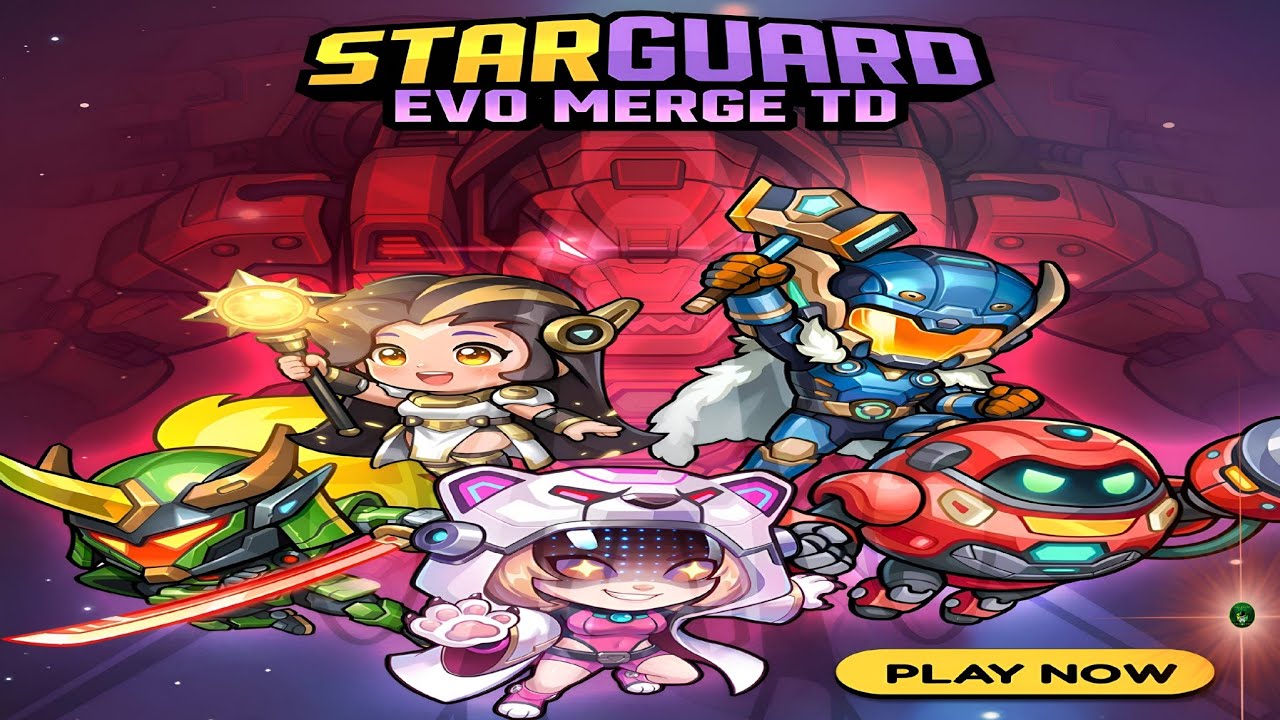
To succeed in Starguard: Evo Merge TD, you must master the delicate balance between rapid unit synthesis and spatial control. This sci-fi tower defense game demands more than just clicking the merge button; it requires a calculated approach to resource management and battlefield positioning. By prioritizing a clean, efficient board and understanding the scaling mechanics of your elite troopers, you can effectively defend your outpost against the relentless mechanical invaders.
The Core Mechanic: Understanding Merge Efficiency
At its heart, Starguard: Evo Merge TD is a game of exponential growth. Every time you merge two units, you are not just saving space; you are consolidating your damage per second (DPS) output. A single high-tier unit is mathematically superior to two units of a lower tier because it provides more concentrated fire in a smaller footprint.
However, the "trap" many new players fall into is over-merging. If you merge all your units into one or two high-level troopers, you lose the ability to cover the map effectively. The key is to aim for a "pyramid" structure: maintain a few high-tier units at the center of your kill zones, supported by a healthy baseline of mid-tier units that provide consistent chip damage across the entire path.
Strategic Board Space Management
Your board is your most limited resource. When your grid fills up, your ability to spawn new units—and therefore your ability to grow—comes to a screeching halt. To maximize your efficiency:
- The 75% Rule: Try to keep your board no more than 75% full during the early waves. This gives you the "breathing room" to spawn new units, evaluate your options, and perform merges without the board locking up.
- Clear Inactive Tiles: If a unit is placed in a corner where it cannot hit the path, it is dead weight. Merge it away immediately, even if it’s a higher tier than you’d like to sacrifice.
- Avoid "Merge Paralysis": Do not let your board reach 100% capacity. Once the grid is full, you cannot react to boss spawns or sudden enemy rushes, effectively forcing you into a losing position where you are at the mercy of RNG.
Mastering Unit Tier Advancement
Tier advancement is your primary lever for scaling against the game’s increasing difficulty. As enemy health pools grow, your low-tier troopers will eventually be unable to secure kills, leading to a "leaking" defense.
Focus your currency on spawning new units consistently rather than saving for a single high-tier unit. By maintaining a constant flow of new troopers, you ensure that you are always one or two merges away from a significant power spike. When you identify a unit type that excels at crowd control or high single-target damage, prioritize merging those specific units to create a specialized "anchor" tower that can handle the toughest mechanical invaders.
Tactical Placement and Synergy
In Starguard: Evo Merge TD, your towers are only as good as their reach. Placing a high-damage unit in an isolated corner is the most common mistake made by beginners.
- Choke Point Prioritization: Identify the sections of the map where enemy paths converge. These are your "Kill Zones." Focus your highest-tier units in these areas.
- Range Overlap: Ensure the ranges of your units overlap. This ensures that if a fast-moving enemy slips past one trooper, another is already primed to continue the damage.
- The Anchor Strategy: Place your most powerful units in the center of the board. From this position, they can provide maximum target uptime, essentially acting as the "anchor" of your defense that cleans up anything that survives the initial engagement.
Navigating Wave Transitions
The quiet moments between waves are not for resting—they are for active maintenance. Use the transition period to perform a "Board Audit":
- Sell Redundant Units: If you have low-level units that aren't contributing to your DPS, sell them to generate the resources needed to spawn more units.
- Repositioning: If the next wave features enemies with unique patterns, shift your higher-tier units to cover the new pathing routes.
- Resource Management: If you have excess currency, dump it into spawning units before the wave starts. A full board of mid-tier units is generally better than a half-empty board of high-tier units during the chaotic mid-game.
Common Mistakes to Avoid
- Ignoring Synergy: Not all troopers are equal. Some are meant for sustained damage, while others are specialized for burst or slow effects. Learn which units work best together and stop merging them into "generic" high-tier towers if you lose a valuable ability in the process.
- Over-Investing in One Area: Spreading your power across the map is usually safer than focusing all your strength at the entrance. If your "entrance defense" fails, you will be left defenseless as enemies swarm your base.
- Ignoring Boss Mechanics: Bosses in Starguard: Evo Merge TD often require specific tactical adjustments. If a boss has high armor, you might need to prioritize units with armor-piercing capabilities. Always hover over the boss info when it appears to adjust your strategy on the fly.
Final Expert Insights
The transition from early to late game in Starguard: Evo Merge TD comes down to your ability to recognize when to hold and when to merge. If you find yourself losing, it is almost always due to board clutter or poor placement.
Treat your board as a living engine. If one part of the machine stops performing, break it down and rebuild it. By keeping your board flexible, your towers positioned for maximum coverage, and your tier-advancement consistent, you will find that even the most difficult mechanical waves can be neutralized. Focus on the rhythm of the game—spawn, assess, merge, and repeat—and you will stabilize your outpost against any threat the game throws your way.

Free Starguard: Evo Merge TD Codes
Current active codes and how to redeem them.

Sarah Williams
Sarah specializes in RPG and collection games, explaining team building, character growth, and beginner-friendly ways to avoid expensive early mistakes.
COMMUNITY
Player Comments
144 players commented on this guide.
This guide answered the exact question I had.
This saved me time in the early game.
I tried this today and it worked better than my old setup.
I wish I had read this before upgrading the wrong thing.