
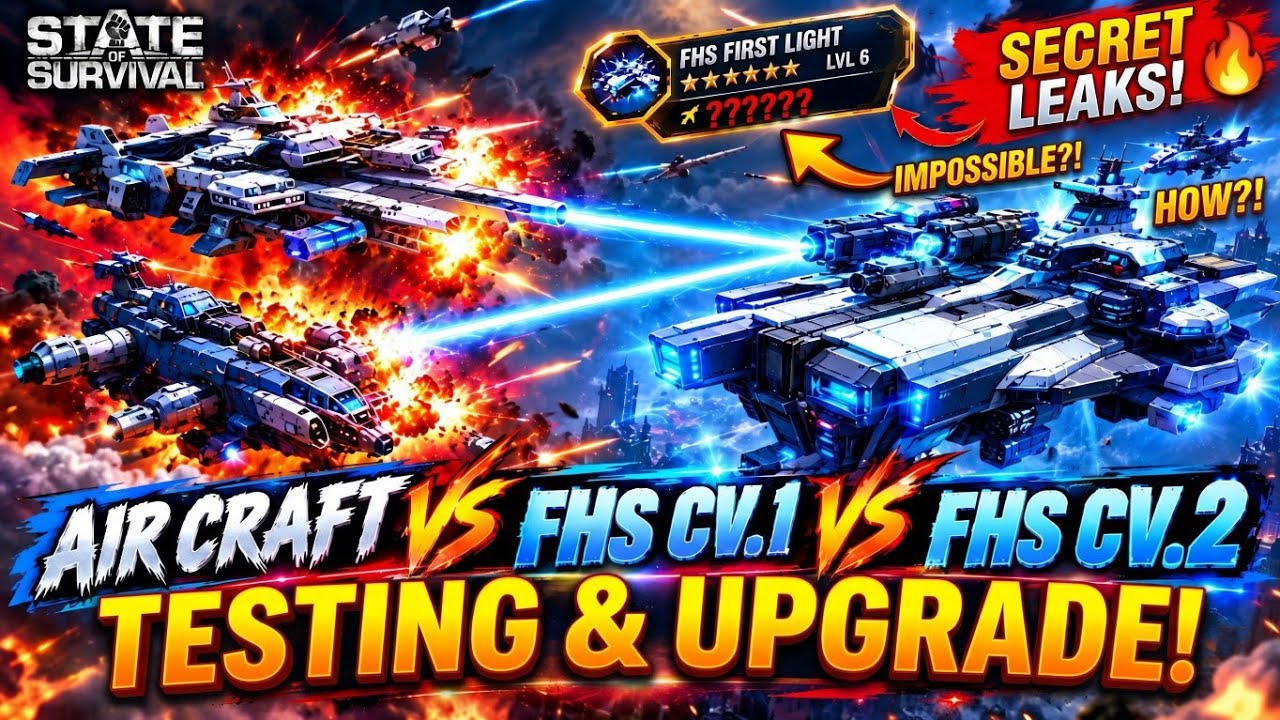
Upgrading the Flying Heavy Ship (FHS) First Light CV-2 in State of Survival significantly improves troop survivability and offensive lethality in PvP combat. Because flagship bonuses project across joined alliance forces, maxing out First Light CV-2 is a top priority for designated rally leaders in State Warfare (SvS) and Capital Clash. Supporting players, however, should stop at operational baselines to preserve materials for other core progression systems.
First Light CV-2 Combat Performance vs. Ark CV-1
Fielding a maxed First Light CV-2 against the earlier Ark CV-1 creates a distinct combat advantage across sustained battle rounds. Battle reports indicate that this disparity centers on formation preservation and backline protection:
- Frontline Retention: Ark CV-1 fleets often suffer premature frontline Infantry collapse. First Light CV-2 provides defensive thresholds that allow Infantry to withstand incoming bursts, preventing Riders and Hunters from taking direct fire early.
- Damage Multipliers: Rather than providing flat stat increases, First Light CV-2 applies percentage-based lethality multipliers across all troop types, steadily multiplying enemy wounded counts.
- Periodic Tactical Strikes: During combat rounds, the flagship triggers automated airstrikes and artillery barrages. These attacks bypass standard base defense calculations and strike high-density enemy formations while inflicting damage-reduction debuffs.
- Rally Propagation: The ship's stats scale across full alliance rallies, making it far more impactful in large-scale cross-state clashes than older flagships.
Combat Comparison Overview
| Metric | Ark CV-1 | Maxed First Light CV-2 | Combat Impact |
|---|---|---|---|
| Frontline Retention | Depletes in middle rounds | Holds through late rounds | Shields backline Riders and Hunters |
| Troop Lethality | Baseline output | Percentage multiplier | Increases enemy hospital casualties |
| Active Skill Damage | Moderate single-target | Area-of-effect barrages | Weakens enemy damage reduction |
| Rally Utility | Limited leadership boost | Full alliance stat projection | Enhances all joined reinforcement units |
Recommended Module Upgrade Order
Upgrading modules evenly dilutes material efficiency because Fleet Components, Flagship Blueprints, and Nanomaterials are limited by event cycles and store availability. Upgrading the flagship's central chassis unlocks higher tier caps for individual subsystems. To maximize combat performance before reaching full completion, prioritize modules in this sequence:
- Heavy Weapon Batteries: Maximize offensive weapon systems first to increase Hunter and Rider lethality, maximizing the wounded casualties inflicted per round.
- Hull Reinforcement Systems: Upgrade hull armor second to increase Infantry defense and health, ensuring your front line survives incoming enemy rallies.
- Tactical Avionics and Radar: Invest in avionics third to stabilize flagship skill trigger frequency and optimize airstrike accuracy.
- Hangar and Propulsion Bays: Finish with propulsion components to secure march speed increases and secondary utility stats once core combat modules are established.
Resource Allocation for Rally Leaders vs. Fillers
Because maxing First Light CV-2 demands an extensive investment of rare materials, account roles should dictate how far you push this ship:
- Alliance Rally Leaders: Prioritize maxing First Light CV-2. In SvS, Capitol Clash, and Fortress fights, the rally leader's flagship buffs project across hundreds of thousands of allied troops. A fully maxed CV-2 drastically reduces casualties across the entire alliance force.
- Reinforcing Alliance Members: Avoid pouring all competitive resources into maxing First Light CV-2. Diverting materials away from Chief Gear, Hero Gear, and Plasma troop research weakens your base stats. Bring First Light CV-2 to key milestone levels for personal defense, then join rallies led by fully maxed alliance flagships.

Free State of Survival Codes
Current active codes and how to redeem them.

Emily Johnson
Emily writes practical mobile strategy guides with a focus on resource planning, base progression, and the early decisions that shape a long-term account.
COMMUNITY
Player Comments
57 players commented on this guide.
This saved me time in the early game.
The explanation is clear, especially for beginners.
Nice guide. I am checking the other State of Survival articles next.
This guide answered the exact question I had.