
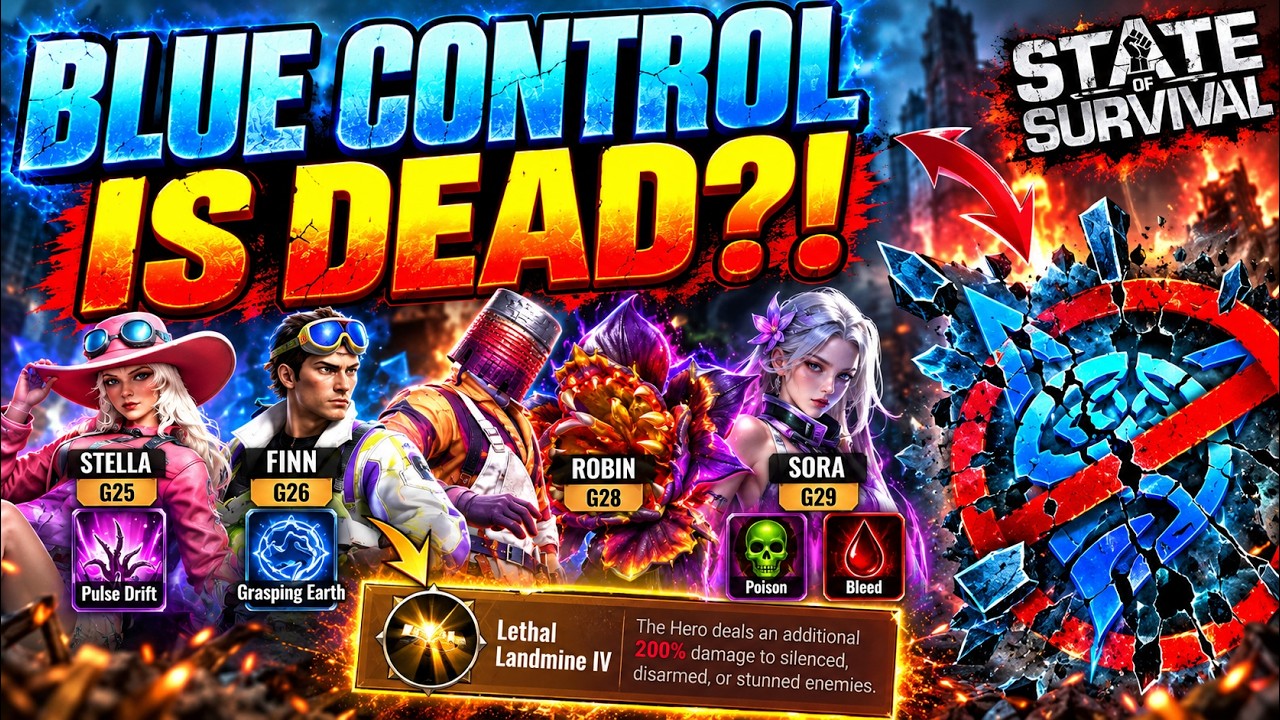
Blue Control is not completely obsolete in State of Survival, but running a pure crowd-control stall march will fail against modern hero generations. Newer hero rosters bypass prolonged freeze and stun cycles through automatic cleanses, passive crowd-control resistance, and immediate round-one burst damage.
To keep your investment in control commanders viable, transition your lineups from pure lock-down attrition into hybrid control-burst formations and reassign legacy control squads to specialized combat roles.
Why Modern Hero Generations Counter Pure Control
Classic Blue Control relied on looping stun, silence, and freeze abilities to delay incoming attacks while chipping away at enemy forces over extended rounds. Newer hero generations dismantle this strategy through three direct mechanical shifts:
| Combat Factor | Classic Blue Control Meta | Modern Generation Counterparts |
|---|---|---|
| Primary Win Condition | Stun-locking and skill suppression | Front-loaded burst and stat scaling |
| Debuff Vulnerability | Relies on uninterrupted status uptime | Automatic cleanses and immunity windows |
| Combat Duration | Extended wars of attrition | Decisive combat in early rounds |
| Infantry Trade-off | Sustained defensive survival | Rapid early infantry collapse |
Recent offensive and support heroes feature skills that purge debuffs automatically when applied, shortening or canceling lock-down windows. Additionally, priority skill triggers and energy-siphoning abilities prevent control heroes from generating the energy required to cast their crowd-control sequences on schedule. Combined with higher baseline stat multipliers, opposing marches often inflict decisive percentage-based casualties during the first few combat rounds before defensive debuff loops can stabilize the fight.
How to Adjust Control Marches
To remain competitive without abandoning control heroes, adjust both your lineup structure and troop ratios to handle higher incoming burst.
1. Build Hybrid Formations
Do not deploy three dedicated control heroes together. Anchor your march with one high-impact control commander and fill the remaining two slots with current-generation offensive or stat-buffing heroes.
The single control specialist interrupts early skill execution, creating a window for your high-damage heroes to trigger their abilities unimpeded.
2. Increase Front-Line Infantry Ratios
Because high-tier burst damage shatters standard flat troop distributions early in combat, increase your front-line shielding:
- Infantry Allocation: Increase infantry to 50%–60% of your total march capacity. This ensures your line survives the opponent's opening skill sequence so your debuffs have time to cycle.
- Backline Allocation: Distribute the remaining 40%–50% between hunters and riders to supply the lethal return fire required to close the match.
Where Control Lineups Still Excel
While pure Blue Control should no longer serve as a universal lead march or blind garrison defense, control specialists remain effective in specific tactical situations:
- Targeting Pure Damage Offenses: Attacking marches that stack pure damage without defensive cleanse support remain susceptible to well-timed control interruptions.
- Secondary Rallies in Event Matches: In multi-march modes such as Reservoir Raid or Canyon clashes, assign your highest-tier new heroes to your primary rally and deploy control heroes to secondary formations targeting tier-two enemy squads.
- Garrison Reinforcement: Crowd-control abilities that strike multiple marching targets retain utility in congested Capital Clash and State vs. State (SVS) garrison battles, where they can disrupt incoming attackers who lack complete cleanse coverage.
Investment Rules for Control Heroes
When managing hero progression across generational updates:
- Halt Heavy Investment in Pure Control: Do not commit universal speedups, elite hero fragments, or premium combat gear to legacy heroes whose kits offer only crowd control without built-in damage scaling or defensive barriers.
- Prioritize Dual-Function Heroes: Focus premium resources on commanders who combine disruption with secondary utility, such as team shields, personal dispels, or high-percentage damage skills.
- Target Functional Thresholds: Keep legacy control heroes at functional rank and skill levels rather than maximizing star upgrades, reserving top-end resources for generation-current damage dealers.

Free State of Survival Codes
Current active codes and how to redeem them.

James Brown
James focuses on Android gaming on PC, emulator setup, controls, performance tuning, and practical troubleshooting for longer play sessions.
COMMUNITY
Player Comments
76 players commented on this guide.
Nice guide. I am checking the other State of Survival articles next.
Can you add more details about heroes in a future update?
I tried this today and it worked better than my old setup.
The tips are practical and easy to follow.