
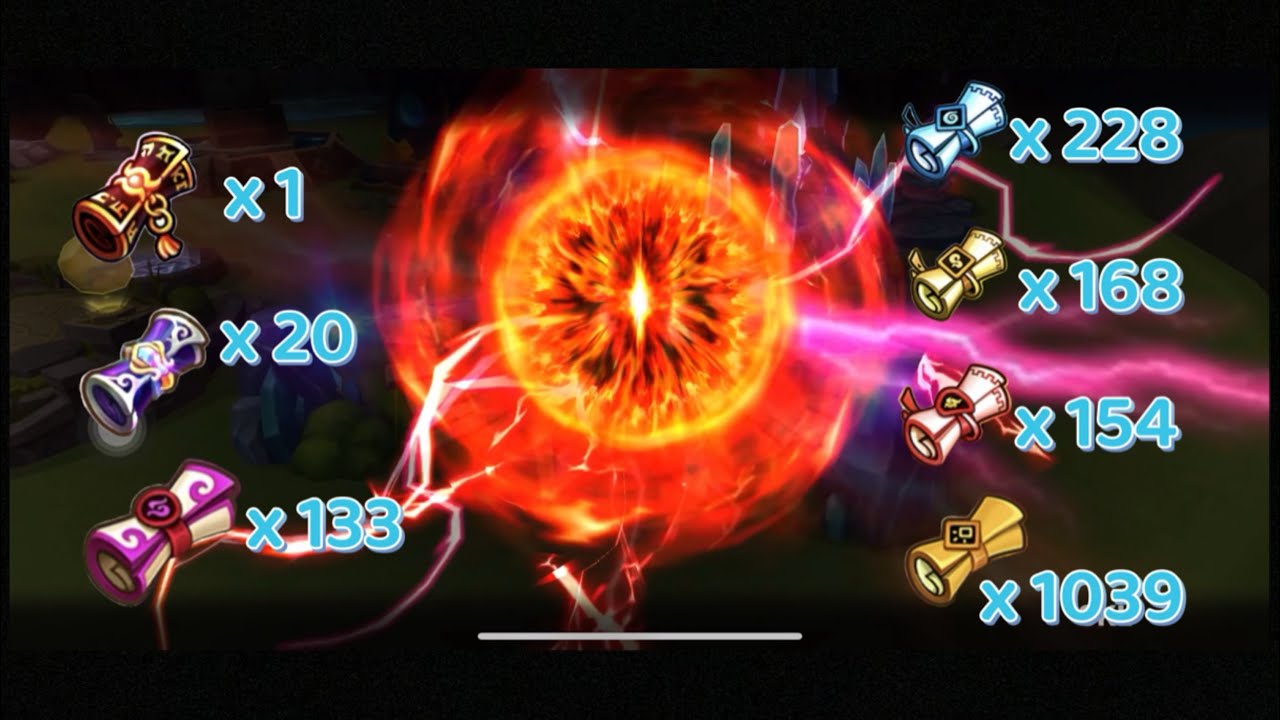
In Summoners War, the Light and Dark (L&D) scroll is the most coveted item in the game. Because L&D monsters occupy a unique space in the meta—often providing niche utility, game-changing passive abilities, or unrivaled power—the "mass summon" has become a rite of passage for players. However, these sessions can be a rollercoaster of emotions. To navigate the high-variance world of L&D summons, you must move beyond the hype and approach your scrolls with a blend of mathematical realism and strategic preparation.
Understanding the Reality of L&D Probability
The first rule of Summoners War summoning is that the game engine does not recognize "batches." When you click the summon button for 100 L&D scrolls, the server processes each one as an entirely independent event. There is no "pity" system for L&D scrolls that mirrors the structured rates of elemental scrolls, nor does the game "owe" you a lightning after a streak of bad luck.
The drop rates for natural 4-star and 5-star L&D units are intentionally low to preserve their rarity. When you perform a mass summon, you are essentially engaging in a series of independent coin flips where the odds are heavily stacked against the rare outcomes. Accepting that each scroll is its own isolated event is the best way to prevent the "gambler’s fallacy"—the mistaken belief that if you’ve pulled ten 3-stars in a row, a 5-star is "due." In reality, the odds remain identical for every single tap.
Strategic Preparation: Before You Click "Summon"
A successful mass summoning session is defined by preparation, not just the quality of the monsters pulled. If you are rushing into a session without logistical planning, you are setting yourself up for unnecessary stress.
- Inventory Management: Clear your monster storage and summoning pieces inventory. You will inevitably pull a high volume of 3-star monsters; having enough space ensures you can evaluate them without being interrupted by "Storage Full" pop-ups.
- Mana Reservoir: Ensure you have a significant surplus of Mana Stones. If you pull a potential new project, you will need the currency to immediately equip runes or evolve the unit.
- The "Skill-Up" Mindset: Before you start, identify which of your core monsters need skill-ups. Many L&D 3-stars, such as the Thrain (Dark Grim Reaper) or Pang (Light Rakshasa), have elemental counterparts that need those skill-ups. Viewing a "non-lightning" pull as a source of skill-up fodder changes your perspective from disappointment to progress.
Managing RNG Volatility and Emotional Health
The variance in Summoners War is extreme. You might see a player on social media pull two L&D Nat 5s in ten scrolls, while another pulls none in one hundred. This variance is the nature of the game, not a failure on your part.
To maintain a healthy relationship with the game:
- Detach from the Outcome: View the session as a "resource dump" rather than a quest for a specific unit. If you go in expecting a specific Nat 5, you are setting yourself up for 99% disappointment.
- Set a Hard Limit: Never "chase" a pull. If you run out of scrolls, stop. The temptation to buy more packs after a bad session is where most players experience burnout and financial regret.
- The "Humor" Defense: As seen in community trends, adopting a lighthearted or humorous attitude toward poor luck is a proven psychological shield. If you treat the session as entertainment rather than an investment in your account’s power, you remain the winner regardless of the RNG.
The Role of Runes vs. Monsters
It is a common trap for newer players to believe that an L&D Nat 5 will instantly solve their progression issues. In Summoners War, the "meta" is driven by rune quality. A highly efficient set of Swift or Violent runes on a farmable team will consistently outperform a poorly runed, top-tier L&D monster.
If your mass summon results in a lack of lightning, remind yourself that your account’s true strength is built in the Cairos Dungeon and Rift Raids. A great summoning session is a bonus, but it is not the foundation of a competitive account. Focus your energy on farming efficiency; if you have the runes, any monster—even a 3-star unit—can become a force to be reckoned with.
Best Practices for Future Summoning Cycles
To keep your sessions engaging and sustainable, consider these expert-level habits:
- Batching by Type: Some players prefer to mix their L&D summons with other scrolls (like Legendary or Mystical) to "spread out" the chances of seeing lightning. While this does not affect the actual math, it can prevent the monotony of seeing consecutive 3-star L&D units.
- Documentation: Record your summons or keep a simple log. Over time, this provides you with a realistic view of your personal drop rates, which often helps ground you in the reality of the game’s percentages.
- The "Cool-Down" Rule: After a large session, take a break from the summoning circle. If you had a great session, you might be tempted to push your luck; if you had a bad one, you might be tempted to overcompensate. Both impulses are dangerous to your resource management.
Conclusion: Playing the Long Game
Summoners War is a marathon, not a sprint. Mass L&D summoning is simply one small component of the total experience. By maintaining realistic expectations, keeping your inventory organized, and prioritizing your rune quality over lucky pulls, you ensure that you stay in control of your account’s trajectory. Treat every scroll as a chance for a new tool in your arsenal, keep your sense of humor, and remember that the next scroll is always just one more farm away.

Free Summoners War Codes
Current active codes and how to redeem them.

Sarah Williams
Sarah specializes in RPG and collection games, explaining team building, character growth, and beginner-friendly ways to avoid expensive early mistakes.
COMMUNITY
Player Comments
89 players commented on this guide.
Good guide for Summoners War players. The strategy part was useful.
The explanation is clear, especially for beginners.
The tips are practical and easy to follow.
I wish I had read this before upgrading the wrong thing.