
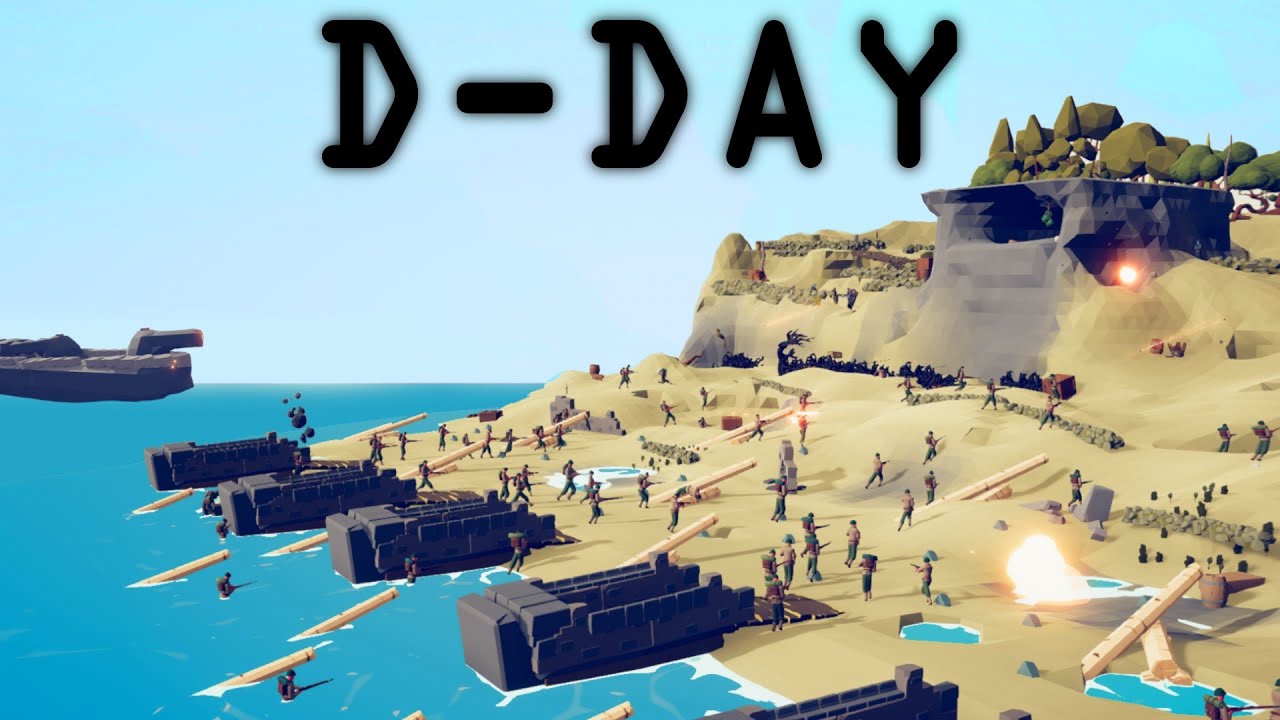
To win the World War 2 D-Day beach assault scenario in TABS Pocket Edition, deploy your landing troops across the shoreline in wide, staggered horizontal waves rather than tightly packed squads. Frontal charges across open sand collapse under heavy defensive crossfire. Securing the beach requires routing infantry behind physical obstacles, absorbing incoming fire with staggered lines, and sending close-quarters units into the clifftop bunkers through rear flanking entrances.
Stagger Landing Waves Across the Shoreline
Deploying units in dense clusters triggers catastrophic losses immediately after landing. Defending machine gunners and riflemen atop the bluffs fire directly into the shoreline. The targeting AI in TABS Pocket Edition locks onto dense clusters, allowing stationary emplacements to wipe out full squads in a single burst without shifting aim.
Counter this defensive setup by spreading your frontline across the widest perimeter possible along the water's edge:
- Split forces into distinct waves: Space assault lines five to ten meters apart from front to back.
- Sacrifice opening lines: Use the first wave to draw initial enemy fire and trigger reload cycles.
- Advance secondary squads: Move your primary damage dealers across the sand while defensive emplacements track targets across different angles.
Use Beach Obstacles and Exploit Bunker Blind Spots
TABS Pocket Edition calculates terrain props as physical collision barriers. Steel Czech hedgehogs, wooden stakes, and crater depressions stop incoming small-arms fire. Directing units behind these map props prevents elevated snipers and machine gunners from landing direct hits on exposed infantry.
Once your units cross the open sand, the cliff base and concrete seawall provide total cover from overhead fire. The mounted pillbox guns have limited downward pitch and cannot aim steeply enough to hit the base of the ridge. Use this dead zone beneath the bunker overhangs to gather surviving infantry before breaching the bluffs.
| Beach Sector | Primary Incoming Threat | Assault Response |
|---|---|---|
| Water's Edge | Concentrated automatic crossfire | Disperse units horizontally in separated waves |
| Open Tidal Flats | High-velocity rifle and machine gun fire | Advance behind Czech hedgehogs and craters |
| Seawall & Cliff Base | Blind zone with zero incoming fire | Regroup surviving infantry beneath the overhang |
| Trench Entrances | Defending guards and crossfire | Flank through lateral paths with close-range units |
Flank Elevated Pillboxes from the Rear
Attacking concrete bunkers directly through their front-facing gun slits will wipe out your squad. Fortified pillboxes feature narrow ports that deflect incoming frontal fire while preserving wide fields of view across the beach.
Win the position by navigating lateral ramps and outer perimeter paths into the trench network. Mounted bunker gunners cannot rotate their heavy weapons backward toward interior doorways. Rush rapid melee fighters, shotgun units, or submachine gunners through the rear entrances to clear the gun crews at point-blank range.
Coordinate Armored Frontrunners and Infantry Spacing
Placing armored vehicles ahead of foot soldiers draws high-caliber defensive fire away from vulnerable infantry. Automated AI targets prioritize the closest or most threatening target in their line of sight, forcing enemy anti-tank emplacements to fire on vehicle armor plates rather than rifle squads.
Do not group infantry directly behind armored vehicles. Incoming artillery shells, mortars, and missed anti-tank rounds deal area-of-effect splash damage that will destroy trailing infantry squads. Keep a wide operational gap between your armored vanguard and your secondary breach teams.
Pre-Battle Deployment Rules
Before starting the battle, balance your unit count and operational roles to ensure a smooth advance:
- Send wing skirmishers: Deploy cheap, expendable units along the extreme edges of the beach to pull bunker targeting away from the center.
- Position shoreline fire support: Keep dedicated marksmen or light artillery near the water to suppress bunker gunners while infantry crosses the sand.
- Avoid seawall bottlenecks: Do not push multiple squads through a single breach in the seawall, as defensive explosive fire will wipe the line.
- Manage unit density: Avoid placing excessive unit counts inside landing craft, as dense physics calculations can degrade mobile performance and stall unit movement.

Free TABS Pocket Edition Codes
Current active codes and how to redeem them.

Emily Johnson
Emily writes practical mobile strategy guides with a focus on resource planning, base progression, and the early decisions that shape a long-term account.
COMMUNITY
Player Comments
95 players commented on this guide.
This guide answered the exact question I had.
Can you add more details about strategy in a future update?
The explanation is clear, especially for beginners.
The tips are practical and easy to follow.