
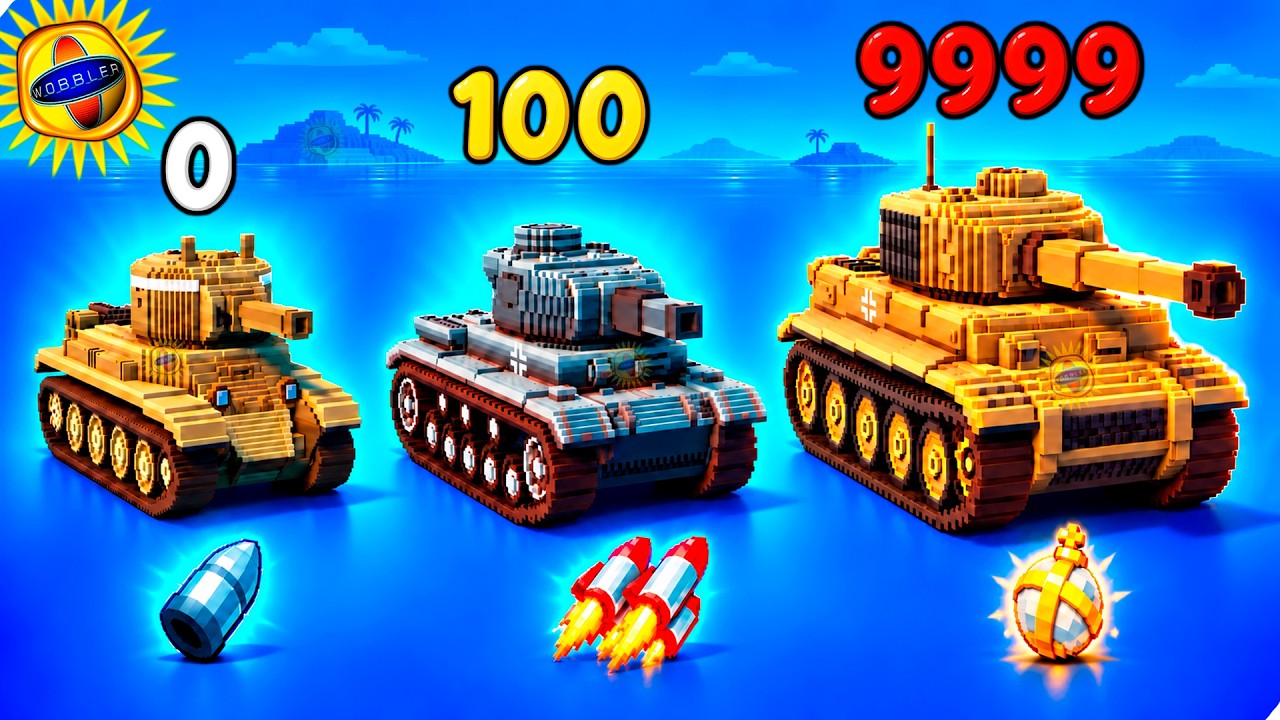
To build an effective rocket artillery platform in Tank Busters: Cannon Battle, transition from lightweight starter hulls to a heavier tank chassis and mount secondary rocket pods. The heavier hull provides the recoil dampening and frontal armor required to survive return fire, while the secondary rockets deliver high-explosive area-of-effect (AoE) burst damage to crack armored targets.
Cannon vs. Rocket Pod Performance
Rocket pods serve as an explosive secondary system rather than a direct replacement for your primary cannon. Balancing both weapons requires understanding their mechanical differences:
| Weapon System | Combat Role | Trajectory Profile | Damage Type | Reload Cycle |
|---|---|---|---|---|
| Main Cannon | Sustained firing | Arced ballistic curve | Kinetic / Armor-piercing | Fast reload |
| Rocket Pods | Burst opener / Finisher | Direct propelled flight | Explosive AoE | Extended cooldown |
Primary cannon rounds follow a ballistic arc and rely on direct kinetic impact. Rockets fly on a flatter, accelerated trajectory, detonating on contact with voxel structures, terrain, or vehicle armor. Because rockets deal explosive area damage, near-misses still strip armor plates and damage clustered enemy units.
Chassis Selection and Handling
When purchasing a new tank in the garage, select a heavier platform designed to support secondary weapon weight.
- Recoil Stability: Heavier hulls prevent your vehicle from bucking backward when firing heavy shells, keeping your aim stable for immediate follow-up shots.
- Frontal Protection: Reinforced front glacis plates absorb kinetic hits during medium-range trades.
- Mobility Trade-Offs: The increased weight lowers top speed and hill-climbing torque, making open-field repositioning slower.
Optimal Combat Firing Rotation
Firing both weapons simultaneously causes massive overkill on low-durability targets and leaves your vehicle defenseless while both modules cycle. Stagger your shots using this four-step sequence:
- Fire a Ranging Shell: Lead with a single primary cannon round to confirm elevation, shell drop, and target speed.
- Unleash the Rocket Pod: Once the kinetic round connects and staggers the enemy, launch the rocket salvo directly into the target.
- Withdraw to Cover: Reverse behind cover or angle your front armor toward incoming fire while the rocket tubes reload.
- Execute the Finishing Shot: Pull out of cover once your primary cannon is loaded to deliver the final kinetic blow.
Holding the rocket salvo until an enemy attempts to rush your position is also effective; close-range launches ensure every projectile connects, disabling tracks or turret elevation.
Hull-Down Positioning Tactics
Because rockets follow a direct trajectory rather than a high ballistic mortar arc, poor positioning can cause missiles to clip nearby terrain.
- Clear the Crest: Position your vehicle so that the roof-mounted rocket pods sit just above the ridge while the hull remains concealed behind the incline.
- Avoid Depressions: Firing from trenches or low dips will cause rockets to hit the lower lip of the embankment, wasting ammunition and inflicting self-damage.
- Nudge and Retreat: Move forward just enough to gain line of sight, fire the salvo, and promptly reverse behind the crest while the launcher reloads.
Garage Upgrade Priorities
Avoid investing currency solely into weapon damage or hull health. A balanced distribution keeps your tank mobile and durable:
- Rocket Damage and Reload Speed: Upgrading burst damage and reducing reload downtime ensures you eliminate high-threat targets before they flank you.
- Blast Radius: Expanding splash damage helps shells damage tracks and adjacent defensive barricades even on imperfect hits.
- Engine Torque: Upgrading engine power offsets the added weight of the heavy chassis, restoring the hill-climbing mobility needed to maneuver around ridgelines.
- Frontal Plating: Increasing armor values protects the tank from counter-battery fire during extended trades.
Free Tank Busters: Cannon Battle Codes
Current active codes and how to redeem them.

Michael Smith
Michael covers live-service games, events, reward systems, and efficient daily routines, turning frequent updates into clear actions for players.
COMMUNITY
Player Comments
140 players commented on this guide.
Can you add more details about strategy in a future update?
Good guide for Tank Busters: Cannon Battle players. The strategy part was useful.
I wish I had read this before upgrading the wrong thing.
This helped me understand strategy much better.