
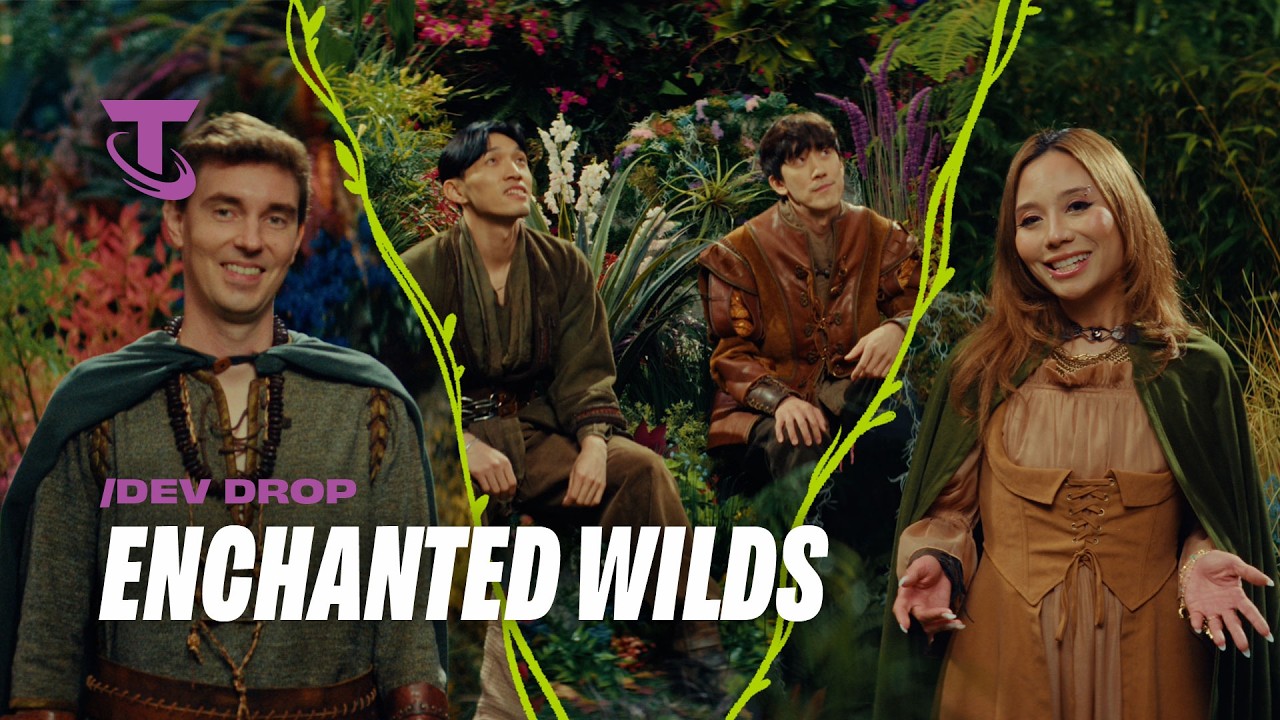
In the Enchanted Wilds set of TFT: Teamfight Tactics, the Spirit mechanic serves as a unique scaling engine that separates top-tier players from the rest of the lobby. Unlike standard traits that provide flat stat bonuses, the Spirit mechanic requires active management, long-term planning, and careful bench optimization. By collecting and evolving Forest Spirits, players gain access to persistent, round-over-round power spikes that can turn a mid-game deficit into a dominant late-game victory.
The Lifecycle of a Forest Spirit
The Spirit mechanic functions as an evolving progression system. When you deploy units associated with the Enchanted Wilds theme, you begin collecting Spirits that occupy space on your bench or board. These entities are not merely passive units; they are investments that mature over multiple rounds.
- Generation Phase: Upon deploying specific Spirit-trait units, you begin the accumulation process.
- Maturation Period: Spirits require time to evolve. During this window, your board may feel slightly weaker than hyper-aggressive opponents who prioritize raw combat stats.
- Empowerment: Once a Spirit matures, it grants a permanent, board-wide combat buff. These buffs are typically multiplicative, meaning they scale better with higher-tier units than early-game flat damage items.
Understanding this lifecycle is crucial: the Spirit mechanic is a "tempo" game. You are essentially trading short-term health for long-term power. If you fail to protect your units during the Maturation Period, you risk losing the game before your Spirits can reach their final, empowered forms.
Identifying and Drafting Spirit Generators
Success in Enchanted Wilds begins in the drafting phase. Not all units are created equal, and identifying which champions act as your primary Spirit engines is the first step toward a successful build. When scouting your shop, categorize units based on these three pillars:
- Generation Velocity: Prioritize units that produce Spirits during the early stages of combat. The faster you begin the accumulation process, the sooner you hit your first evolution spike.
- Trait Compatibility: Your Spirit generators should ideally share secondary traits (e.g., Vanguard, Mage, or Chrono) with your primary carries. This minimizes the "dead weight" of running units solely for the Spirit mechanic.
- Durability and Itemization: Because generation often relies on the unit surviving the initial burst of combat, prioritize defensive items like Warmog’s Armor or Dragon’s Claw on your primary Spirit generators. A generator that dies in the first five seconds of a fight is a wasted slot.
Managing the Bench and Economy
The most common mistake players make with the Spirit mechanic is poor bench management. Because Spirits occupy space, you are inherently limited in how many pairs or units you can hold for future pivots. This creates a strategic bottleneck.
The Spirit-Focused Economy Strategy
- Avoid Over-Rolling: Since your power comes from the evolution of Spirits rather than just starred-up units, you can often afford to stay at higher interest thresholds. Save your gold to push levels, allowing you to field more units and trigger more Spirit generation simultaneously.
- Calculated Sacrifices: If your bench is full of Spirits, you must be ruthless. If a unit on your bench doesn't contribute to your current synergy or help an evolution, sell it. Holding onto "maybe" units while your Spirits are in the maturation phase is a recipe for a bottom-four finish.
- Loss-Streak Optimization: If your board is currently weak because your Spirits are in the early stages of evolution, consider intentionally loss-streaking to maximize your economy. The extra gold from a streak can be used to level up and find the high-cost units that best utilize your final Spirit buffs.
Combat Positioning and Vulnerabilities
A Spirit-heavy board is inherently vulnerable to "fast-tempo" compositions that rely on backline access or heavy crowd control (CC). If an opponent’s assassin or high-burst mage deletes your generator before the Spirit can evolve, your entire late-game strategy collapses.
Tactical Positioning Tips:
- The "Buffer" Frontline: Always place your Spirit generators in the second row, protected by two layers of tanks.
- Scouting for Backline Access: If you see an opponent with units that jump or target the backline, move your generators toward the center of your board.
- CC Mitigation: Use units with Quicksilver or positioning tricks to avoid being stunned, as CC prevents your generators from accumulating the necessary energy to evolve.
Pivoting into the Late Game
Transitioning to the late game is where the Spirit mechanic truly shines. Once your Spirits reach their final form, the combat bonuses provided are often enough to act as a win condition. At this stage, your focus must shift from "generating" to "optimizing."
Late-Game Decision Matrix:
- Check the Buff: Does the final Spirit buff favor attack speed, ability power, or survivability? If you have been building an AP carry, but your Spirits provide an AD buff, you must pivot your items or carry choice. Do not be afraid to sell a mid-game carry to build around the permanent, evolved Spirit bonuses.
- Board Space vs. Synergy: Once your Spirits are fully evolved, they may become redundant. Evaluate if selling a low-impact generator to fit in a high-cost Legendary unit provides more value than the passive aura of the Spirit.
- The Final Push: Use the strength of your fully-evolved board to push for level 9 or 10. The goal is to reach a point where your early-game investment creates a "juggernaut" effect that the rest of the lobby cannot match.
By treating the Spirit mechanic not just as a trait, but as a core economy and positioning challenge, you will find that the Enchanted Wilds set rewards patience, foresight, and disciplined board management. Focus on protecting your generators, managing your bench space, and pivoting your itemization to match your final evolved buffs to consistently secure top-four placements.

Free TFT: Teamfight Tactics Codes
Current active codes and how to redeem them.

Michael Smith
Michael covers live-service games, events, reward systems, and efficient daily routines, turning frequent updates into clear actions for players.
COMMUNITY
Player Comments
116 players commented on this guide.
This saved me time in the early game.
I tried this today and it worked better than my old setup.
This helped me understand strategy much better.
The explanation is clear, especially for beginners.