
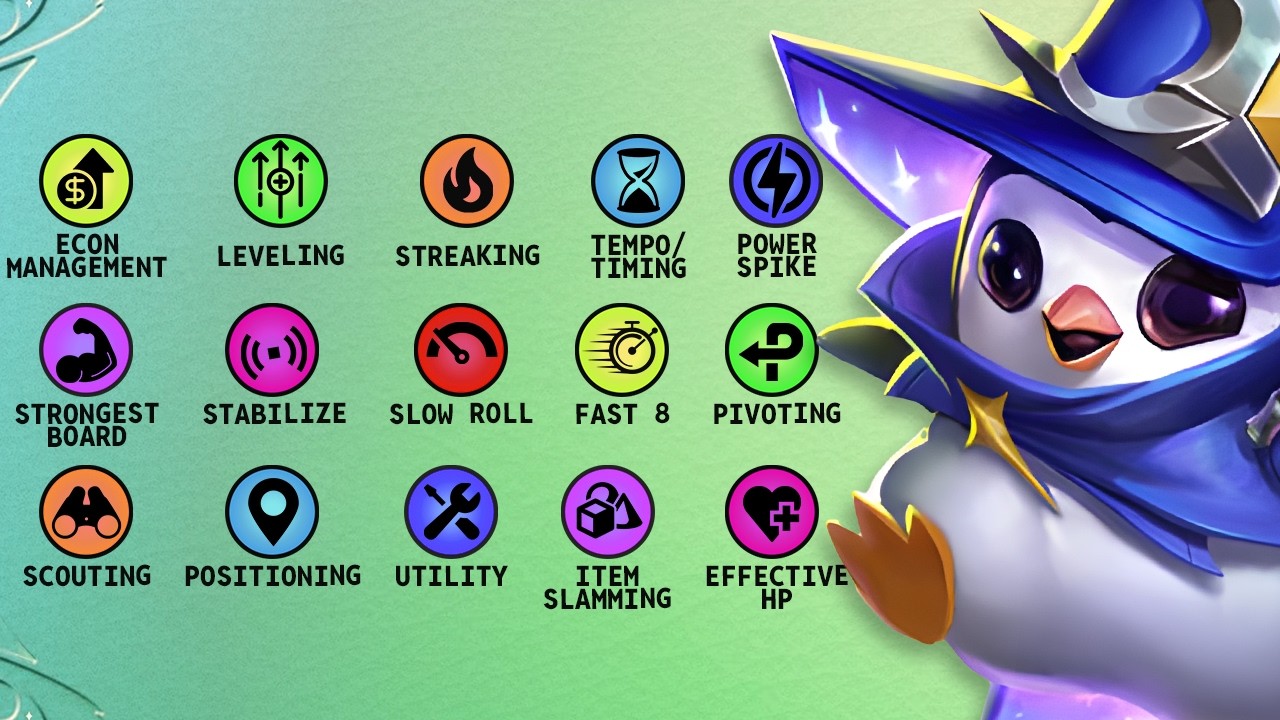
In TFT: Teamfight Tactics, your gold is your most vital resource. While drafting units and positioning are essential, the player who manages their economy most efficiently will almost always win the long game. Mastering your economy is the difference between a mid-game collapse and a top-four finish. By leveraging interest thresholds, streak bonuses, and disciplined shop-rolling, you can dictate the tempo of the lobby and reach powerful late-game compositions before your opponents.
Understanding the Interest System
Interest is the "passive income" of TFT: Teamfight Tactics. After every combat round, you receive bonus gold based on the amount of gold currently held in your bank. This interest caps at 5 bonus gold when you hold at least 50 gold.
- 10 Gold: +1 interest
- 20 Gold: +2 interest
- 30 Gold: +3 interest
- 40 Gold: +4 interest
- 50 Gold: +5 interest
Your primary goal in the early and mid-game is to reach the 50-gold threshold as quickly as possible without sacrificing too much health. Every gold piece spent below 50 is effectively an investment; if you spend 10 gold, you aren't just losing those coins—you are losing the interest those coins would have generated in future rounds. Always prioritize staying above these breakpoints unless you are forced to "roll down" to stabilize your board health.
The Power of Win and Loss Streaking
Streaking is the most effective way to multiply your income beyond the 50-gold interest cap. Winning or losing consecutive combat rounds provides additional gold per turn, which can be the difference between a standard economy and a dominant one.
Winning Streaks
If you are strong, you should play aggressively to maintain your win streak. This means spending gold to level up or rolling for upgrades to keep your board ahead of the lobby. The extra gold from a win streak often pays for the cost of leveling up early, allowing you to maintain a high-level board while still accruing interest.
Loss Streaking
Loss streaking is a high-risk, high-reward strategy. If your opening board is weak, rather than spending gold to find upgrades and failing, you intentionally lose rounds to collect streak gold. This allows you to hit the 50-gold interest threshold much faster than the rest of the lobby. However, you must be prepared to "pivot" or "stabilize"—spending your accumulated gold to build a powerful, winning board—once your health drops to a dangerous level (usually around 40–50 HP).
Leveling vs. Rolling: The Strategic Decision
Deciding when to level up and when to roll is the most frequent decision point in TFT: Teamfight Tactics.
- When to Level: Leveling increases your odds of finding higher-tier units and allows you to field more champions. Use your gold to level when you are on a win streak, when you are trying to reach a specific power spike (like Level 7 or 8), or when you have a surplus of gold while maintaining your interest threshold.
- When to Roll (Slow Rolling): If you are building a composition around 1-cost or 2-cost "reroll" units, you should "slow roll." This means staying at 50 gold and using only your interest income (the gold you gain at the start of the round) to refresh the shop. This maximizes your chances of finding 3-star units without destroying your economy.
- The "All-In" Roll Down: This is a desperation move. If you are low on HP and losing every round, you must spend your entire bank to find upgrades. The goal here is to stabilize your board strength immediately to stop the bleeding, even if it resets your economy to zero.
Scouting: The Key to Efficient Spending
You cannot manage your economy effectively in a vacuum. Scouting—the act of checking your opponents' boards—is mandatory.
If you are pursuing a specific champion, check to see if three or four other players are also building that unit. In TFT: Teamfight Tactics, the unit pool is shared. If your opponents are hoarding the champions you need, your odds of finding them in the shop are drastically reduced. If you see this, stop rolling immediately. It is better to pivot to a different, uncontested composition than to waste your gold searching for units that aren't appearing in the shop.
Additionally, scouting tells you the "lobby tempo." If you see everyone else rolling their gold to get stronger, you may need to sacrifice some interest to stabilize your own board. If the lobby is playing conservatively, you can safely continue building your economy.
Avoiding Common Economic Traps
Even experienced players fall into these classic traps that can ruin a run:
- Panic Rolling: The most common mistake. Don't roll because you lost one or two rounds. Only roll if your board is objectively failing to kill enemy units or if you are at risk of a major health loss.
- Bench Clutter: Holding pairs on your bench ties up gold that could be earning interest. If a pair isn't vital to your immediate plans, sell it. Keeping your bank at a higher interest threshold is almost always more valuable than the potential of hitting a 2-star unit later.
- Ignoring Thresholds: Spending 8 gold to reach 42 gold is a waste. You still only get 4 gold in interest. Always spend in increments that keep you at a clean 10, 20, 30, 40, or 50 gold.
- Forcing Comps: If your desired units aren't hitting, don't bankrupt yourself trying to force them. Adaptability is the hallmark of a high-ranked TFT: Teamfight Tactics player.
By mastering these economic fundamentals—maintaining interest, utilizing streaks, scouting the competition, and avoiding reactive spending—you will find yourself consistently reaching the late game with the resources needed to build a winning composition.

Free TFT: Teamfight Tactics Codes
Current active codes and how to redeem them.

Sarah Williams
Sarah specializes in RPG and collection games, explaining team building, character growth, and beginner-friendly ways to avoid expensive early mistakes.
COMMUNITY
Player Comments
140 players commented on this guide.
This guide answered the exact question I had.
This saved me time in the early game.
I wish I had read this before upgrading the wrong thing.
Good guide for TFT: Teamfight Tactics players. The strategy part was useful.