
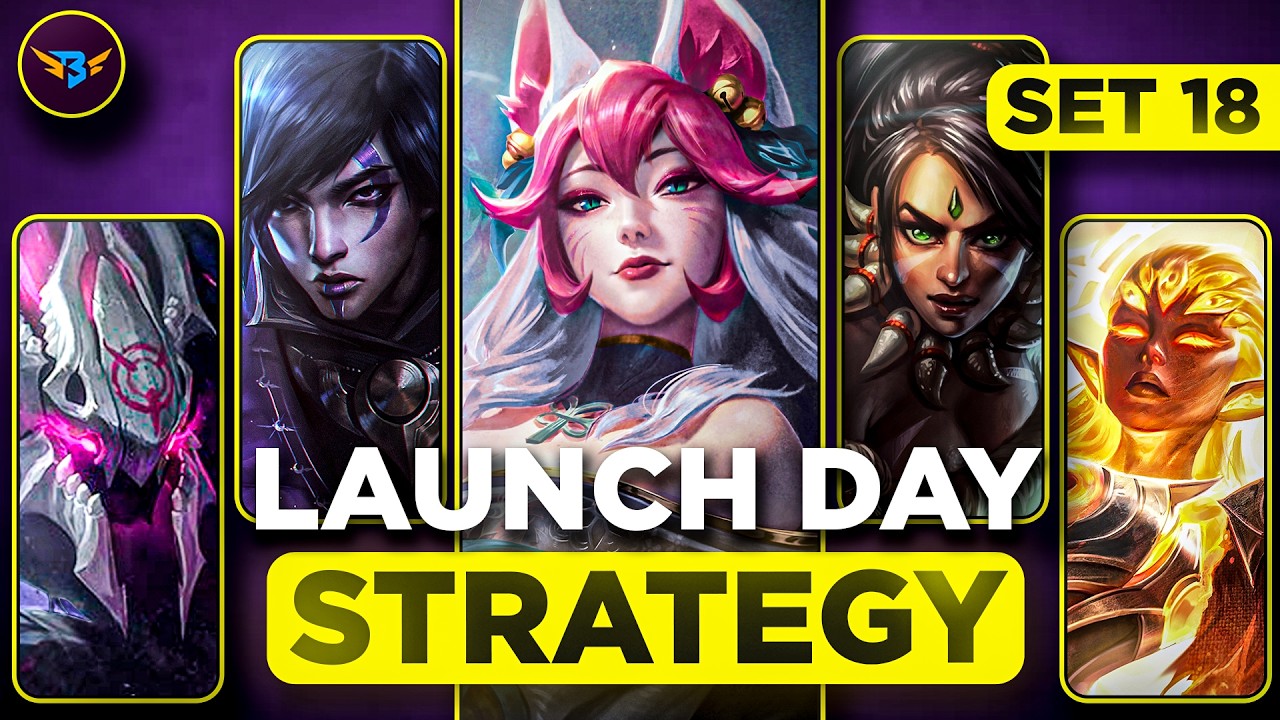
To climb consistently in the early stages of TFT: Teamfight Tactics Patch 18.1, you must pivot away from rigid, forced compositions and instead lean into item flexibility and tempo-based play. A new set launch is defined by volatility; the players who succeed are not those who memorize a single "broken" board, but those who understand how to maintain HP while adapting to the shop’s RNG. This guide outlines the fundamental strategies required to navigate the current meta, stabilize your board, and consistently place in the top four.
Prioritizing Flexible Itemization Over Rigid Builds
The most common mistake in early patch play is forcing specific "best-in-slot" items for a composition that you haven't even hit yet. In Patch 18.1, the key to consistency is crafting "slam-able" items. These are items that provide broad, universal value and can be transferred between different carries as your board evolves.
- Frontline Staples: Items like Warmog’s Armor, Gargoyle Stoneplate, or Sunfire Cape are essential. They provide immediate, flat value that keeps your team alive regardless of which specific frontline trait you are running.
- Backline Versatility: Prioritize items that function on multiple damage types. Guinsoo’s Rageblade or Hand of Justice are often more valuable than niche items because they allow you to pivot between AD and AP carries depending on which units you roll in the mid-game.
- The "Slam" Philosophy: If you have components that can make a strong item, don't wait for perfect components. Slamming an item on Stage 2-1 or 2-2 preserves your health pool, which is the most valuable resource when the meta is unstable and damage output is unpredictable.
Mastering Tempo and Stage Transitions
Tempo is the speed at which you improve your board relative to the lobby. In Patch 18.1, players often play greedily, trying to maximize interest gold. You can punish this by pushing your level aggressively to maintain a win streak.
- The Level 4 and 6 Pushes: If you have a pair of units that can lead to a 2-star upgrade, spending gold to hit level 4 early or level 6 on Stage 3-2 can be the difference between a streak and a loss.
- Gold vs. HP: Think of your gold as a tool to protect your HP. If you are on a win streak, spending 10-20 gold to level up and keep that streak alive is almost always worth it. The extra gold from the streak bonus often cancels out the interest loss, while the saved HP buys you more time to find your end-game units.
- The "Lose-Streak" Pivot: If your opening hand is weak, don’t force a bad board. Accept a controlled loss-streak to maximize economy, but ensure you are losing efficiently—killing at least two or three enemy units per round to minimize HP loss—before pivoting to a strong board at Stage 3-2.
Adapting to Patch 18.1 Unit and Trait Power Levels
Every new set introduces "anchor" units—champions that are simply overtuned for their cost. Identifying these units early is the single most important skill for climbing.
- Frontline Anchors: Look for units with high base health or inherent damage reduction. A single 2-star unit with a solid tank item can often hold the frontline through Stage 3, allowing you to focus your bench space on finding your backline carries.
- Trait Synergies: Don't get trapped by "vertical" traits (e.g., 6 or 8 units of the same type) early on. Often, a "horizontal" mix of powerful individual units with splash traits (like a splash of frontline and a splash of utility) will perform better than a weak vertical synergy.
- Scouting for Contested Units: If three players in your lobby are running the same trait, pivot. Use your early gold to hold units that are not being contested. In the early days of a patch, the "off-meta" units are often just as strong as the popular ones, but they are significantly easier to upgrade to 3-stars.
Executing Effective Late-Game Pivots
The "ideal" end-game board is rarely what you start with on Stage 2-1. Successful players treat their mid-game board as a transitionary phase.
- The Bench Pivot: Always keep a "pivot pair" on your bench. If you are running an AD composition but the shop keeps offering you high-value AP units, be prepared to shift your carry.
- Avoid the "All-In" Trap: Never roll down to zero gold unless you are in immediate danger of being eliminated. Instead, roll in increments of 10 or 20 gold to find upgrades. This "slow-roll" approach allows you to stabilize your board while still maintaining enough economy to reach levels 8 or 9.
- The Final Move: Your late-game board should be built around one or two 4-cost or 5-cost carries. Use your early-game units to hold items for these carries until you find them, then sell your temporary holders to make the switch.
Tracking Opponent Trends and Lobby Strategy
TFT: Teamfight Tactics is a game of information. You are not playing in a vacuum; you are playing against seven other people who are also trying to find the "best" board.
- Scouting for Counters: If the lobby is heavy on magic damage, prioritize a Dragon’s Claw or Ionic Spark. If they are running burst-heavy assassins, reposition your backline to the center or put a tank in the back corner to soak the initial burst.
- Lobby Aggression: Check the health totals of your opponents every round. If the lobby is hyper-aggressive (most players have low HP), you must roll earlier to stay alive. If the lobby is playing for "Fast 9" (saving gold for late-game), you can afford to play greedier and focus on hitting your own power spikes.
- The Three-Week Rule: In the lead-up to competitive events, the meta shifts rapidly. What works on launch day may be countered within 72 hours. Stay informed by observing which boards win the late-game rounds, and don't be afraid to abandon a strategy that worked yesterday if the lobby has learned how to beat it today.
By focusing on these pillars—flexible items, calculated tempo, and constant scouting—you will find yourself climbing the ranks faster than players who rely on static, "solved" guides. In the volatile environment of Patch 18.1, your ability to think on your feet is your greatest competitive advantage.

Free TFT: Teamfight Tactics Codes
Current active codes and how to redeem them.

Michael Smith
Michael covers live-service games, events, reward systems, and efficient daily routines, turning frequent updates into clear actions for players.
COMMUNITY
Player Comments
149 players commented on this guide.
This guide answered the exact question I had.
The tips are practical and easy to follow.
I wish I had read this before upgrading the wrong thing.
Nice guide. I am checking the other TFT: Teamfight Tactics articles next.