
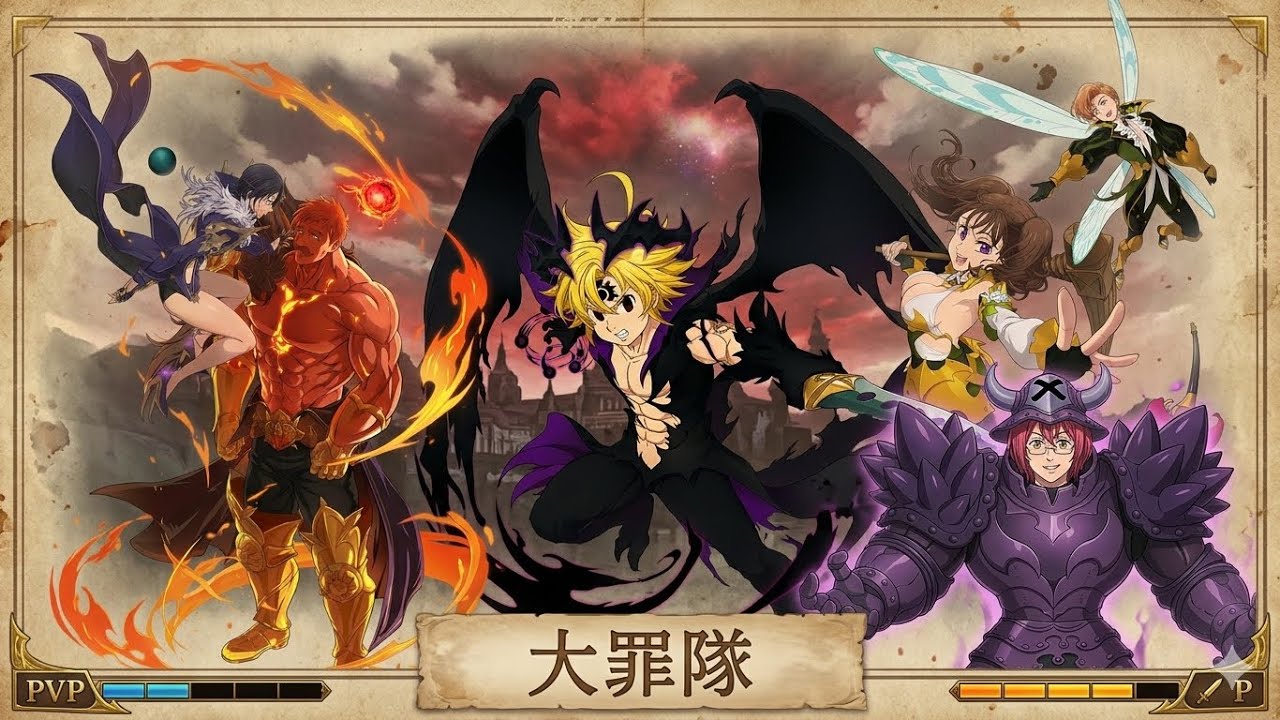
To achieve consistent success in The Seven Deadly Sins PvP, players must shift from standard play to a highly disciplined approach centered on the "Seven Deadly Sins" tag synergy. High-level competitive play is not just about having the strongest units; it is about how you orchestrate their unique skill sets, manage card ranks, and manipulate the board to neutralize your opponent's momentum. By focusing on turn-based decision-making and optimal passive stacking, you can turn a standard roster into a meta-crushing force.
Strategic Skill Prioritization and Board Control
In The Seven Deadly Sins, the flow of battle is dictated by your hand management. The most common mistake players make is burning high-value skills too early. Instead, your primary objective should be board control.
- Low-Cost Efficiency: Prioritize skills that cost 1 or 2 energy but provide utility, such as debuff removal or rank-down effects. These allow you to maintain pressure without overextending your resources.
- Defensive Rotation: If you are facing a "rush" team—a common meta archetype—do not spend your first turn purely on damage. Use defensive passives or shields immediately to mitigate the opponent's opening burst.
- Debuff Management: If your team relies on specific damage dealers, save your cleanse skills specifically for turns where the opponent tries to apply "Seal" or "Stun" debuffs. Holding these cards is often more valuable than using them for chip damage.
Leveraging Passive Synergies
The "Seven Deadly Sins" units are designed to function as a cohesive ecosystem. Their passive abilities are multiplicative, meaning they scale better together than they do individually.
To maximize these synergies, you must identify your "Anchor" unit—the character who benefits most from the team's combined buffs. Before activating your heavy-hitting Ultimate moves or high-rank attacks, ensure your support units have already triggered their passives.
Pro Tip: If your team includes Meliodas or Escanor variants, always check the specific conditions for their passive triggers. For example, some passives require a certain number of Sins on the field or a specific health threshold. Position your team so that these passives remain active for as long as possible, even if it means playing more conservatively in the early rounds.
Navigating Meta Threats and Counter-Plays
The Seven Deadly Sins PvP meta is highly reactive. If you are struggling against specific top-tier teams, you must pivot your strategy:
- Anti-Burst Tactics: When facing teams built for turn-one kills, incorporate units with "Damage Reduction" or "Revival" passives. Surviving the first two turns often forces the opponent to play from a position of resource exhaustion.
- The Shield-Break Strategy: Many meta teams rely on invulnerability or barrier shields. Do not waste your Ultimate moves on shielded targets. Use a low-rank attack to "pop" the shield first, then follow up with your high-impact damage dealer.
- Target Priority: Always eliminate the utility or support unit first. If an opponent has a character that cleanses debuffs or provides massive stat boosts, that unit is your primary target, regardless of their current health pool.
The Art of Card Merging and Hand Management
Card merging is the most underutilized tool in The Seven Deadly Sins. Many players merge cards purely to increase damage, but in high-level PvP, it is a strategic maneuver to filter your hand.
- The "Dead Card" Cleanse: If your hand is clogged with low-value cards that don't contribute to your win condition, merge them to clear space. This increases the probability of drawing into your "win-con" cards (such as Ultimate gauge boosters or high-rank attack skills) on the next turn.
- Positioning Matters: Always keep track of which unit's cards you are merging. If you have a character whose passive increases with higher-rank skills, prioritize merging those specific cards over others.
Mastering Ultimate Move Deployment
Your Ultimate move is rarely just a damage source; it is a match-turning tool. In The Seven Deadly Sins, timing is everything.
- The "Bait" Technique: If you have an Ultimate move ready, do not feel obligated to use it immediately. Sometimes, holding onto it forces your opponent to play sub-optimally because they are afraid of the imminent nuke. Use this psychological pressure to force them into inefficient defensive plays.
- Energy Management: Monitor the Ultimate gauges of the entire enemy team. If an opponent's unit is one turn away from their Ultimate, prioritize using "Gauge Decrease" skills or focus fire to eliminate them before they can cast it.
- Comboing for the Finish: Never fire off an Ultimate move in isolation if you can pair it with a team-wide buff or an enemy defense debuff. Even a minor attack-up buff can turn a "survivable" hit into a "one-shot" kill.
Common Mistakes to Avoid
Even experienced players fall into these traps. Avoiding these will immediately increase your win rate:
- Over-committing: Do not use all your energy on a single character if you haven't verified the opponent's defensive cooldowns. Always bait out shields or counters first.
- Ignoring the Sub-Slot: The fourth unit in your team is not just for show. Their "Sub-slot Passive" can provide team-wide buffs that are crucial for survival. Ensure your sub-unit complements your main three.
- Predictability: If you use the same skill rotation every match, your opponent will predict your moves. Vary your opening turns to keep the opponent guessing, especially when playing against human-controlled teams rather than AI.
By internalizing these strategies, you move beyond simple gear-checking and into the realm of tactical mastery. The Seven Deadly Sins PvP arena rewards patience, precise card manipulation, and an intimate knowledge of your team’s synergy. Focus on maintaining board state, force your opponent to play into your hands, and use your Ultimate moves as the final, decisive blow.

Free The Seven Deadly Sins Codes
Current active codes and how to redeem them.

Emily Johnson
Emily writes practical mobile strategy guides with a focus on resource planning, base progression, and the early decisions that shape a long-term account.
COMMUNITY
Player Comments
100 players commented on this guide.
The explanation is clear, especially for beginners.
This saved me time in the early game.
This helped me understand heroes much better.
Nice guide. I am checking the other The Seven Deadly Sins articles next.