
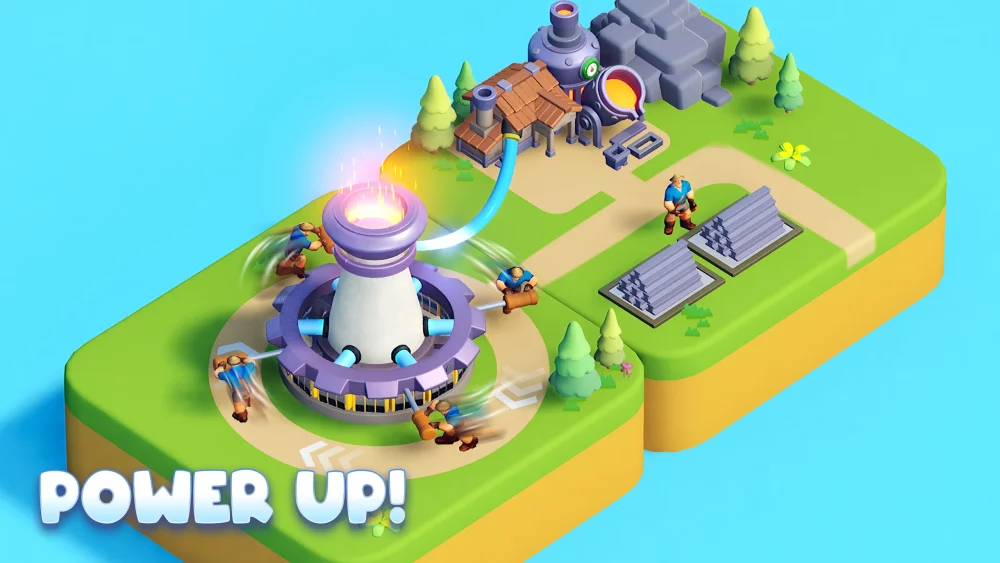
To succeed in the challenging Celestial Castle segments of Tiles Survive!!, you must move beyond static base building and adopt the high-efficiency defensive frameworks seen in the game's most competitive environments. By analyzing the performance metrics and structural choices of players in server 211—who typically favor dense, resource-efficient fortifications—versus the more traditional, resource-heavy builds often found in server 194, you can identify critical weaknesses in your own setup. This guide provides an expert breakdown of how to refine your layout, position your heroes, and balance your economy to survive the most punishing endgame waves.
Analyzing Cross-Server Defensive Performance
The primary takeaway from comparing defensive strategies in Tiles Survive!! across different server brackets is that "one-size-fits-all" base layouts inevitably fail as enemy intensity scales. Players in high-activity environments like server 211 have pivoted toward compact, multi-layered defensive structures. These players recognize that the game’s AI-driven enemy spawns prioritize the path of least resistance, meaning a large, sprawling base is significantly harder to defend than a small, reinforced one.
In contrast, server 194 often showcases a trend of "perimeter-heavy" defense, relying on long, continuous walls that are prone to being overwhelmed at a single point of failure. If your progress is stalling during Celestial Castle waves, your footprint is likely too large. Moving toward the compact, compartmentalized designs of server 211 allows for better resource preservation and lower structural attrition, as your defense is concentrated rather than spread thin across a wide, vulnerable perimeter.
Structural Integrity and Tile Placement
In Tiles Survive!!, the arrangement of your tiles is just as vital as the tier of the materials you use. Observations of top-tier play reveal that a "serrated" or zigzag wall pattern is significantly more effective than a straight line.
Why Zigzag Patterns Work:
- Damage Dissipation: A straight wall allows enemies to focus all damage on a single tile block, leading to a rapid breach. A zigzag pattern forces the AI to path toward corner pieces, spreading incoming damage across multiple tiles simultaneously.
- Kill Zone Creation: By creating "indentations" in your wall, you force enemies to cluster in specific pockets. This creates natural "kill zones" where your area-of-effect (AoE) hero abilities can hit the maximum number of targets at once.
- Structural Redundancy: If one tile in a serrated layout falls, it does not immediately expose your inner sanctum. The surrounding tiles continue to hold, buying your heroes precious seconds to rotate or trigger cooldowns.
Hero Positioning for Maximum Defensive Output
Your hero loadout is the primary engine of your defense, but their placement is the steering mechanism. Successful players in server 211 treat hero placement as a tactical exercise in battlefield control rather than just a stat-check.
- Front-Line Anchors (The "Cornerstones"): Place your highest-durability heroes at the corners of your defensive structures. These units act as "damage sponges," soaking up the initial impact of a wave before the enemies reach your main wall tiles.
- Crowd-Control (CC) Mid-Fielders: Position your heroes with slows, stuns, or knockbacks in the center-rear. From this position, they can influence the most tiles simultaneously, preventing enemies from swarming a single point of your wall.
- DPS Line-of-Sight: Ensure your ranged damage dealers have clear, unobstructed lines of sight across the entire frontage of the castle. Avoid placing defensive buildings or non-combat structures in front of your DPS units, as pathing and line-of-sight blocks are common reasons for lost waves.
Identifying Trade-offs in Defense Development
A common error observed in server 194 is the "over-investment trap." Players often pour the entirety of their resources into wall upgrades, thinking that higher hit points (HP) will solve their survival issues. However, in Tiles Survive!!, a wall that never falls is useless if your heroes lack the DPS to clear the enemies standing in front of it.
The 60/40 Development Rule
To maintain a balanced defense, adopt the 60/40 resource allocation strategy:
- 60% Hero Focus: Prioritize hero experience (XP), gear refinement, and skill level-ups. Your heroes are the active component of your defense and provide the necessary scaling to handle high-level waves.
- 40% Structural Focus: Spend the remainder of your resources on wall materials and defensive technology. Use this to maintain your "structural integrity" rather than simply pushing for raw HP.
This balance ensures that even when the enemy manages to breach a segment of your wall, your hero squad has the raw power to "clear the breach" before the wave can reach your inner buildings.
Adapting to Evolving Enemy Difficulty
As you progress through the Celestial Castle tiers, enemy AI behavior becomes more sophisticated. Enemies will begin to prioritize buildings with lower defensive stats or exploit gaps in your hero coverage.
Monitoring your combat reports is non-negotiable. If you find your walls falling faster than your heroes can eliminate the threats, look for the following:
- The "Gap" Indicator: Are enemies funneling into one specific area? If so, your defensive density is unbalanced. Shift your CC heroes toward that sector.
- The "Range" Indicator: Are your archers or mages standing idle? They may be blocked by your own structures. Move your DPS units to the highest point of your base for a clear view of the field.
- The "Attrition" Indicator: If your wall HP is consistently dropping, you are likely using an "active attrition" approach when you should be using "total containment." Shrink your base footprint further to ensure that your hero abilities cover every single tile of your perimeter.
Conclusion: Mastering the Meta
The disparity between server 211 and 194 provides a masterclass in Tiles Survive!! strategy. By shifting away from the sprawling, static wall-heavy builds and moving toward the compact, hero-centric, and serrated defensive layouts favored by elite players, you can significantly increase your survivability. Remember that the Celestial Castle is a test of both structural planning and active hero management. Keep your base small, your heroes mobile, and your resource allocation balanced, and you will dominate even the most aggressive endgame waves.

Free Tiles Survive! Codes
Current active codes and how to redeem them.

James Brown
James focuses on Android gaming on PC, emulator setup, controls, performance tuning, and practical troubleshooting for longer play sessions.
COMMUNITY
Player Comments
60 players commented on this guide.
Good guide for Tiles Survive! players. The base building part was useful.
This helped me understand base building much better.
This saved me time in the early game.
The tips are practical and easy to follow.