
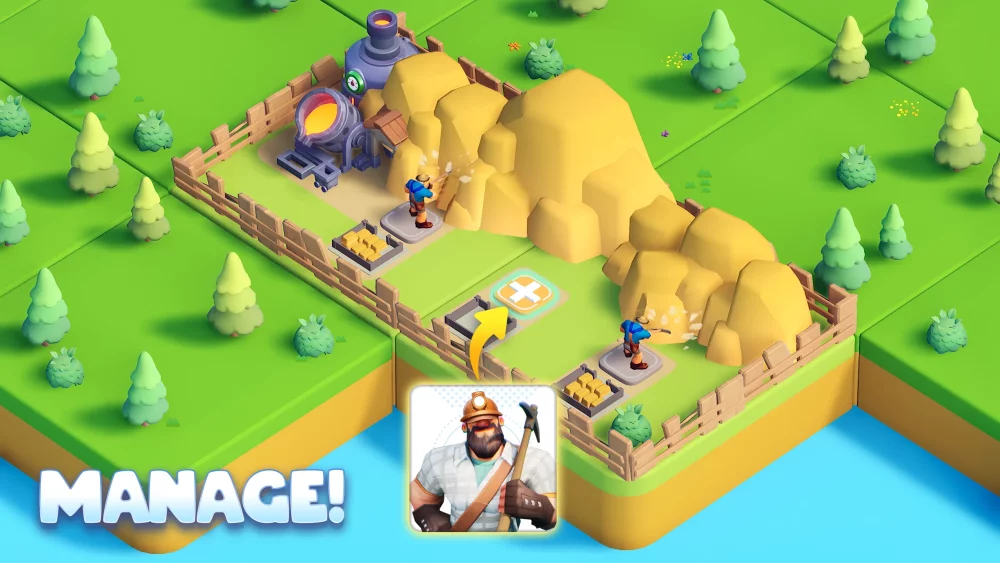
In Tiles Survive!!, your ability to navigate the grid is the primary determinant of your survival. Unlike many survival management games that focus solely on inventory or base building, Tiles Survive!! introduces a rhythmic, high-tempo movement component that demands spatial awareness and mechanical precision. Success is not just about having the right resources; it is about reaching them before the environment collapses or shifts.
This guide provides the tactical framework required to master the game’s movement mechanics, allowing you to maintain momentum, navigate complex clusters, and ensure your survival in the harshest wilderness conditions.
Establishing Consistent Input Rhythm
Success in Tiles Survive!! is fundamentally tied to your ability to maintain a steady input rhythm. Beginners often fall into the trap of reacting sporadically to individual tile placements. However, the game’s architecture rewards a proactive, fluid cadence. When you establish a consistent flow, you minimize the "mental tax" required to process the grid, freeing your focus to anticipate future obstacles.
Building Your Cadence
To establish a sustainable rhythm, observe the spacing between interactive tiles during the early stages of a run. By matching your movement speed to the grid layout, you create a "temporal buffer." This buffer is vital because it allows you to identify color-coded patterns or hazardous gaps before they reach your immediate vicinity.
- The Three-Tile Rule: Always look three tiles ahead of your current position. If your rhythm forces you to look only at the tile directly beneath your character, you are playing defensively and will likely fail when the tempo increases.
- Input Smoothing: Avoid "stutter-stepping." In Tiles Survive!!, binary inputs (moving only when you see a threat) often lead to jerky, inefficient movement that limits your pathing options. Aim for a continuous, gliding movement style that covers the grid efficiently.
Navigating High-Density Grid Clusters
As the game progresses, you will encounter high-density clusters where the grid is saturated with obstacles. In these segments, your priority must shift from raw speed to tactical precision. High-density areas frequently offer multiple pathing choices, but the risk of a "forced collision"—a situation where no legal move exists—increases exponentially.
The Path-of-Least-Resistance Approach
Instead of attempting to clear or interact with every tile in a cluster, identify the most direct, unobstructed path. Your goal is not to maximize resource gathering in these zones; it is to maintain your forward trajectory.
- Identify Exit Vectors: Before entering a dense cluster, scan the exit row. If you know where you need to end up, your brain will subconsciously favor movement paths that lead toward that exit.
- Avoid Over-Clearing: Clearing peripheral tiles is a common rookie mistake. It wastes time and often pulls you into a dead end. Only interact with tiles that directly support your forward movement.
- Prioritize Survival over Resources: If a resource tile sits in a corner that forces you into a potential trap, leave it. A single missed resource is a minor setback; a run-ending collision is a complete loss of progress.
Managing Movement Momentum
Momentum in Tiles Survive!! is a hidden resource. It dictates your ability to pivot when the grid layout shifts unexpectedly. Players who stop or stall frequently find that they lack the "clearing speed" to maneuver around complex geometric patterns.
Maintaining the Active Zone
Your "Active Zone" is the center-forward portion of the screen. Keeping your character positioned here maximizes your reaction window. If you allow yourself to fall toward the bottom of the screen, you effectively shrink your field of vision, forcing you to make reactive, low-information decisions.
- The Forward-Lean Strategy: Always position your character slightly ahead of the incoming tile wave. This keeps the upcoming grid layout in your direct line of sight.
- Momentum Recovery: If you are forced to stop, immediately look for the nearest "open" lane to restart your movement. Do not wait for the perfect opening; wait for the first safe opening.
Advanced Pathing for Survival
Survival hinges on your ability to read the grid's geometry as a series of connected lanes. Viewing the screen as a random collection of tiles leads to "tunnel vision," where you focus on a single tile and miss the broader, more threatening pattern forming on the perimeter.
Lane Segmentation Techniques
Mentally partition the grid into three vertical lanes. When you encounter a pattern that requires a shift, execute the transition early. Waiting until the last possible second to switch lanes is the single most common cause of failure.
- Anticipatory Pivoting: By initiating a lane switch as soon as a pattern is identified, you maintain a smoother trajectory. This gives you the flexibility to pivot again if a secondary, unexpected tile appears in your new path.
- The "Cross-Grid" Scan: Periodically move your eyes from the far left to the far right of the screen. Tiles Survive!! often hides the most dangerous hazards in the corners; by practicing a wide-angle scan, you ensure that no environmental hazard catches you off guard.
Common Mistakes to Avoid
Even experienced players can fall into bad habits. Keep these common pitfalls in mind during your next run:
- Reactionary Panic: When the tempo increases, players often begin tapping inputs randomly. This is almost always fatal. If you feel your rhythm breaking, intentionally slow down your input speed by 10% to regain your bearings.
- Ignoring the Peripheral: Hazards often spawn on the edges of the grid. If you focus exclusively on the center, you will be blindsided by lateral tile shifts.
- Lack of Long-Term Planning: Always ask yourself, "If this tile disappears, where will I be in three seconds?" If the answer is "trapped," you are already in the wrong position.
By focusing on these core movement mechanics—rhythmic input, efficient pathing, and momentum management—you will find that Tiles Survive!! becomes much more manageable. Survival is not about luck; it is about maintaining a disciplined connection between your intent and the grid's layout. Practice these techniques in your next session to see immediate improvements in your survivability and overall performance.

Free Tiles Survive! Codes
Current active codes and how to redeem them.

Michael Smith
Michael covers live-service games, events, reward systems, and efficient daily routines, turning frequent updates into clear actions for players.
COMMUNITY
Player Comments
131 players commented on this guide.
Good guide for Tiles Survive! players. The strategy part was useful.
Nice guide. I am checking the other Tiles Survive! articles next.
The explanation is clear, especially for beginners.
The tips are practical and easy to follow.