
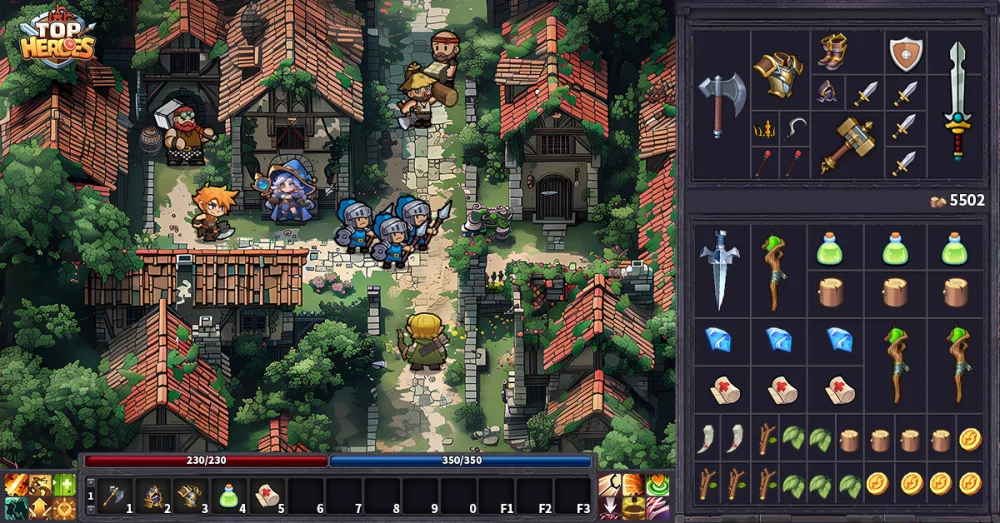
In Top Heroes, switch to the new utility combat pet only after it reaches at least two stars. While the newcomer provides squad shielding and crowd control, replacing an established three-star or four-star legacy companion at zero or one star lowers your team's baseline Attack, Defense, and Health by 15% to 20%. Keep your high-star damage or defense pet equipped until the new companion hits the two-star threshold and unlocks its core passive talents.
Star Rank vs. Active Utility Threshold
In Top Heroes, combat pets grant passive percentage stat increases to all six squad members based directly on their star rank. Even though the new pet features superior active mechanics—such as stuns, silences, attack debuffs, and damage shields—raw stats dictate whether your heroes survive long enough to cast their skills.
- 0-Star to 1-Star: Keep legacy pets equipped. An unranked utility pet lacks the passive stats to keep fragile heroes alive against high-speed League or burst Horde teams.
- 2-Star Threshold: Safe transition point. The pet unlocks essential passive nodes and provides enough baseline squad durability to justify benching older damage companions.
- 3-Star and Above: Full upgrade. The combination of high baseline stats and crowd control outperforms pure damage pets across both competitive PvP and high-difficulty PvE.
Before swapping companions, check your combat logs. If your frontline collapses before filling energy meters, the stat loss from an unranked pet will worsen the problem. If your heroes survive the opening burst but fail to disrupt enemy skill rotations, transitioning to the utility pet is the correct move.
Companion Archetype Matchups
Different squad compositions benefit from specific companion archetypes. Use this breakdown to determine whether your primary lineup needs tactical control, raw mitigation, or flat damage.
| Companion Archetype | Primary Combat Role | Ideal Faction Lineup | Strategic Advantage |
|---|---|---|---|
| Control Utility (New Pet) | Crowd control, shields, and damage suppression | Balanced League & Nature squads | Disrupts enemy casts and shields fragile backline carries. |
| Defensive Guardian (e.g., Bear) | Damage mitigation and frontline bulk | Tank-heavy Horde & Nature teams | Absorbs burst damage to extend fight duration. |
| Offensive Striker (e.g., Dragon) | Area burst and damage amplification | High-burst League & Horde lineups | Eliminates enemy backlines during initial skill cycles. |
Pairing the new utility pet with sustain-focused Nature teams creates a durable frontline, while adding it to League squads patches defensive vulnerabilities. However, avoid pairing it with lineups that already feature heavy crowd control if skill cooldowns overlap, as simultaneous debuffs yield diminishing returns.
Resource Allocation for Pet Upgrades
Pet leveling materials—including pet feed, ascension shards, and skill development items—are scarce bottlenecks. Maximize their efficiency by following these rules:
- Invest solely in Team 1: Your primary march handles Arena, Castle defense, and seasonal PvE progression. Distributing resources across secondary marches slows down your main squad's power progression.
- Prioritize the active skill: Upgrades to the main active skill directly boost shield absorption values and status effect durations.
- Target defensive nodes: Choose talent nodes that increase ability trigger frequency and squad survivability over auxiliary attack stats.
- Hold materials during shard gates: When ascension shards gate your primary pet's rank, save your leveling materials rather than spending them on bench companions.

Free Top Heroes Codes
Current active codes and how to redeem them.

Emily Johnson
Emily writes practical mobile strategy guides with a focus on resource planning, base progression, and the early decisions that shape a long-term account.
COMMUNITY
Player Comments
150 players commented on this guide.
This helped me understand heroes much better.
This guide answered the exact question I had.
I wish I had read this before upgrading the wrong thing.
I tried this today and it worked better than my old setup.