
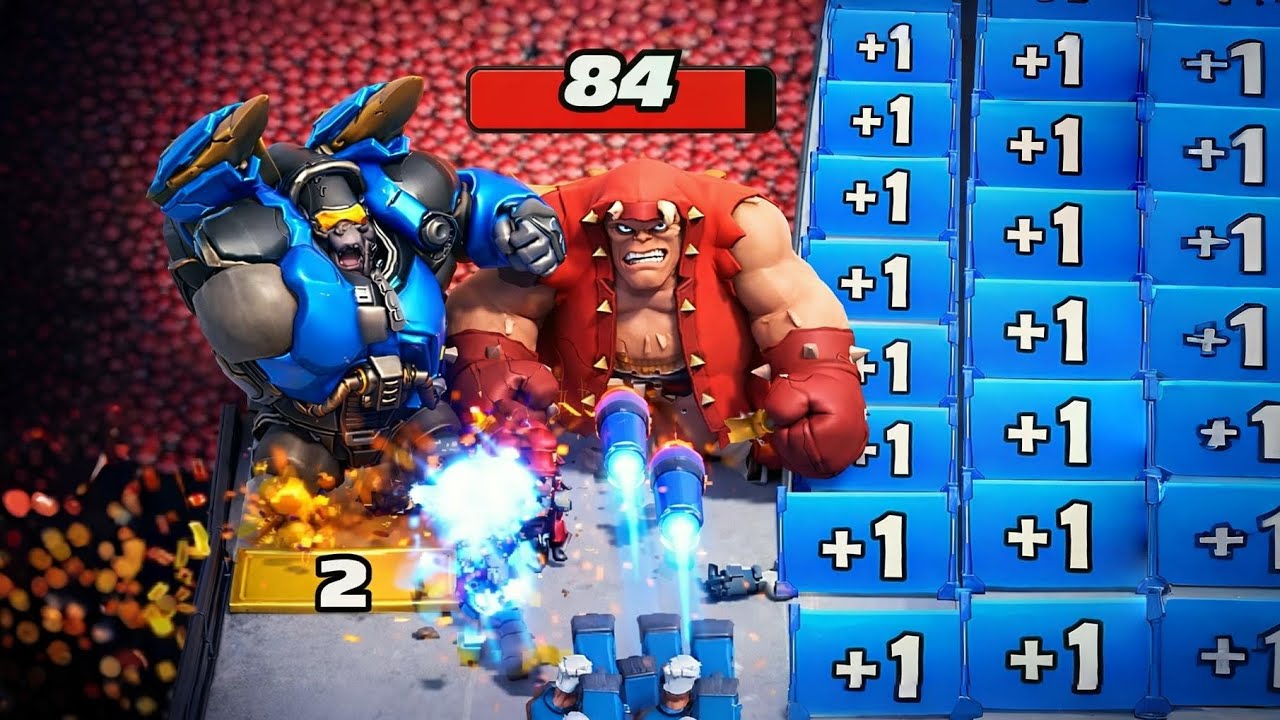
To dominate in Top War: Battle Game, you must move beyond basic unit production and master the high-speed merging mechanics that define your combat power. While many players focus on simply clicking icons, true efficiency comes from managing your limited grid space to produce high-tier units rapidly. This guide focuses on the tactical application of merging to bolster your defense and overwhelm opposition forces, ensuring your base remains a fortress even when faced with aggressive expansion attempts.
The Mechanics of Efficient Merging
At its core, Top War: Battle Game is a game of exponential growth. The fundamental rule is simple: two units of the same level can be merged to create one unit of a higher level. However, the strategy lies in the "Merge Chain."
Each merge action effectively doubles the combat power of the resulting unit relative to its predecessors. A single high-tier unit not only saves physical grid space but also provides superior performance in combat compared to multiple low-tier units. To maximize efficiency:
- Avoid Over-production: Do not mass-produce low-level units if your grid is already near capacity.
- Batch Merging: Clear space by merging in large batches rather than one-by-one to maintain a steady flow of high-level assets.
- Prioritize Tier Progression: Always focus resources on pushing toward the next unit level rather than hoarding disparate, low-level assets.
Optimizing Your Grid for Maximum Output
The most significant bottleneck in Top War: Battle Game is your base grid size. If you fill your limited space with low-level units, you stifle your production capacity. You must treat your grid as a dynamic workspace rather than a storage area.
Best Practices for Grid Management:
- Clear the Clutter: Remove unnecessary decorations or low-level buildings that are not contributing to your immediate goals.
- Dynamic Workspaces: Keep a designated "merge zone" on your grid where you only drop units that are ready to be combined.
- Queue Awareness: If your production queue stalls, it is almost always due to a full grid. Keeping at least 15-20% of your grid empty allows for the necessary movement required to chain merges together.
Strategic Unit Composition
Merging is not just a way to organize your base; it is the primary mechanic for upgrading your combat effectiveness. In Top War: Battle Game, the difference between unit levels is astronomical. A Level 20 unit will obliterate a swarm of Level 10s.
When building your forces, consider the three pillars of the game’s military: Land, Navy, and Airforce.
- Land Forces: Ideal for early-game defense and general base protection.
- Navy: Provides specialized bonuses and is essential for water-based map navigation.
- Airforce: High-damage output, necessary for late-game offensive maneuvers.
Focus your merging efforts on one branch at a time. Trying to maintain high-tier units across all three branches simultaneously can spread your resources too thin, leaving you vulnerable in all categories. Choose your focus based on your playstyle and current research progress.
Defensive Tactics Against Base Raids
Base raids in Top War: Battle Game are won by the player who can sustain the highest output of units under pressure. When an opponent initiates a battle, the game shifts into a tactical display of your current available forces. If you have neglected your merging, your base will rely on a large number of weak units that fall quickly, leading to a swift defeat.
Pro-Tip for Defense: Always keep your most advanced units positioned near the center of your base to intercept incoming threats. If you are under active attack, prioritize "Emergency Merging." This involves quickly combining your existing units to create a few high-level defensive anchors that can hold the line while your production facilities replenish the losses.
Managing Resource Consumption During Merges
Every merge action consumes gold and space. If you merge too many low-level units at once without considering your future production requirements, you may find yourself with a single powerful unit but a completely empty base that cannot defend itself against a secondary wave of attacks.
To balance this, maintain a "defensive buffer." This means keeping a small contingent of mid-tier units that can provide a baseline of protection while you work toward your next high-tier merge. By keeping a mix of units at different stages of the merge chain, you ensure that your defense is not entirely dependent on a single unit that might be tied up in a long-duration task or an active battle.
Scaling Up for Late-Game Dominance
As you progress, the complexity of merging increases, and the number of units required to reach the highest tiers grows exponentially. The transition from mid-game to late-game requires a shift in mindset from simple merging to efficient resource management.
Signs You Are Ready to Scale:
- Production Speed: You are consistently clearing your grid within seconds of new units spawning.
- Research Tiers: You have unlocked the necessary upgrades in the Research Center to boost the base level of new units.
- Resource Surplus: You have enough gold to sustain rapid-fire merging without depleting your reserves.
If you find that your production speed is lagging, it is time to reassess your base layout. Look for bottlenecks where low-tier units are sitting idle because they lack a partner to merge with. By streamlining your merging process and keeping your production lines active, you maintain the momentum necessary to stay competitive.
Common Mistakes to Avoid
Many players fall into the trap of "Hoarding Syndrome," where they keep units because they look cool or they are afraid to commit them to a merge. Avoid these common pitfalls:
- Holding on to Low-Tier Units: If a unit is not contributing to your current military goals, merge it. An empty grid is better than a grid full of useless, low-level troops.
- Ignoring Hero Synergy: While units are important, they work best when paired with the right Hero. Always ensure your high-tier units are led by a Hero that boosts their specific type (Land, Navy, or Airforce).
- Neglecting Base Decorations: While they add flavor, they take up valuable grid space. Only keep decorations if you have excess space.
In Top War: Battle Game, the players who consistently merge their way to higher tiers are the ones who ultimately dictate the flow of battle. By applying these strategies, you will transform your base from a vulnerable outpost into a formidable, high-output military machine.
Free Top War: Battle Game Codes
Current active codes and how to redeem them.

Sarah Williams
Sarah specializes in RPG and collection games, explaining team building, character growth, and beginner-friendly ways to avoid expensive early mistakes.
COMMUNITY
Player Comments
127 players commented on this guide.
Good guide for Top War: Battle Game players. The base building part was useful.
I wish I had read this before upgrading the wrong thing.
This helped me understand base building much better.
I tried this today and it worked better than my old setup.