
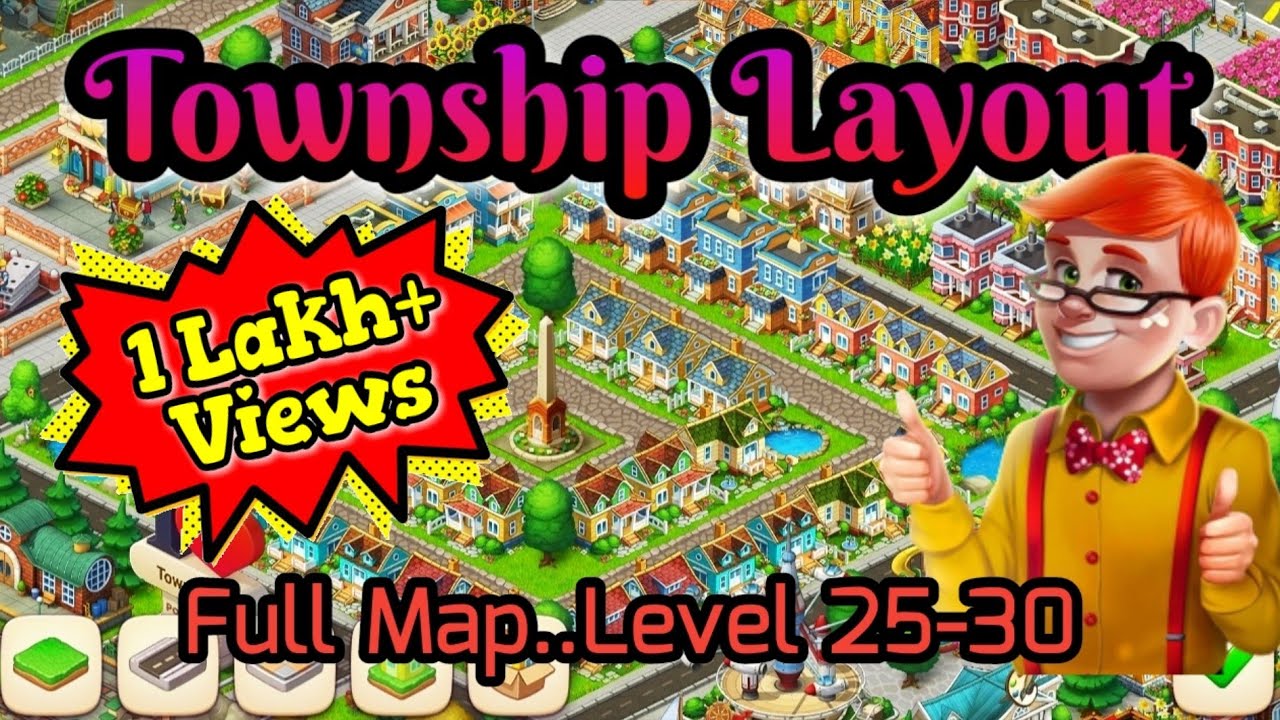
To build an efficient, budget-friendly town layout in Township between levels 25 and 30, divide your unlocked territory into four functional sectors: agriculture, industry, residential civic blocks, and transportation logistics. Isolating these systems prevents production bottlenecks, shortens screen navigation, and prepares your borders for orderly land expansions.
Core District Zoning
Between levels 25 and 30, unlocked land remains limited while production chains expand. Dividing your map into four continuous zones keeps order fulfillment moving quickly without requiring expensive redesigns later:
- Agricultural Hub: Contains all crop fields, feed mills, and livestock pens in a tight loop.
- Industrial Corridor: Houses multi-step processing facilities such as the Bakery, Dairy, Sugar Refinery, Tailor Shop, Fast Food Restaurant, and Paper Mill.
- Civic and Residential Quarter: Combines houses with population-cap community buildings along structured streets.
- Logistics Hub: Centers on the Train Station, Helicopter Pad, and Barn to streamline material drop-offs and order shipments.
Separate these districts using simple dirt paths, paved roads, or single-tile water canals so you can pan directly to the service you need.
Agricultural Loop: Crops, Feed, and Livestock
Organizing your farming sector into a self-contained production loop minimizes swiping errors and speeds up animal feeding.
- Group Crop Fields in a Rectangle: Lay all farming plots together in a single solid block. This makes rapid swiping for planting and harvesting consistent.
- Place Feed Mills Adjacent to Fields: Situate your Feed Mills directly along the edge of your crop grid so harvested wheat, corn, and carrots immediately enter feed queues.
- Border Feed Mills with Animal Pens: Arrange Cow Pastures, Chicken Coops, and Sheep Fosters right next to the Feed Mills. This creates a direct path from raw crops to animal feed to animal products.
- Anchor the Barn nearby: Position your main Barn on the perimeter of the farming zone. Because crops and raw animal goods fill inventory rapidly, keeping the Barn visible nearby helps you monitor storage thresholds.
Industrial Layout and Train Logistics
Processing factories unlocked by level 30 require structured street frontage so queue bubbles remain visible.
Align factories in two parallel rows separated by a wide roadway:
- Short-Cycle Facilities: Keep high-frequency buildings like the Bakery and Dairy on the inner edge closest to your agricultural hub.
- Long-Cycle Facilities: Place slower buildings, such as the Paper Mill, Tailor Shop, and Fast Food Restaurant, toward the outer perimeter.
- Train Station Alignment: Ensure an open transit corridor runs directly from your factory row to the Train Station. Trains deliver the axes, saws, and shovels required for expansion; maintaining an unobstructed view of incoming trains ensures crates are loaded as soon as goods finish processing.
Residential Blocks and Community Buildings
Housing increases your population cap to unlock new farming plots and factories, but sprawling homes take up valuable territory.
Cluster identical or similar footprint houses into compact residential grids rather than scattering them across open grass. Reserve the center of these neighborhoods for large community buildings, such as the Police Station, Fire Station, and Post Office. Placing civic structures as central anchors creates tidy municipal squares and ensures your residential footprint forms straight outer edges, making future perimeter expansions easy to incorporate.
Budget Landscaping and Map Expansion
Decorating between levels 25 and 30 should not drain coins needed for factory construction. Low-cost landscape items create visual structure and mark boundary zones cleanly.
| Landscape Element | Ideal Placement | Practical Function |
|---|---|---|
| Paved Walkways | Civic centers and factory rows | Defines clear vehicle and walking corridors at minimal cost |
| Canals and Water Tiles | Buffers between livestock and housing | Isolates animal pens visually without blocking transit |
| Hedges and Flowerbeds | Odd gaps beside community buildings | Fills single-tile dead space where structures cannot fit |
| Forest Borders | Perimeter of uncleared territory | Conceals uneven plot edges until land tools become available |
When spending expansion tools from train shipments, clear land outward in rectangular blocks rather than long, irregular strips. Maintaining straight borders allows you to extend existing factory rows or crop grids immediately into new plots without shifting previously placed buildings.

Free Township Codes
Current active codes and how to redeem them.

Michael Smith
Michael covers live-service games, events, reward systems, and efficient daily routines, turning frequent updates into clear actions for players.
COMMUNITY
Player Comments
55 players commented on this guide.
This saved me time in the early game.
The explanation is clear, especially for beginners.
This helped me understand strategy much better.
Nice guide. I am checking the other Township articles next.