
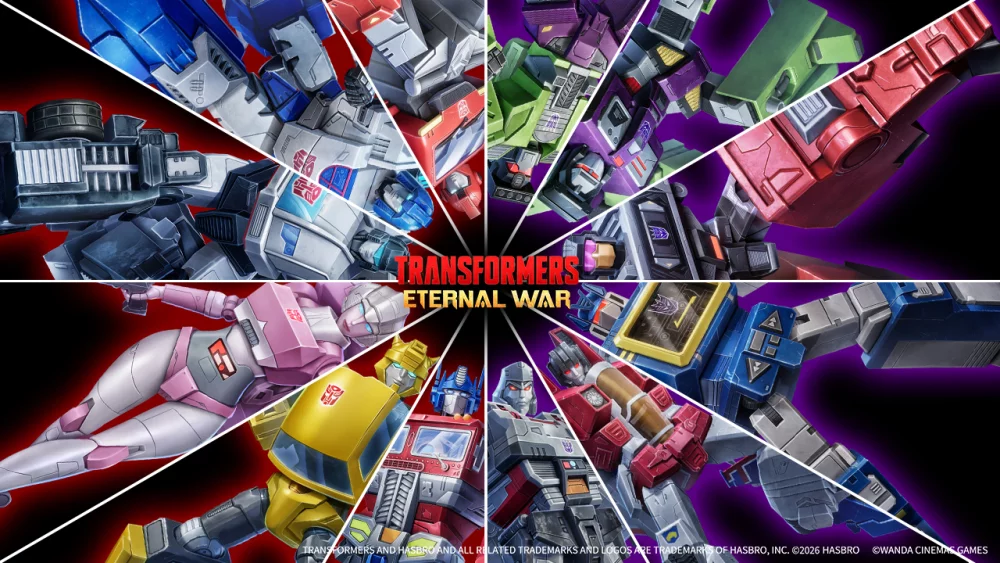
In Transformers: Eternal War, victory against the Chaos Legion requires more than just powerful individual units; it demands a deep understanding of squad synergy and tactical deployment. As you navigate the corruption spreading across Earth, your ability to combine iconic character archetypes into a cohesive fighting force will determine your success in high-difficulty encounters. This guide provides the expert insights you need to build a top-tier roster, manage your resources efficiently, and maximize your performance during the game’s 40th-anniversary events.
Understanding Character Archetype Utility
The foundational mistake most players make in Transformers: Eternal War is prioritizing raw power over tactical utility. While high-stat units provide a solid baseline, the true strength of your squad comes from how your characters interact through their specific historical archetypes.
Characters in Transformers: Eternal War are categorized by their legacy design philosophy. A unit designed as a "Tactical Scout" might have lower base damage, but their ability to reveal hidden enemy weaknesses or provide debuffs to the Chaos Legion is invaluable. Conversely, "Heavy Armor" units serve as the anchor for your team. By evaluating characters based on their role—rather than just their rarity or attack power—you can build squads that are greater than the sum of their parts. Always inspect the "Trait" section of a hero’s profile to identify their primary function: are they a disruptor, a sustain-tank, or a precision executioner?
Leveraging 40th Anniversary Event Bonuses
To celebrate the 40th anniversary of the franchise, Transformers: Eternal War frequently introduces legacy-inspired character variants. These units are not merely cosmetic; they are engineered with passive abilities specifically tuned to dominate the current game meta.
When an event is active, these featured characters often receive significant stat modifiers or unique "Synergy Links" that are exclusive to the event’s trial stages. If you are struggling to clear a challenge, check if your current roster lacks the featured event character. Often, these units possess "Counter-Mechanics" that are essential for bypassing the specific defenses of event bosses. Prioritize your currency spending during these windows; the long-term utility of a high-tier legacy character far outweighs the cost of pulling for generalist heroes.
Optimizing Squad Composition for Synergy
A balanced squad in Transformers: Eternal War must address three core pillars: survivability, crowd control, and burst damage. Failing to include one of these leads to "bottlenecking," where your team performs well in general combat but fails against specialized bosses.
The Three Pillars of Squad Building
- Frontline Tanks: Your first priority is a unit capable of drawing fire. Look for characters with "Taunt" or "Damage Mitigation" abilities. These units allow your squishier DPS characters to operate without interruption.
- Support & Utility: These units provide the "flow" of the battle. Prioritize characters that offer speed buffs, cooldown reduction, or shields. Speed is often the deciding factor in meeting time-based objectives in higher-tier trials.
- Precision DPS: You need at least one unit capable of single-target elimination. When the Chaos Legion deploys high-priority threats, your precision DPS must be able to remove them before they can trigger their ultimate abilities.
When these three roles are filled by characters from the same era or faction, they often trigger a "Legacy Synergy" bonus. This hidden mechanic provides passive stat boosts to the entire team, making them significantly more efficient than a "rainbow" squad of high-stat, non-synergizing units.
Strategic Investment and Resource Management
Resource scarcity is the primary barrier to progress in the late game. A common error is spreading upgrade materials across your entire collection. In Transformers: Eternal War, you should focus your investment on a core team of five units.
- Focus on Versatility: Before spending rare materials, ask: "Can this unit function in multiple game modes?" A character that excels in both the campaign and the competitive arena is always a better investment than a character limited to a single niche role.
- The Power of Anchors: If you are stuck, identify which of the three pillars (Tank, Support, DPS) is failing. If your team dies too fast, don't upgrade your DPS; invest in a stronger Tank. If you are running out of time, upgrade your Support's cooldown reduction.
- Recycling Tactics: Use lower-tier units as fodder for your core squad’s growth. Maintaining a lean, highly upgraded squad is mathematically superior to having a wide, under-leveled roster.
Long-Term Progression and Meta Anticipation
As you advance deeper into Transformers: Eternal War, the meta will shift. Characters that seem mid-tier today may become essential tomorrow due to balance patches or new, difficult content.
Monitor the community and official patch notes for "Quality of Life" (QoL) updates. Often, older characters receive stat buffs that make them viable again. By keeping a close eye on these shifts, you can anticipate which legacy characters will remain relevant. A generalist unit—one that can handle various enemy types without relying on specific environmental buffs—is your safest long-term bet.
When you reach the late-game, focus on building "sub-teams." Once your primary squad is maxed out, start a second squad that counters the weaknesses of your first. For example, if your primary squad is weak against high-armor enemies, build a secondary squad with armor-piercing capabilities. This disciplined approach ensures that no matter what threats the Chaos Legion presents, you will always have a tactical answer prepared, keeping your account at the forefront of the Transformers: Eternal War community.
Free Transformers: Eternal War Codes
Current active codes and how to redeem them.

Emily Johnson
Emily writes practical mobile strategy guides with a focus on resource planning, base progression, and the early decisions that shape a long-term account.
COMMUNITY
Player Comments
75 players commented on this guide.
The tips are practical and easy to follow.
Nice guide. I am checking the other Transformers: Eternal War articles next.
This guide answered the exact question I had.
I wish I had read this before upgrading the wrong thing.