
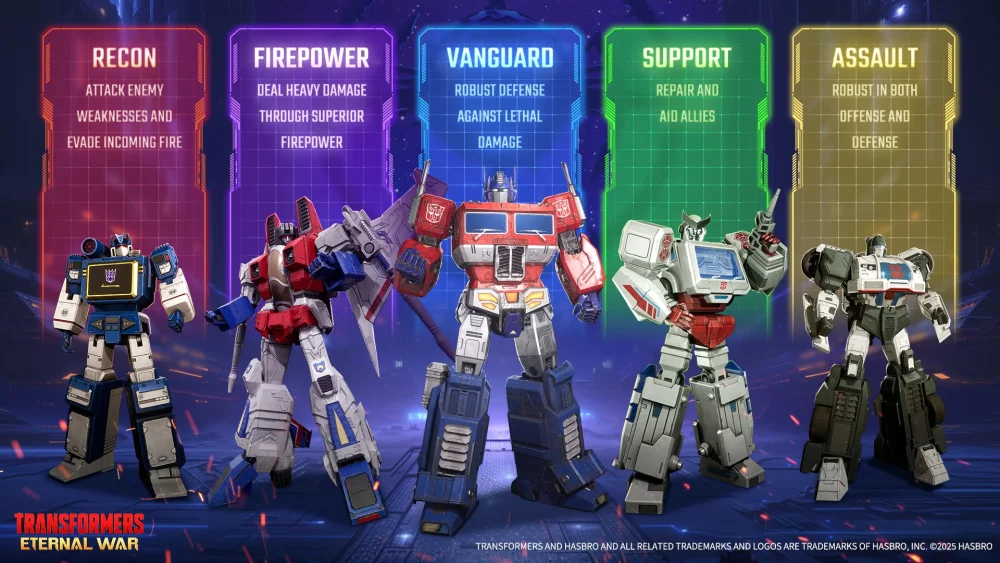
To prevent severe progression bottlenecks in Transformers: Eternal War, immediately stop investing premium upgrade materials into units that rely solely on raw, single-target damage without utility. Characters that clear early campaign chapters easily often fail when enemy damage spikes in mid-game stages. If you have already leveled underperforming units, halt their upgrades immediately, relegate them to background dispatch missions, and redirect your resources toward versatile squad anchors.
Why Early-Game Trap Units Stall Account Progression
In the early chapters of Transformers: Eternal War, low enemy health pools and predictable attack patterns allow almost any unit to secure victories. This creates a false sense of security. As you advance into mid-game content, elite bosses, and faction raids, raw damage numbers alone cannot overcome coordinated enemy waves.
Upgrading a full five-unit squad requires vast amounts of alloy, gold, progression catalysts, skill modules, and promotion matrices. Because resource refund systems are either limited or costly, spreading faction-specific energy and transformation cores across second-tier units dilutes your roster's overall combat strength. Sinking high-end materials into heroes with rigid kits delays the development of core cornerstones needed to survive late-game encounters.
Kit Red Flags: High-Value Units vs. Trap Units
Before committing rare promotion materials, evaluate a character's skill kit rather than their base combat rating. Trap units consistently lack battlefield disruption, defensive utility, and faction synergy.
| Characteristic | High-Value Priority Units | Low-Value Trap Units |
|---|---|---|
| Damage Profile | Broad area-of-effect (AoE) or rapid reset mechanics | Rigid, single-target burst that wastes excess damage |
| Transformation Utility | Grants invulnerability frames, gap closers, or squad buffs | Purely cosmetic stat increases with sluggish animation locks |
| Crowd Control | Stuns, knockbacks, silences, or displacement skills | Zero disruption; dependent entirely on raw stat checks |
| Team Synergy | Provides barriers, energy replenishment, or faction buffs | Selfish abilities that offer no mutual squad protection |
Animation length is another critical failure point. Characters with extended attack animations lacking invulnerability frames (i-frames) leave themselves vulnerable to enemy snipers and heavy artillery. If a unit cannot interrupt an incoming enemy cast, absorb heavy fire, or reposition instantly during transformation, they will struggle in high-difficulty stages.
Faction Traps: Autobot and Decepticon Kit Flaws
Both factions feature characters whose performance drops significantly outside early-stage content:
- Autobot Frontline Brawlers Without Self-Sustain: Frontline heroes that lack personal damage reduction, barriers, or self-healing fall apart against defense-shredding debuffs. Running an anchor without defensive mitigation forces your support units to waste cooldowns on emergency healing rather than applying team buffs. Versatile frontline anchors like Optimus Prime outperform pure brawlers by absorbing damage while anchoring the squad.
- Autobot Single-Target Gunners: Secondary ranged units lacking AoE spread, armor penetration, or turn manipulation cannot clear swarm waves. Single-target shooters get overwhelmed quickly, allowing enemy backline threats to eliminate your squad.
- Decepticon Glass Cannons: High critical-strike ratings and aggressive offensive profiles often mask dangerously low base defenses. Without evasive transformations or protective passives, these units frequently die to incidental AoE damage before activating their ultimates.
- Decepticon Channelers Without Protection: Units that rely on long, uninterrupted casting channels are easily neutralized in difficult content. A basic enemy stun or knockback will cancel their ultimate entirely. Top-tier Decepticon strategies rely instead on consistent debuff layering and field control led by command units like Megatron.
How to Reallocate Resources and Build a Balanced Squad
If you have already invested heavily in low-tier units, do not spend additional materials attempting to make them viable in frontline combat.
- Freeze investment: Keep their skill modules and promotion matrices at their current level and stop farming specific upgrade catalysts for them.
- Assign to dispatch: Use these leveled units to fulfill secondary passive tasks, such as resource dispatch missions, where their raw stats still provide value without risking combat failure.
- Restructure around core roles: Funnel all future promotion matrices and alloy into a balanced five-unit team composition built on functional utility:
- Vanguard Tank: Focus on a frontliner providing team-wide barriers, damage reduction, or displacement control.
- Primary Damage Dealer: Prioritize wide AoE coverage or transformation reset mechanics to clear standard enemy waves efficiently.
- Utility Controller: Use a character capable of interrupting channeled abilities, displacing enemy clusters, and applying persistent debuffs.
- Dedicated Support: Field a unit that cleanses negative status effects, feeds team energy, and provides sustained frontline healing.

Free Transformers: Eternal War Codes
Current active codes and how to redeem them.

Sarah Williams
Sarah specializes in RPG and collection games, explaining team building, character growth, and beginner-friendly ways to avoid expensive early mistakes.
COMMUNITY
Player Comments
129 players commented on this guide.
Can you add more details about strategy in a future update?
This guide answered the exact question I had.
Nice guide. I am checking the other Transformers: Eternal War articles next.
This helped me understand strategy much better.