
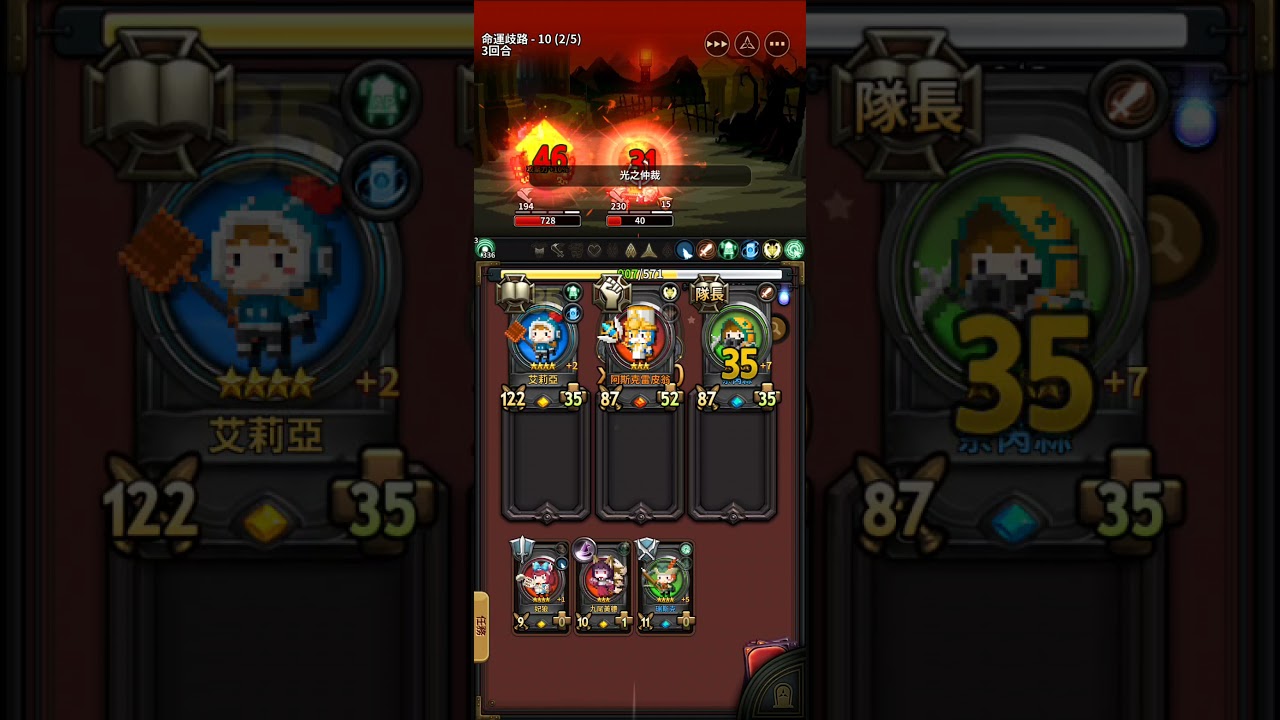
Advancing through the late-game stages of Triple Fantasy requires a sophisticated blend of card synergy and tactical foresight, particularly when tackling Chapter 25, "Fate Crossroads." As you reach this milestone, the difficulty spike becomes pronounced, with enemies featuring massive health pools and mechanics that punish sloppy play. To succeed, you must shift your mindset from "raw power" to "calculated efficiency." This guide breaks down the essential combat adjustments and deck-building philosophies required to push past the Fate Crossroads and continue your journey.
Analyzing the Fate Crossroads Difficulty Spike
The primary challenge in Chapter 25 is the sudden surge in enemy health pools and incoming damage, which forces players to abandon generalist decks. In earlier chapters, you might get away with playing high-rarity cards regardless of their synergy; in "Fate Crossroads," that approach leads to stagnation.
The boss encounters in this chapter act as gatekeepers. They often employ sustain mechanics—such as self-healing or defensive buffs—that trigger if you fail to reach a specific damage threshold within a set number of turns.
- The Resistance Check: Many bosses in this chapter possess high elemental resistances. If you are relying on a single-element deck, you will likely hit a "soft lock" where your damage output is halved or negated.
- The Sustainability Threshold: These stages often punish players who cannot maintain a defensive floor while waiting for their ideal card draw. If your team lacks passive damage mitigation or reliable healing, you will find yourself overwhelmed by the boss's escalating attack patterns.
Optimizing Card Rotation for Maximum Burst
In Triple Fantasy, the damage formula rewards players for building long, cohesive chains. The damage scaling for 3-card and 4-card combos is exponential, not linear. To clear Chapter 25, you must stop spreading your damage thin across multiple turns and instead focus on "Burst Windows."
The Art of the Combo
- Hold for Multipliers: Avoid playing your high-damage cards individually just to clear small mobs. Save your heavy hitters for when you can trigger a 4-card combo that exploits the enemy’s elemental weakness.
- Hand Cycling: If your current hand contains low-value cards, use your turn to "cycle"—play only what is necessary to survive—so you can draw into your core synergy pieces.
- The "Win Condition" Deck: Identify your deck's specific win condition. If you are using a "Critical Damage" build, ensure your hand contains the support cards that grant critical rate buffs before you drop your main damage dealer.
Managing Resource Consumption During Progression
Chapter 25 features multi-wave structures that test your stamina. A common mistake is using your "Ultimate" skills or high-cost cards on the trash mobs leading up to the boss. By the time you reach the final encounter, your hand is depleted, and your mana pool is drained.
Follow these rules for resource management:
- Clear Waves with Basics: Use the early waves to set up your board. If you can clear them using only 2-card combos, save your power cards for the boss.
- Identify the "Burn" Phase: Watch the boss carefully. Many bosses in Fate Crossroads have a "Vulnerable" state—often signaled by a change in their glow or a specific animation—where their defenses drop. This is your cue to dump your entire hand for maximum impact.
- Defensive Transition: If you cannot one-turn-kill (OTK) the boss, ensure your deck includes at least one card capable of providing a shield or damage reduction. This "insurance" card allows you to survive the transition into the boss's secondary phase without losing a hero.
Building for Synergy Over Raw Stats
As you progress deeper into the game, you will find that individual hero stats matter less than the "Team Effect." A team of mid-tier heroes that share a "Chain" bonus will consistently outperform a collection of high-stat legendary cards that do not interact with one another.
Why Synergy Wins
- All-Element Bonuses: Look for heroes that provide "All-Element" damage buffs. These are invaluable in Chapter 25, as they allow you to maintain high damage output even when the boss switches elemental weaknesses.
- Persistent Field Effects: Prioritize heroes whose skills create passive buffs that persist across turns. These effects create a "damage floor" that ensures your combos hit harder, regardless of what cards you draw in your next hand.
- Debuff Stacking: If a boss has high natural defense, look for cards that apply "Defense Down" or "Resistance Shred." Applying these before your primary burst combo can effectively double your total damage output.
Strategic Trade-offs and Limitations
The biggest risk in an offense-heavy "burst" deck is the lack of sustainability. If your combo fails to finish the target, you are often left wide open to a punishing counter-attack.
- The Healer Dilemma: While it is tempting to run 4-5 pure DPS cards, Chapter 25 often demands at least one slot for a healer or a cleanser to remove debilitating status effects applied by bosses.
- Adapting to the Meta: Triple Fantasy receives frequent updates. Always review your hero descriptions after a patch. Even a small tweak to a hero's passive damage scaling can change the math of your combo. If a specific boss level proves impossible, do not hesitate to swap one utility card for a synergy-focused hero to see if the increased combo potential bridges the gap.
Conclusion: The Path Through the Crossroads
Success in Chapter 25, "Fate Crossroads," is rarely about having the "best" individual cards; it is about how those cards work together to exploit the specific weaknesses of the encounter. Focus on stacking your combo multipliers, managing your hand to ensure you have the right elements for the boss, and holding your biggest attacks for the moment the boss is most vulnerable. By shifting your focus toward these tactical pillars, you will find that even the most difficult stages in Triple Fantasy become manageable. Experiment with your deck composition, learn the boss rhythms, and you will undoubtedly clear this chapter and move on to the next challenge.

Free Triple Fantasy Codes
Current active codes and how to redeem them.

Emily Johnson
Emily writes practical mobile strategy guides with a focus on resource planning, base progression, and the early decisions that shape a long-term account.
COMMUNITY
Player Comments
138 players commented on this guide.
The explanation is clear, especially for beginners.
Good guide for Triple Fantasy players. The resources part was useful.
This helped me understand resources much better.
This guide answered the exact question I had.