
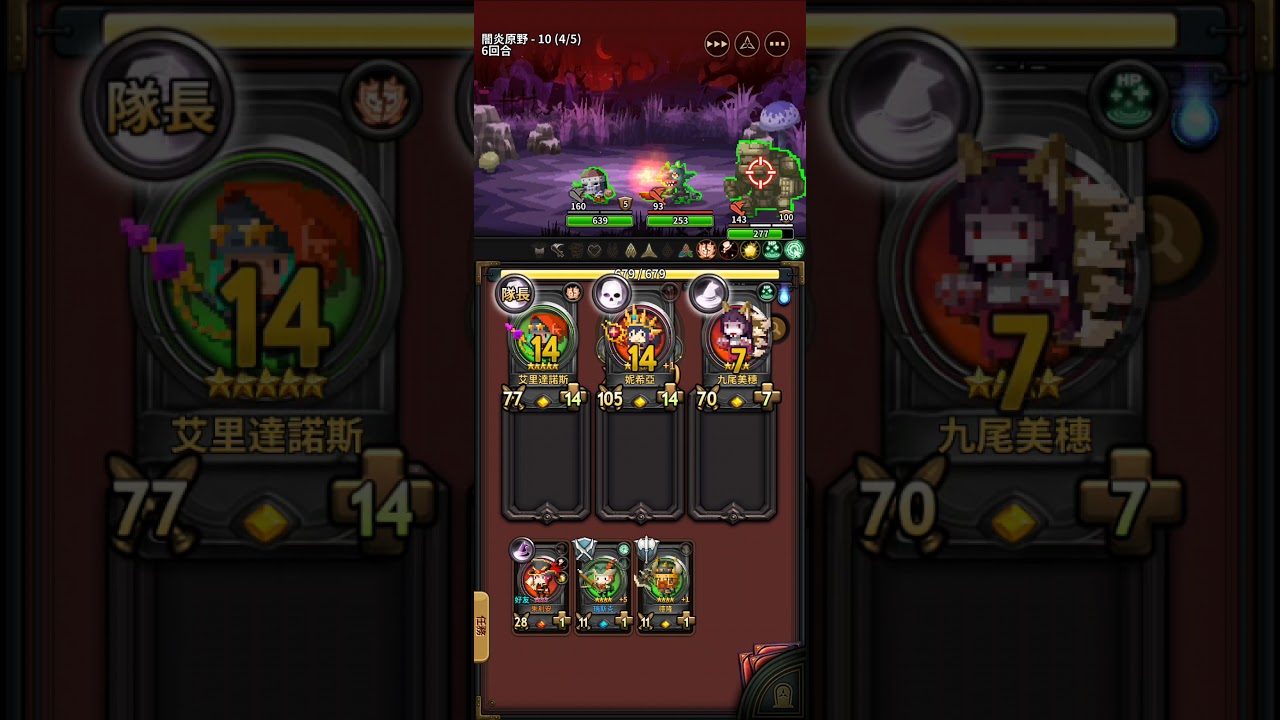
Advancing through Chapter 26 of Triple Fantasy, specifically the "Dark Flame Field" stages, represents a major difficulty spike that tests your ability to balance deck composition with turn-based resource management. Stage 26-3, in particular, forces players to move away from sustainable, defensive playstyles in favor of calculated, high-burst elemental combos. Because the environment actively punishes slow progression through constant fire-based pressure, your success hinges on your ability to force favorable poker hands and maximize your damage multipliers before the enemy can overwhelm your frontline.
Understanding the Dark Flame Field Mechanics
The Dark Flame Field is defined by its environmental hazard: a persistent fire-based debuff that ramps up in intensity the longer a battle lasts. In Triple Fantasy, if you fail to eliminate enemies quickly, the cumulative burn damage will drain your health pool faster than any healer can restore it.
The enemies in Chapter 26-3 are not just tanky; they are designed to punish players who lack elemental synergy. Fire-based mobs here have high resistance to neutral damage and will capitalize on any turn where you fail to land a significant combo. To survive, you must view the field not as a static background, but as a ticking clock. If you are not dealing massive damage by turn three or four, the battle is statistically skewed against you.
Optimizing Your Deck for Elemental Burst
In the Dark Flame Field, Water-element units are your most valuable assets. Because Triple Fantasy relies heavily on elemental multipliers, bringing a mono-water or water-heavy deck allows you to bypass the massive health pools of the fire-aligned mobs.
When constructing your deck for Chapter 26, prioritize the following archetypes:
- Multiplier Enablers: Focus on cards that increase the damage of specific poker hands (e.g., Straight Flush or Four of a Kind). A 5x or 7x multiplier on a water-aligned attack is often the only way to clear elite mobs in a single turn.
- Hand-Cyclers: Cards that allow you to swap or redraw your hand are essential. You cannot afford to be stuck with "garbage" hands that don't trigger your strongest combo bonuses.
- Burst-Support Hybrids: Look for heroes who provide both an attack buff and a cleanse. Clearing the "burn" debuff is secondary to dealing damage, but it is necessary if you find yourself surviving with only a sliver of HP.
Strategic Hand Rotation and Card Economy
Many players fail Chapter 26 because they "hoard" their best cards, waiting for the perfect moment. In the Dark Flame Field, "perfect" is the enemy of "good enough." You must manage your hand economy aggressively.
If your hand is cluttered with low-value, off-element, or duplicate cards, use your swap mechanic immediately to fish for the specific elements needed for your primary combo. Every turn spent playing a weak hand is a turn that allows the environmental fire hazard to stack against you. Aim for a "cycle-heavy" strategy where your goal is to refresh your hand as frequently as possible to ensure that every turn results in a high-multiplier poker hand.
Tactical Positioning and Focus Fire
The AI in Chapter 26-3 is designed to exploit split damage. If you attack multiple targets and fail to kill any of them, you leave yourself open to retaliation from every mob on the field.
The Priority Target Rule:
- Glass Cannons: Eliminate any enemy that applies "Burn" or "Damage Over Time" first. These debuffs are the primary reason for failure in late-game stages.
- High-Damage Mobs: Once debuffers are down, target the enemies with the highest attack stat.
- Elite/Boss Units: Save these for last unless they are actively summoning reinforcements.
By focusing all your damage on one target at a time, you reduce the number of incoming attacks per turn, which significantly lowers the pressure on your support units.
Overcoming Performance Plateaus
If you are repeatedly failing Chapter 26-3 despite using the correct elemental strategy, the issue is likely your card evolution or level cap. Triple Fantasy is a collectible RPG, and there is a "stat floor" for every chapter. If your cards are under-leveled, even the best strategy will result in "chip damage" that fails to break the enemy's defense.
Checklist for Progression:
- Are your units fully evolved? If not, return to earlier stages to farm evolution materials.
- Are you using the right Leader Skill? Ensure your leader provides a passive bonus that aligns with your deck’s damage type (e.g., increased damage for Water units).
- Are you utilizing the "Retry" feature effectively? Sometimes, RNG is the only barrier. If you played perfectly and still lost, re-enter the stage to see if a different card draw sequence provides a better opening.
Final Expert Insights
The transition to the late game in Triple Fantasy requires a fundamental shift in mindset. You are no longer playing a turn-based RPG where you survive by attrition; you are playing a high-stakes puzzle game where you win by efficiency.
By prioritizing Water-element synergy, ruthlessly cycling your hand to land high-multiplier poker hands, and focusing fire on debuff-heavy targets, you can neutralize the threats of the Dark Flame Field. Remember that in Triple Fantasy, the best defense is an overwhelming offense—if you can clear the board before the fire stacking becomes critical, you have already won the encounter. Keep your deck lean, your focus sharp, and don't be afraid to sacrifice cards to get that perfect, board-clearing combo.

Free Triple Fantasy Codes
Current active codes and how to redeem them.

Emily Johnson
Emily writes practical mobile strategy guides with a focus on resource planning, base progression, and the early decisions that shape a long-term account.
COMMUNITY
Player Comments
58 players commented on this guide.
The explanation is clear, especially for beginners.
Can you add more details about base building in a future update?
This guide answered the exact question I had.
Good guide for Triple Fantasy players. The base building part was useful.