
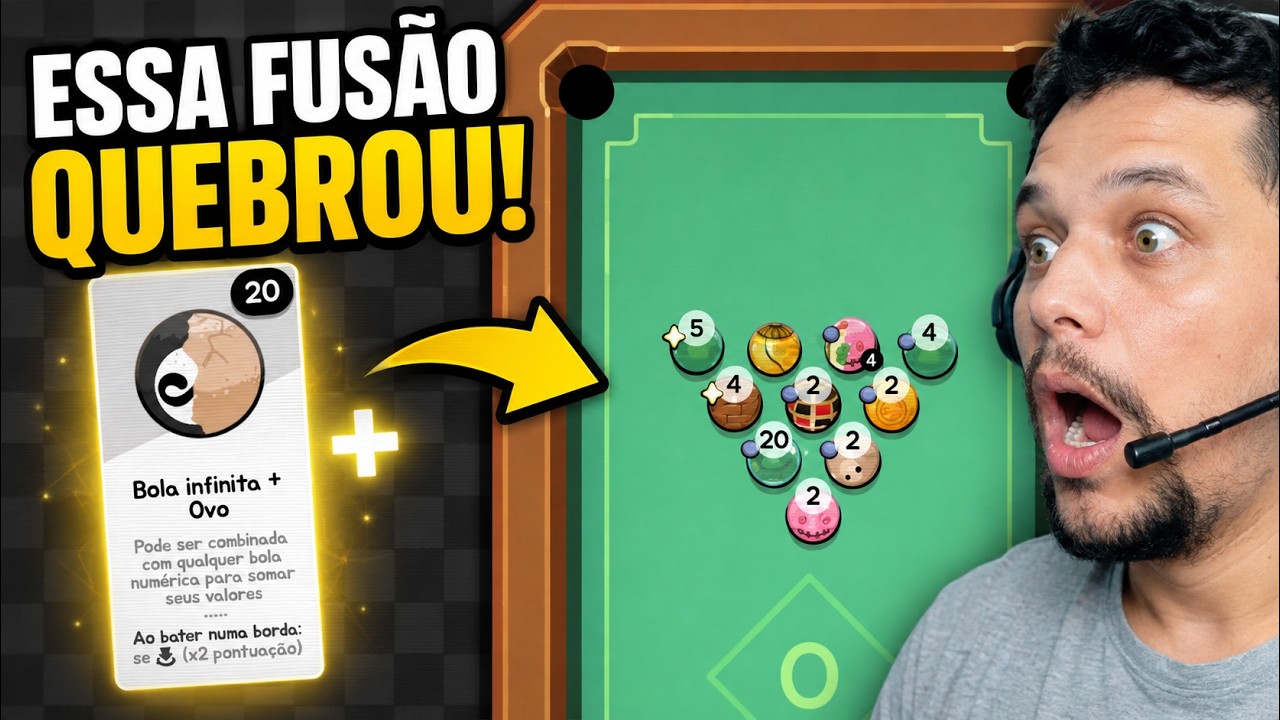
To achieve infinite scaling in Ultrapool: Pool Roguelite, you must pivot your drafting strategy from simple precision shots toward "projectile density." By stacking ball count modifiers, duplication effects, and collision-based passives, you can transform the table into a self-sustaining engine of destruction. In this arcade roguelite, the goal isn't just to pocket balls—it is to create a chain-reaction feedback loop that triggers hundreds of damage instances per second, allowing you to breeze through all ten rounds.
The Core Mechanic: Why Ball Count is King
In Ultrapool: Pool Roguelite, your total ball count is the primary multiplier for every other stat in your arsenal. Many players make the mistake of prioritizing raw damage increases or speed upgrades early on, but these stats only apply to individual projectiles.
When you prioritize +Ball Count upgrades, you are exponentially increasing the "surface area" of your damage. A single ball with a +10 damage passive is good; ten balls with that same passive is a screen-clearing event. Because passives trigger independently upon collision, increasing your ball count acts as a force multiplier that makes your entire build exponentially more dangerous as the round progresses.
Building the "Infinite Scaling" Engine
To reach the point where you "break" the game, your build must focus on three distinct pillars:
- Mass Duplication: Always prioritize rewards that add base balls to your tray. If a choice offers a significant stat boost versus a +1 ball count, take the ball count nine times out of ten.
- Collision-Triggered Passives: Look for items that trigger effects on hit. Whether it is an area-of-effect (AoE) explosion, a secondary projectile, or a debuff, these are the engines of your damage. With enough balls on the table, these passives trigger so frequently that they effectively blend into a single, continuous stream of damage.
- Momentum Maintenance: Since your build relies on balls staying in motion to trigger hits, you need to minimize friction. Upgrades that increase ball speed or bounce longevity ensure your "engine" never stalls.
Strategic Drafting: Prioritizing Synergies
Not all passives are created equal. In an infinite scaling build, you need synergy-based passives that reward chaos.
- Impact Proliferation: Seek out items that create extra projectiles when a ball hits a target. This creates a "snowball effect" where your initial shot count multiplies mid-round, eventually filling the table to the point of total saturation.
- The "Cocktail" Balancing Act: Utilize the bar system to purchase modifiers that specifically synergize with your current ball count. If you have a high ball count, look for cocktails that scale damage based on the number of active objects or successful pocketing streaks.
- Avoid Single-Target Traps: Avoid passives that only affect the cue ball or the first ball hit. Your build needs to be "wide"—meaning it deals damage across the entire table. If a passive doesn't provide value when your balls are bouncing randomly, it is a liability.
The Reality of Screen Saturation
As you progress toward the mid-game, you will reach a state of "Screen Saturation." This is the point where the table is so full of balls and visual effects that you can no longer track individual trajectories.
Expert Tip: Do not try to aim for specific pockets once you reach this stage. Instead, focus on the "center of mass" of your balls. By banking shots into the most densely populated area of the table, you trigger the maximum number of collision passives instantly. At this stage, your role shifts from a pool player to a "damage manager," ensuring that your balls are directed toward the largest clusters of health-bar-carrying targets.
Overcoming Performance and Visual Clutter
The most common mistake players make when attempting an infinite scaling build is ignoring visual clarity. When the screen is filled with explosions and projectile tracers, it becomes difficult to see incoming enemy attacks or table hazards.
- Play by the UI: Stop looking at the balls. Look at the score ticker and your health bar. If the score is climbing rapidly, your engine is working. If your health is dropping, focus on clearing a path to hit the nearest enemy cluster.
- Damage Decay Mitigation: Some builds experience "damage decay" where the number of enemies outscales your passive damage. To prevent this, ensure that at least one of your core items provides percentage-based damage or stacking debuffs. This ensures that even as enemy health pools inflate in the later rounds, your chain reactions remain effective.
Decision Making: When to Pivot
If you aren't finding the +Ball Count upgrades you need early on, you must be prepared to pivot. An infinite scaling build is high-risk, high-reward. If your ball count remains low, you should shift toward "Crit" or "Speed" builds to maximize the damage of the few balls you do have.
However, if you manage to secure one or two early duplication modifiers, commit fully. Do not try to split your build between defensive items and offensive scaling. In Ultrapool: Pool Roguelite, the best defense is a screen-filling offensive that prevents enemies from ever having the space to move.
Final Summary for Success
To break Ultrapool: Pool Roguelite:
- Draft for quantity over quality in the first three rounds.
- Prioritize collision-based passives that generate AoE effects.
- Keep your balls moving at all costs; stationary balls are wasted potential.
- Embrace the chaos and stop aiming for precision once you hit critical mass.
By following this roadmap, you move beyond playing Ultrapool as a standard physics game and start playing it as a resource-management system, where every ball is a potential trigger for a game-breaking score.

Free Ultrapool: Pool Roguelite Codes
Current active codes and how to redeem them.

James Brown
James focuses on Android gaming on PC, emulator setup, controls, performance tuning, and practical troubleshooting for longer play sessions.
COMMUNITY
Player Comments
46 players commented on this guide.
Good guide for Ultrapool: Pool Roguelite players. The strategy part was useful.
Can you add more details about strategy in a future update?
The tips are practical and easy to follow.
This guide answered the exact question I had.