
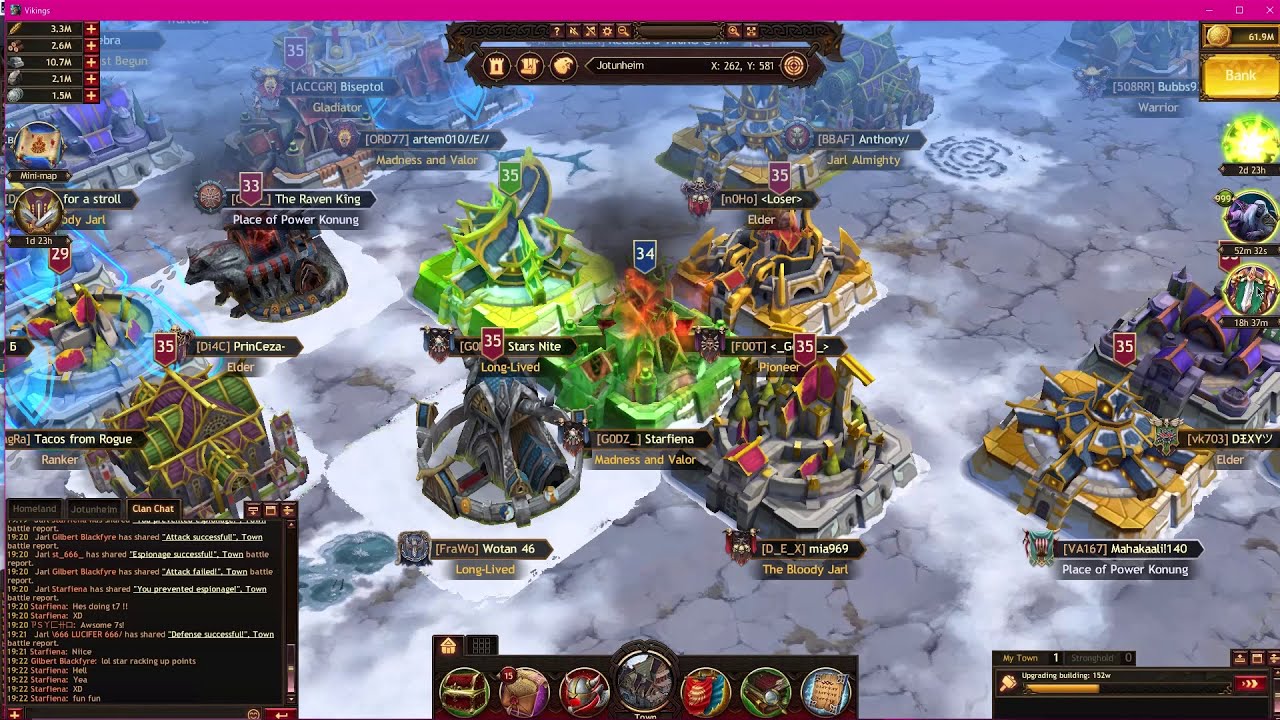
To succeed in the Jotunheim event in Vikings: War of Clans, you must move beyond passive play and adopt an aggressive, calculated combat strategy. The most effective way to climb the leaderboard is to utilize a combination of multi-account coordination, precise "test hits," and strict troop tier management. By shifting your mindset from total war to surgical strikes, you can rack up massive points while keeping your primary assets shielded from catastrophic losses.
Coordinating Multiple Accounts for Strategic Advantage
The "Jotunheim meta" heavily favors players who can effectively manage both a main account and at least one alt account simultaneously. In this high-stakes PvP environment, information is your most valuable resource. Using an alt account allows you to maintain a presence in dangerous sectors without risking the high-tier troops (T9–T10) residing in your main account’s Town.
The Role of Your Alt Account:
- Forward Scouting: Park your alt in high-traffic zones to monitor enemy movements and identify "sleeping" players or weak targets.
- The Bait Mechanism: Use your alt to draw out enemy reinforcements or test the reaction time of a rival Clan.
- Distraction Tactics: A well-placed alt can force an opponent to waste speed-ups or shields, creating a window of opportunity for your main account to strike.
By funneling real-time intel from your alt to your main, you can identify vulnerable targets before they have a chance to reinforce. This dual-account synergy ensures your main account only engages when the odds are overwhelmingly in your favor.
Executing Tactical Test Hits Against Opponents
Blindly launching your entire army at a target is the fastest way to lose your event ranking. Instead, adopt the "Test Hit" protocol. A test hit involves sending a small, sacrificial batch of troops—typically Tier 7 (T7)—to gauge the strength of an opponent’s defense.
Why Test Hits Matter:
- Information Gathering: The resulting battle report reveals the enemy’s Hero gear, troop composition, and active combat boosts.
- Efficiency: If your T7 units cause significant damage, you know the target is vulnerable. If they are wiped out instantly, you have saved your elite troops from a suicide mission.
- Resource Preservation: By probing defenses, you minimize the "point-per-loss" ratio, ensuring you don't burn through your entire training queue on a single fortified target.
Always analyze the battle report before committing your main force. If the enemy has high-level defensive gear or massive fortification bonuses, move on. In Jotunheim, points are awarded for efficiency, not just for the number of kills.
Optimizing Troop Deployments for Jotunheim Combat
The key to long-term success in Jotunheim is stratification. You cannot win by deploying your best units for every minor skirmish. High-tier troops are expensive and time-consuming to replace; treat them as a "strategic reserve" rather than an expendable frontline.
Tiered Engagement Strategy:
- Low-Tier Units (T1–T5): Use these for scouting or filling gaps in your defense. They are cheap and serve as excellent cannon fodder to soak up traps.
- Mid-Tier Units (T6–T8): These are your primary workhorses for test hits and opportunistic attacks on smaller players.
- Elite Units (T9–T10): Save these exclusively for coordinated Clan strikes, defense against massive incoming rallies, or finishing off high-value targets that you have already scouted and verified as vulnerable.
By maintaining this hierarchy, you ensure that even if you suffer a significant loss, your military backbone remains intact, allowing you to stay active until the event ends.
Managing Communication and Social Dynamics
Vikings: War of Clans is as much a social game as it is a strategy game. The Jotunheim chat and direct messaging system are tools for psychological warfare.
Psychological Tactics to Employ:
- Baiting: Send a message challenging a player or inviting them to attack your alt. If they take the bait and move out of their shielded zone, your main account can intercept them.
- Diplomatic Pressure: Sometimes, a polite but firm message to a neighbor can prevent them from attacking you, allowing you to focus your troops elsewhere.
- The "Unpredictable" Factor: If you maintain a reputation for being active, vocal, and aggressive, opponents will often avoid you, preferring easier targets. This "deterrence" allows you to hold territory without spending a single troop.
Limitations and Trade-offs of Event Aggression
While aggression is rewarded in Jotunheim, overextension is fatal. Every attack you launch creates a "cooldown" or leaves your city vulnerable if your troops are caught returning.
- The Counter-Attack Risk: Always assume that a successful attack will invite a retaliation. Have your Hero gear switched to defensive presets immediately after an attack, and keep your reinforcements ready.
- Resource Management: Ensure your alt accounts have enough resources to survive independently. If your main account is constantly funneling resources to keep your alt active, you are starving your own infrastructure.
- The "Escape Route": If you are attacking a significantly stronger player, always have a plan for where your troops will retreat if the battle turns. Never leave your main army sitting in a city that is being scouted by a top-tier player.
By balancing these tactical considerations—scouting with alts, testing with mid-tier units, and protecting your core assets—you will transform from a casual participant into a dominant force in the Jotunheim event. Remember, in Vikings: War of Clans, the player who controls the flow of information and manages their troop economy best will almost always outlast the player who simply throws the most units at the wall.
Free Vikings: War of Clans PvP Codes
Current active codes and how to redeem them.

Emily Johnson
Emily writes practical mobile strategy guides with a focus on resource planning, base progression, and the early decisions that shape a long-term account.
COMMUNITY
Player Comments
38 players commented on this guide.
Good guide for Vikings: War of Clans PvP players. The updates part was useful.
This guide answered the exact question I had.
Nice guide. I am checking the other Vikings: War of Clans PvP articles next.
The explanation is clear, especially for beginners.